
The International Monetary Fund (IMF) has imposed stringent conditions on Pakistan’s forthcoming 2025-26 federal budget, effectively dictating the fiscal framework through its staff-level agreement. As negotiations enter their final stage, the government faces severe constraints in budget planning, with the IMF demanding strict adherence to reform benchmarks as a precondition for releasing the next $1.1 billion loan tranche. The proposed budget outline of PKR 17.6 trillion—with a staggering revenue target of PKR 14.07 trillion—reflects the Fund’s push for aggressive fiscal consolidation despite Pakistan’s challenging economic environment.
Key IMF Conditions Shaping the Budget:
The IMF has specifically mandated several structural adjustments that will directly impact both macroeconomic policy and household budgets. These include the complete elimination of energy subsidies, which could trigger 18-22% hikes in electricity and gas tariffs, and the expansion of the tax net to cover previously exempt sectors. Most controversially, the Fund is pushing for petroleum development levies to increase by PKR 10-15 per liter, a move that would further inflate already record-high fuel prices. The government’s limited bargaining power stems from its urgent need for IMF support to stabilize foreign reserves, currently hovering at a precarious $9 billion despite recent inflows.
Government’s Balancing Act:
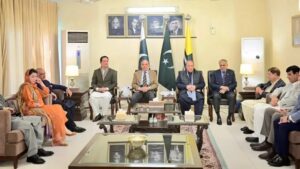
Prime Minister Shehbaz Sharif’s economic team is attempting to negotiate some relief measures, particularly seeking IMF approval for:
– Targeted subsidies for low-income groups (BISP allocations may rise to PKR 550 billion)
– Gradual rather than immediate withdrawal of corporate tax incentives
– Protection for the salaried class from additional income tax burdens
To offset potential revenue losses from these concessions, authorities have proposed alternative measures including:
✓ 35% higher sin taxes on tobacco and sugary beverages
✓ New 5-7% digital taxes on freelancers and IT exports
✓ Stricter enforcement for retailer taxation through POS systems
**Sectoral Allocations Under Scrutiny:**
The IMF’s conditions are forcing difficult trade-offs in budget allocations:
Defense: Likely capped at PKR 2.25 trillion (12.8% of budget) despite military requests
Development: PSDP may see 40% increase to PKR 1.4 trillion, focused on CPEC projects
Debt Servicing: Projected at PKR 9.2 trillion (52% of budget) due to high interest rates
With the June 10 budget announcement deadline approaching, the government remains cautiously optimistic about reaching a staff-level agreement this week. However, economists warn that full IMF compliance risks exacerbating inflation (currently 26%) and could trigger political backlash. The success of these measures ultimately hinges on the Fund’s flexibility regarding implementation timelines and the government’s ability to deliver on its reform commitments.