
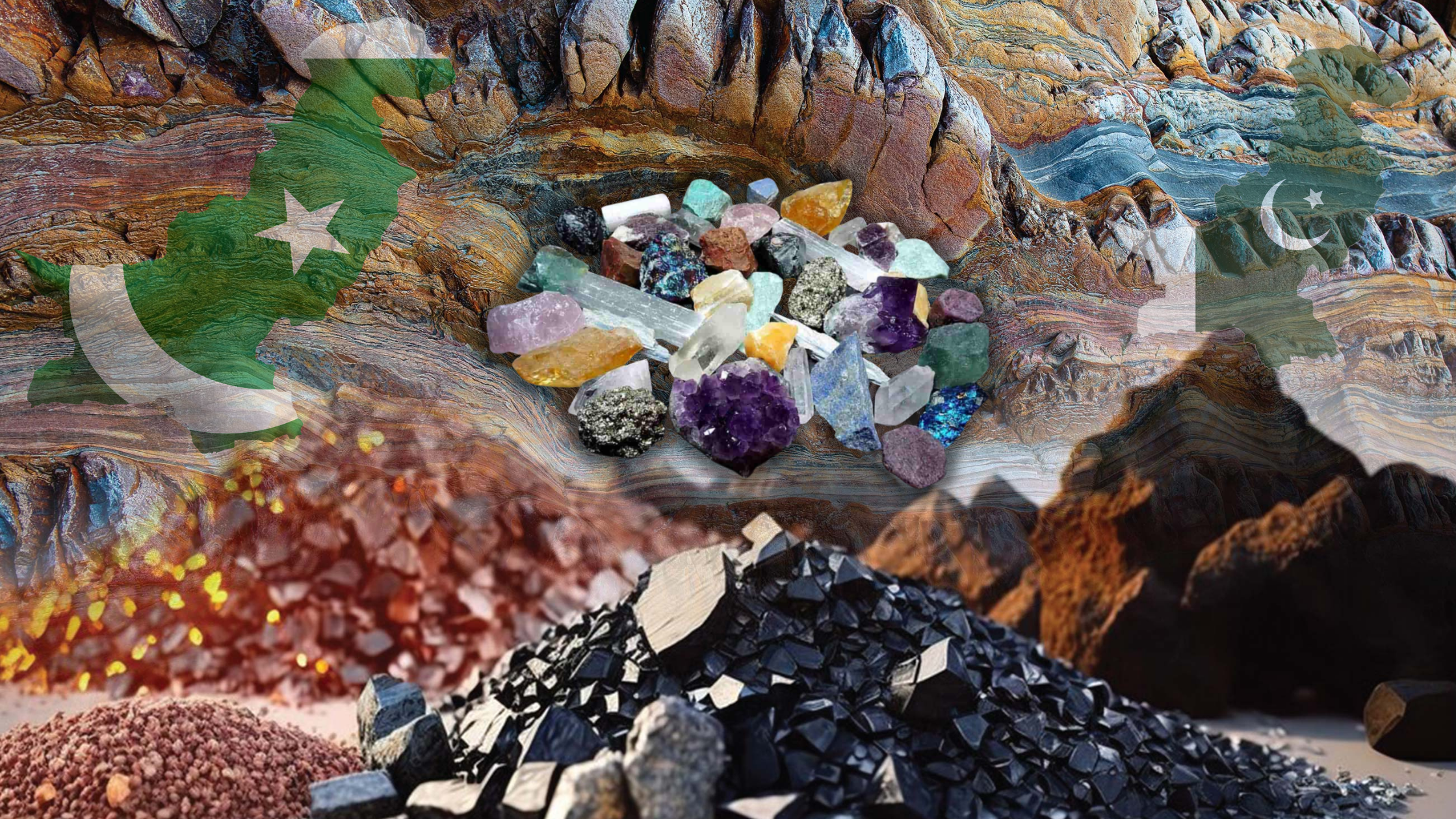
In the dry and dusty lands of Chagai, in Pakistan’s province of Balochistan, some of the world’s most valuable natural resources are buried including gold, copper and Minerals in Pakistan. Experts believe that these resources could bring in billions of dollars in investment for the country.
After earlier discoveries at Reko Diq and Saindak, a new claim has been made by a private company, National Resources Limited (NRL). They say they’ve found new gold and copper reserves in Chagai. At a recent event, the Pakistan Minerals Investment Forum 2025, NRL’s head, Muhammad Ali Tabba, said international investors are showing interest in the project.
At the same forum, another company, Mari Energies, shared news about a new oil and gas find in North Waziristan.
This is the fourth such find in the region, with daily test output reaching 70 million cubic feet of gas and 310 barrels of oil condensate.
During this two-day conference, Pakistan and Turkey signed an agreement to work together on offshore oil and gas exploration. Pakistani companies Mari Energies, OGDCL, and PPL will team up with Turkey’s national company to find Minerals in Pakistan.New Oil and Gas Reserves Discovered in Waziristan
Officials say that Pakistan’s underground wealth has often been wasted blocked by bureaucracy, security issues, or lack of political focus. However, the government recently promised to use Minerals in Pakistan to help boost the economy.
Representatives from over 20 countries, including the US, China, and Saudi Arabia, attended the forum in Islamabad to explore investment opportunities Minerals in Pakistan calls a “trillion-dollar sector.”
The aim of the event was to show Pakistan as a major global player, especially Minerals in Pakistan known as “critical minerals” essential for electronics, defense, and green energy.
Officials, including military leaders, called the forum a “milestone” for the economy. However, critics point out that Pakistan has made such promises before, but little has changed.
What Valuable Minerals in Pakistan?
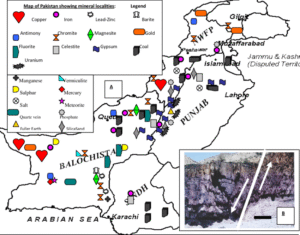
Pakistan classifies its minerals into different types:
- Strategic Minerals: Copper, gold, lithium, rare earth elements, and chromite crucial for electronics, defense, and green energy.
- Energy Minerals: Coal and uranium used for power generation and nuclear programs.
- Industrial Minerals: Salt, limestone, gypsum, barite used in construction and farming.
- Gemstones: Though small in volume, they are valuable and important for exports.

Balochistan: The Mineral Heart of Pakistan
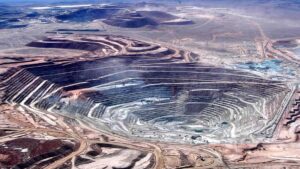
Balochistan is rich in strategic minerals, especially in places like Reko Diq and Saindak.
- In the 1970s, Pakistan’s Geological Survey found gold and copper at Reko Diq.
- For years, legal and financial issues halted development, but in 2022, a new deal was signed with Canadian company Barrick Gold, which now holds 50% of the project.
- Pakistan’s federal and Balochistan governments each have 25%.
- Production is expected to start by 2028.
Barrick Gold’s CEO stated that after the project’s second phase, Reko Diq will yield 400,000 tons of copper and 250,000 ounces of gold each year. The first phase will cost $5.5 billion to develop.
Due to rising demand for electric vehicle batteries and clean energy, copper is expected to be in high demand globally, making this project economically important for Pakistan.
Nearby, Saindak has also been producing gold and copper since the 1970s. It is managed by a Chinese company.
Other Balochistan minerals include:
- Chromite from Muslim Bagh in Qilla Saifullah
- Lithium and rare earths in Chagai and Khuzdar
- Fluorite near Kalat and Mastung
- Lead and zinc in Lasbela (the first modern project of its kind in Pakistan).
- Coal in Duki, Daghari, and Khost still a key source of local jobs
However, local people often complain they don’t benefit from these resources. Lack of transparency and unfair resource sharing are major causes of unrest in the region.
Gemstones and Minerals in Khyber Pakhtunkhwa
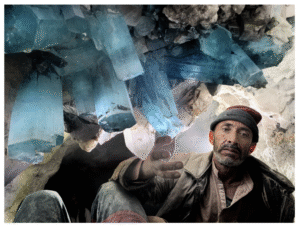
Khyber Pakhtunkhwa (KP) is home to beautiful gemstones under its green valleys and tall mountains:
- Emeralds from Swat are famous in global jewelry markets.
- In Waziristan, authorities say copper and gold traces have been found.
- Other precious stones found across KP, Gilgit-Baltistan, and Azad Kashmir include:
- Rubies in Hunza
- Pink topaz in Mardan
- Aquamarine in Chitral
- Peridot in Kohistan
- Sapphire-like stones in Neelum Valley
Besides gems, KP also has:
- Chromite in Mohmand and Waziristan
- Phosphate in Hazara
- Iron in Malakand and Haripur
- Soapstone and mica in Sherwan
- Marble especially Swat’s white marble and Mohmand’s “Ziarat White” is a major industry, providing jobs to thousands.
KP has also set up “Mineral Economic Zones” to better manage resources, but a new mining bill is now under debate and facing opposition.
Sindh’s Coal and Punjab’s Salt Range
Sindh may not have the same variety as Balochistan or KP, but it holds huge coal reserves:
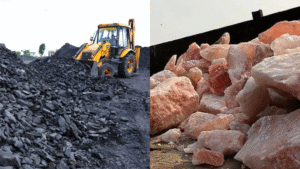
- Tharparkar is home to the world’s 7th largest lignite coal reserves (185 billion tons), powering many electricity projects.
- Chinese companies are heavily invested under the CPEC project.
Other Sindh minerals include gypsum, limestone, salt, and granite. In Nagarparkar, white and pink decorative stones are extracted.
Sindh also has important oil and gas fields, especially in the Mari region, making it an energy hub.
Punjab is known for:
- Salt, especially from the Salt Range
- Iron, copper, and gold traces in Chiniot
- Limestone and phosphate, used in construction and fertilizers
Are Foreign Investors Really Interested?
At the recent conference, US official Eric Meyer said America is interested in investing in Pakistan’s mineral sector, especially in finding safe and reliable sources of important materials.
The US is looking to work with Pakistan on investment, technical support, and responsible resource management.
Though there’s no clear number, local media say over 10 MoUs were signed between Pakistani and international companies during the event.
While Barrick Gold is trying to raise $2 billion in funding for Reko Diq, and Saudi Arabia may also invest, experts say the big question remains:
Will these new deals and discoveries turn into real results, or will they remain just promises like in the past?