

In a significant development regarding the revival of Pakistan Steel Mills (PSM), the Ministry of Industries and Production recently briefed a parliamentary standing committee on the ongoing evaluation of the mill’s revival. A specialized team of Russian technical experts is currently assessing the feasibility of the mill’s resurrection, with the final decision expected to be made by June 30 of this year. This comes as a promising effort to rejuvenate one of the country’s most significant industrial assets, which has been languishing in a state of disrepair for years.
The Russian team, tasked with evaluating the PSM’s revival, recently visited Pakistan for on-site inspections and conducted several online meetings to deliberate on potential restructuring plans. The technical experts are working diligently to assess various facets of the steel mill’s revival, including financial, operational, and infrastructural elements. They are expected to present a comprehensive report to the Ministry by Friday, with detailed recommendations on how the mill could be brought back to life.
Despite the growing concerns over the mill’s debts, which have now ballooned to an alarming Rs345 billion, conversations between Pakistani officials and their Russian counterparts have been progressing positively. This collaboration aims to turn the tide for PSM, offering a chance for its revival rather than scrapping it entirely.
“Efforts are being made to revive the mill instead of scrapping it,” said Syed Hafeezuddin, Chairman of the National Assembly’s Standing Committee on Industries and Production, during a review of the subject. This statement underscores the government’s resolve to give PSM a second chance despite its significant financial challenges and operational inefficiencies.
The Ministry of Industries and Production did not shy away from acknowledging the severe operational inefficiencies that have plagued PSM for years, leading to its closure in 2015. However, the officials remain hopeful that the collaboration with Russian experts could pave the way for a more sustainable and viable revival strategy. This partnership with Russia may be a key factor in addressing the various challenges that have kept the mill from functioning effectively in recent years.
During the meeting, the committee expressed concern about the mounting financial liabilities of PSM and the ongoing operational status of the mill. The committee urged the Ministry to expedite efforts to address the financial challenges and the long-term viability of the project. The committee also requested a detailed financial report on PSM to fully assess the scale of the mill’s debts, as well as the steps required to streamline operations and revitalize the industry.
One of the primary concerns raised by the committee is the burden of financial obligations on the mill, which could hamper efforts for its revival. PSM has long been struggling to stay afloat, with its debts continuing to escalate despite attempts to turn things around. The Russian experts’ evaluation will play a pivotal role in determining the next steps in addressing these financial challenges and exploring potential solutions.
Further complicating the situation is the issue of power supply and distribution. The committee urged K-Electric to assume control of the power distribution network and collect payments directly from the public rather than relying on PSM for payment collection. K-Electric, the utility company responsible for providing electricity in Karachi, has been accused of contributing to the collapse of the city’s industries, including PSM.
“K-Electric is responsible for the destruction of Karachi’s industry,” stated Chairman Hafeezuddin, highlighting the ongoing challenges faced by industrial units in Karachi due to unreliable power supply and inconsistent billing systems. The committee believes that K-Electric’s involvement in directly handling power payments could alleviate some of the financial pressure on PSM and help it focus on its core operations.
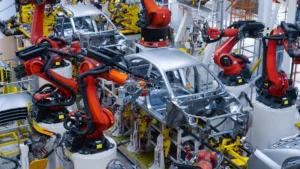
The revival of Pakistan Steel Mills is not just an industrial matter; it’s a crucial step toward revitalizing the country’s manufacturing sector and creating much-needed jobs. PSM once played a vital role in contributing to the country’s steel production and economic growth, and its revival could have far-reaching implications for Pakistan’s industrial landscape. However, the process of restoring PSM to its former glory will require a multifaceted approach, involving financial restructuring, technological upgrades, and improved management practices.
The collaboration with Russian technical experts provides an opportunity for Pakistan to tap into international expertise in steel production and mill management. Russia, with its vast experience in steel manufacturing, can offer invaluable insights into modernizing PSM’s operations and making it more competitive on the global stage. Additionally, the potential involvement of Russian firms in the mill’s revival could open doors to future economic cooperation between Pakistan and Russia, particularly in the steel and manufacturing sectors.
In conclusion, the ongoing efforts to revive Pakistan Steel Mills under the guidance of Russian technical experts represent a crucial turning point for the country’s industrial future. While the road ahead is fraught with challenges, the commitment of the Ministry of Industries and Production, along with the support of international partners like Russia, offers hope for PSM’s restoration. As the evaluation process continues, stakeholders remain cautiously optimistic that the steel mill can be revived, contributing to Pakistan’s industrial growth and economic recovery. The next few months will be crucial in determining whether this ambitious revival plan will bear fruit or remain another unfulfilled promise for Pakistan’s struggling industrial sector.