
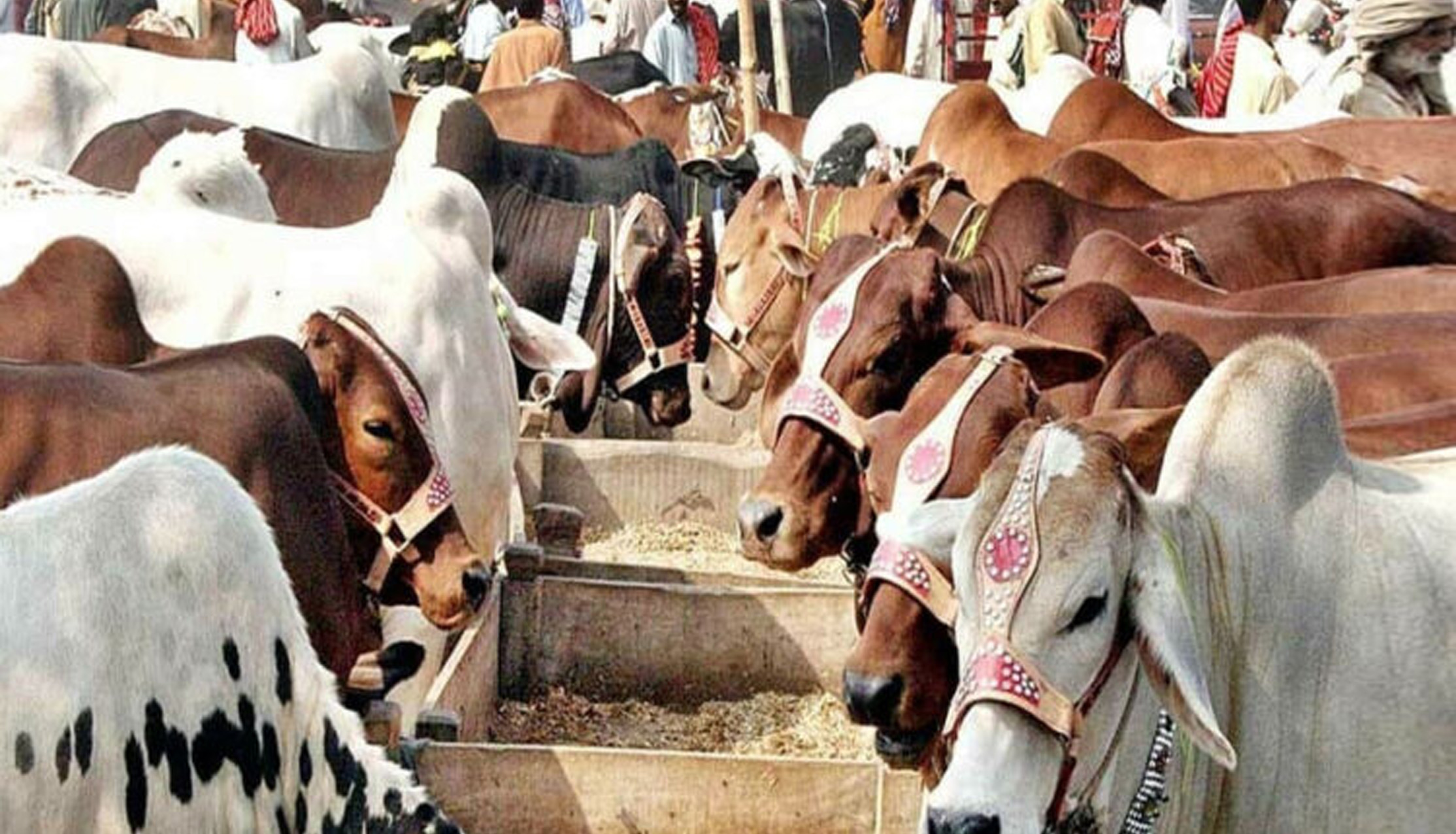
As Eid-ul-Adha approaches, Karachi has witnessed a staggering 50 to 70 percent surge in the prices of sacrificial animals compared to last year. The rising costs have made it increasingly difficult for citizens to afford livestock for the religious ritual. The minimum price for a cow has reached 140,000 rupees, while goats are being sold for at least 40,000 rupees. Traders attribute this sharp increase to rising expenses in animal rearing, transportation, taxes, and other logistical challenges.
Citizens have expressed frustration over the lack of a government-regulated pricing mechanism, leaving buyers at the mercy of fluctuating market demands. Negotiations between traders and customers have become intense, with prices often settled after prolonged bargaining. Many middle-class families, who traditionally participate in the ritual, now find it financially burdensome. The absence of price controls has allowed traders to set rates arbitrarily, further exacerbating the situation.
Top 5 Airlines in Pakistan; A Complete Guide to the Best Flying Experience
Economic Factors Behind the Price Hike
Livestock traders explain that multiple economic factors have contributed to the steep price rise. The cost of animal feed has surged by over 50 percent, significantly impacting rearing expenses. Additionally, transportation charges have spiked by 60 percent, making it costly to bring animals from Punjab and Sindh’s major cattle markets to Karachi. Taxes and other miscellaneous expenses, such as market stall allocations and maintenance, have further inflated the final prices.
Kashif Qureshi, a sacrificial animal trader, highlighted that while every financially capable Muslim aspires to fulfill the Sunnah of Qurbani, the exorbitant prices this year may deter many. Large-scale traders purchasing animals from upcountry markets have passed on their increased costs to middlemen, who then sell them at even higher rates in Karachi. The cumulative effect of these expenses has made sacrificial animals a luxury rather than an affordable religious obligation for many.
The situation calls for government intervention to stabilize prices and ensure that the tradition of Qurbani remains accessible to all segments of society. Without regulatory measures, the financial strain on citizens may continue to grow, undermining the spirit of Eid-ul-Adha.