

The landscape of education in Pakistan has transformed dramatically over recent years. Gone are the days when academic success was solely measured by marks and memory. Today, schools are judged on their ability to cultivate critical thinking, emotional intelligence, and real-world readiness especially in a world that’s constantly shifting under our feet. Choosing the top schools in Pakistan 2025 is more than ticking off a name on a prestigious list. It’s about finding a place that aligns with your family’s values, champions your child’s individuality, and nurtures their dreams while building a strong ethical foundation. Whether you’re in Lahore, Karachi, Quetta, or beyond, this guide will give you an in-depth look at what makes certain schools lead the pack, and what these homes of learning can offer your child.
Why Rankings Matter—Really
Let’s face it, rankings alone aren’t everything but they are a compass. A good ranking reflects a school’s educational philosophy, community impact, and academic results. In 2025, rankings are less about comparison and more about clarity. They spotlight schools pushing boundaries: integrating global curricula like IB and PYP, leveraging technology smartly, and, most importantly, creating environments where all children regardless of background can thrive.
But here’s the key: a school’s place in a ranking should be a starting point, not the destination. It should spark curiosity, invite conversation, and inspire action leading you to dig deeper into what truly makes a school exceptional.
Pakistan Top 10 Universities 2025: Your Ultimate Guide to Higher Education Excellence
Punjab Government Introduces New Student Card to Support Education
Key Features of the Top Schools in Pakistan 2025
What separates the best from the rest? It’s not just high exam scores. It’s the heartbeat of the school the ethos, the atmosphere, the everyday moments.
Internationally Aligned Curriculum: Schools leading the charge, like Sanjan Nagar, have embraced globally recognized frameworks like the International Baccalaureate (IB) and Primary Years Programme (PYP). These focus on inquiry, exploration, and developing global citizens, rather than teaching to the test.
Student-Centred Teaching: Imagine classrooms buzzing with questions, with children leading their learning journeys, teachers acting as facilitators. That’s the reality at many top schools where the focus is on harnessing each student’s unique strengths.
Tech-Driven Learning: From interactive digital boards to virtual labs and AI-powered assessments, these schools are preparing students for a digital world—not just by teaching coding, but by embedding digital fluency across subjects.
Equity & Access: The true hallmark of distinction? Ensuring that marginalized students aren’t just admitted, but deeply supported. Whether through fee waivers, community outreach, or targeted mentorship, these schools stand by the creed that input potential is universal—opportunity, not so much. They bridge that gap.
Sanjan Nagar Public Education Trust Higher Secondary School, Lahore

Founded in an abandoned factory with only ten passionate students and a handful of untrained volunteer teachers, Sanjan Nagar is now a bustling campus of 800 learners. But its story isn’t one of expansion it’s a narrative of transformation. In embracing the IB and PYP curriculum, Sanjan Nagar introduced an educational revolution. Suddenly, children from economically vulnerable families were asking “Why?” “How?” and “What next?”not just for answers, but for exploration.
What makes Sanjan Nagar extraordinary is how it wove global frameworks with local realities. The school embedded UN Sustainable Development Goals within its daily lessons—teaching, for instance, about clean water through science experiments, or equality through art and storytelling. It actively recruits and supports students from diverse religious and ethnic backgrounds 65% Christian, alongside Muslims and others fostering mutual respect and learning.

Graduates from Sanjan Nagar are proof of its mission in motion: fourteen won scholarships to study abroad, several teachers received advanced training overseas, and alumni have gone on to international postgraduate programs. The ripple effects are tangible: families uplifted out of poverty, community enterprise thrives, and a new generation of critical champions is being nurtured all from what was once an empty building.
Beaconhouse College Programme, Juniper Campus Quetta
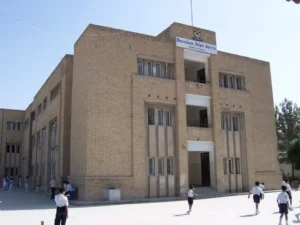
In the heart of Balochistan, one of Pakistan’s most underserved regions, Beaconhouse Juniper Campus stood determined to rewrite the narrative of STEM education. Its vehicle was Science Gaari a mobile, student-driven science lab. With no microscope or chemistry set seen by many rural students ever, this initiative broke new ground.
Science Gaari is more than a lab on wheels; it’s a symbol of empowerment. Students at Juniper Campus were not passive recipients they became authors of change. Trained by teachers, they crafted experiments, taught peers, and journeyed to over 150 rural schools. The results? A 35% leap in science engagement, a 20% rise in test scores, and a renewed interest in STEM careers for students and teachers alike.
This ripple effect goes beyond the classroom. Students now see themselves as capable, teachers feel revitalized, and communities believe in possibilities. The inextricable link between local relevance and global aspiration makes Juniper Campus a canvas of innovation for Pakistan and beyond.
Nordic International School Lahore
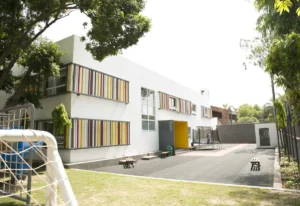
At Nordic International School, education transcends textbooks. Yes, students learn math and science but they also learn kindness, empathy, and emotional literacy. Here, parents aren’t backseat drivers; they’re co-designers of education. Imagine UTC (Unstructured Time for Collaboration) sessions where parents and teachers redesign learning experiences together.
That’s the reality at Nordic, where emotional well-being is the cornerstone of excellence. Every classroom is built on mutual respect, where celebrating small victories an act of kindness, a moment of collaboration is as common as traditional grading.
The ripple effects are profound. Students ask questions like “How do you feel?” as easily as “What’s the answer?” Projects with international partners foster global mindsets, while local service projects reinforce community responsibility. In essence, Nordic isn’t just preparing students for tests it’s preparing them for life.
What Unites These Schools
Though their methods vary mobile labs, IB programs, parent-architected learning these standouts share DNA: they challenge the one-size-fits-all model. They’re purpose-driven, inclusive, and wouldn’t exist unless by choice. They value relationships as much as results. And they see education as a bridge not just to university, but to agency, empathy, and positive change.
Curriculum Trends in 2025
Beyond these examples, the top school in Pakistan 2025 embraces learning that’s integrated and interdisciplinary. History lessons are linked to climate solutions; art is infused with technology; languages connect to empathy and human rights. Teachers adopt project-based modules: for example, designing a local recycling campaign while learning mathematics, civics, and communication all in one go.
This isn’t experimental. It’s intentional: it fosters flexible, adaptable, and creative problem-solvers exactly the capabilities required in a fast-changing world.
Technology: A Classroom Partner
In top schools in Pakistan, technology isn’t a gimmick it’s a game changer. Think virtual labs in physics, robotics clubs, data analytics in sociology even mindfulness apps in ethics classes. These tools bring global experts to remote villages and help teachers draw real-time insights about how students learn. In a world where AI is reshaping industries daily, these schools ensure students aren’t just users they’re creators.
Community & Social Upliftment
Every leading school channels its energies beyond campus walls. Be it sewing skill workshops for mothers, free parent training sessions, or weekend science fairs for neighborhood children schools are community hubs. They’re reclaiming spaces, rebuilding confidence, fostering dialogue between communities of different faiths and backgrounds, and promoting mutual understanding.
At Sanjan Nagar top schools in Pakistan, festivals from Eid to Christmas to Diwali are celebrated side-by-side. At Beaconhouse Juniper, rural students meet peers they’d never otherwise encounter. At Nordic, parents discuss emotional health as openly as academic progress. Education is the glue that’s binding communities and healing divisions.
Looking Ahead: Pakistan’s Educational Future
As 2030 approaches, we’ll see more hybrid models part digital, part in-class, part experience-based. We’ll see schools partnering with startups, NGOs, universities, and governments. We’ll see credentialing move beyond grades to portfolios, social impact, and evidence of global competence. And we’ll see Pakistan’s students not just prepared for the world but ready to help improve it.
Choosing the Top Schools in Pakistan 2025 for Your Child
Forget glossy brochures. Here’s what matters: visit during the day, and watch interactions are teachers curious? Are parents engaged? Do students look supported and listened to? Don’t just ask about test scores ask how the school handles failure, how they build empathy, how they partner with families. Look for schools that see difference not as deficit, but as opportunity. Ultimately, the top school isn’t simply “best” it’s the one that aligns best with your child’s personality and your family’s vision.
A Few More Worthy Mentions
Pakistan’s schools are rising as a wave, not just isolated peaks. Institutions like Roots International, Bay View High School, Froebel’s, The Lyceum, and International Grammar School are also advancing inclusive, modern education models. They offer tracks from Cambridge and IB to national STEM innovations—all while championing holistic growth.
Public-Private Partnerships & Policy
The government has started initiatives for continuous teacher training, curriculum modernisation, and school accountability. Some public–private blend models are emerging: low-cost private schools supported by NGOs or government grants, IB pilot programs in state schools, and community-teacher collectives. The synergy between policy innovation and grassroots experimentation is where true transformation happens.
Scholarships & Pathways
From Sanjan Nagar’s creative philanthropy to British Council tie-ups and USAID grants, access to opportunities is expanding. Scholarships aren’t just financial; they’re holistic covering mentorship, global exposure, and academic support. That means real change not just elite advantage.
Global Recognition & Pakistan’s Place in the World
What started as local efforts has rippled into international acclaim. top schools in Pakistan 2025 now feature in the World’s Best School Prizes, compete globally in robotics, debate, science fairs, and art. Our students once unseen are demonstrating they belong on global platforms. And the message is loud and clear: the best education isn’t about geography it’s about imagination, heart, and courage.
Conclusion
The top schools in Pakistan 2025 isn’t a mythical ideal it’s visible, vibrant, and evolving all around us. From the biology labs on wheels in Quetta, to interfaith harmony in Lahore classrooms, to kindness-centered learning in parent-powered schools, Pakistan is redefining what excellence means. And it’s doing so in a way that’s inclusive, innovative, and real.
If you’re seeking the best for your child, look beyond titles look for transformation. That’s where potential blooms, dreams take flight, and tomorrow’s leaders begin their journeys.
FAQs
1. What makes a school the top schools in Pakistan 2025?
A combination of global vision, local empathy, inclusive policies, curriculum innovation, community integration, and measurable impact.
2. How can I know if my child will thrive in a top schools in Pakistan 2025?
Spend time onsite during classes, meetings, and casual events. Observe how diverse learning styles are supported, how teachers respond to questions, and how students connect with each other.
3. Are top schools in Pakistan 2025 accessible to students from low-income families?
Yes many offer scholarships, sliding fee scales, partnerships with NGOs, and community outreach programs to ensure affordability and access.
4. Do these schools prepare students for global opportunities?
Absolutely. With IB, STEM innovations, and international collaborations, students are ready for university, careers, and impact—both in Pakistan and abroad.
5. What role do parents play in a top schools in Pakistan 2025?
Think partnership over spectatorship. From co-designing learning experiences to volunteering and collaborating on community projects, parents are an essential part of the educational journey.