

On June 21, 2025, the world stood still as news broke of a bold and unprecedented move the US attack on Iran, specifically targeting nuclear facilities. The event, executed under the command of U.S. President Donald Trump, immediately sent shockwaves across global diplomatic channels. It was more than a military strike; it was a statement, a trigger point, and perhaps a turning point in the already fragile balance of the Middle East.
As patrons of Chapel Street Cafe watched the President address the nation, millions tuned in worldwide to witness what would unfold next. This article dives deep into the context, consequences, and international response to the U.S. strike on Iran.
The Strategic Targets: Iran’s Nuclear Infrastructure
What Was Hit and Why
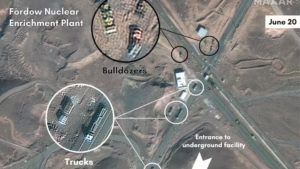
The U.S. strikes on Iran were laser-focused on three known nuclear sites in Natanz, Fordow, and Arak. These facilities, allegedly developing uranium enrichment capabilities, have long been under international scrutiny. The U.S. intelligence community justified the strikes by citing imminent nuclear breakout timelines.
The United States’ Justification
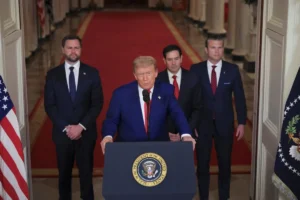
President Trump declared, “We cannot allow the world’s most dangerous regime to possess the world’s most dangerous weapons. This is a message of peace through strength.”
The Pentagon confirmed precision-guided munitions were used to minimize civilian casualties. Nevertheless, Iran claimed civilian infrastructure near Natanz suffered significant damage.
Iran’s Immediate Response: Fury and Defiance
Official Statements and Military Readiness
Iranian Foreign Minister Abbas Araghchi condemned the U.S. attack on Iran as a “grave violation of the UN Charter” and warned of “everlasting

consequences.” Iran immediately placed its military on high alert, deployed air defense systems, and promised retaliation.
In a televised address, Supreme Leader Ali Khamenei said, “We will not kneel. We will not forget. Iran reserves the right to defend its sovereignty.”
Global Reactions: Applause, Alarm, and Appeals
Israel: Loud Support
Israeli Prime Minister Benjamin Netanyahu praised Trump’s decision:
“Congratulations, President Trump. Your bold decision… will change history.”
European Union: Call for Diplomacy
European Commission President Ursula von der Leyen urged restraint:
“Now is the moment for Iran to engage in a credible diplomatic solution. The negotiating table is the only place to end this crisis.”
United Nations: Condemnation and Caution
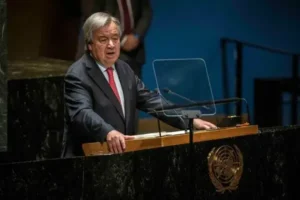
UN Secretary-General Antonio Guterres said:
“This is a dangerous escalation… a direct threat to international peace and security.”
Russia: Harsh Criticism
Dmitry Medvedev, Russia’s Deputy Security Council Chair, mocked Trump:
“Trump, who came in as a peacemaker, has started a new war for the U.S.”
France: Advocacy for a Negotiated Resolution
French Foreign Minister Jean-Noël Barrot stated:
“France is convinced that a lasting resolution… requires a negotiated solution.”
Middle Eastern Neighbors: Anxiety and Appeals
UAE and Qatar
Both countries expressed grave concern about the US attack on Iran. UAE’s Foreign Ministry urged the UN to step up efforts to prevent regional collapse. Qatar warned of “catastrophic repercussions.”
IAF Ready to Evacuate Indians from Iran Amid Rising Tensions
Turkey and Saudi Arabia
Turkey condemned the strikes as unlawful. Saudi Arabia remained officially neutral but urged for de-escalation and regional stability.
Asia-Pacific Reactions: Focus on Stability
Japan
Prime Minister Shigeru Ishiba urged quick de-escalation:
“We are closely monitoring the situation with grave concern.”
Australia and New Zealand
Australia labeled Iran’s nuclear program a global threat but called for peace. New Zealand emphasized diplomacy:
“Diplomacy will deliver a more enduring resolution than military action.”
Latin America: Anti-Imperialist Tone
Mexico, Venezuela, Cuba
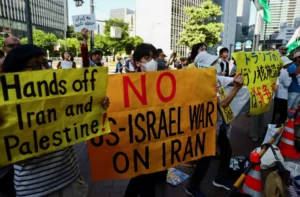
These nations denounced the US attack on Iran as imperialist aggression. Cuban President Miguel Díaz-Canel wrote:
“We strongly condemn the US bombing… a dangerous escalation.”
Domestic Response in the U.S.: Divided Opinions
While some Americans rallied behind the President, anti-war protests erupted across college campuses and major cities. Critics accused Trump of election-year militarism.
Geopolitical Implications: Beyond Bombs and Borders
Impact on Global Oil Markets
Oil prices surged by 17% within 24 hours of the attack. Investors feared Iranian retaliation in the Strait of Hormuz, a crucial oil shipping route.
Cybersecurity Threats
Cybersecurity firms warned of increased Iranian cyberattacks on Western infrastructure. Government agencies raised alert levels.
Diplomatic Fallout: The Future of JCPOA
The Joint Comprehensive Plan of Action (JCPOA), already fragile, now lies in ruins. Iran formally exited the agreement post-strikes. The EU is scrambling to salvage diplomatic dialogue.
The Role of the Media: Information Warfare
Western and Iranian media both pushed narratives aligned with national interests. Social media erupted with hashtags like #WWIII and #IranUnderAttack.
Public Sentiment: Polarized but Passionate
International polls showed that while many support countering nuclear threats, a majority opposes unilateral military action. Humanitarian organizations warned of a refugee crisis if conflict escalates.
Conclusion: A Precipice of Global Consequences
The US attack on Iran has ignited a firestorm across the globe, not just on nuclear grounds but also in the hearts and minds of millions watching. From proud declarations to painful condemnations, the political, ethical, and humanitarian waves triggered by this event are bound to shape our geopolitical future for decades.
It’s not just about rockets and reactors; it’s about human lives, international law, and the volatile dance between peace and power.
The world now stands at a fork in the road: choose diplomacy or dive deeper into destruction.
FAQs
1. What triggered the US attack on Iran and its nuclear sites?
The US attack on Iran was reportedly initiated in response to intelligence suggesting imminent nuclear weapon capabilities. President Trump declared it was a “preventive strike to protect global peace.”
2. How did Iran respond to the United States’ military aggression?
Iranian officials called it a “criminal violation” of international law. Abbas Araghchi condemned the US attack on Iran as outrageous and warned of “everlasting consequences.”
3. What has been the global reaction to the US-Iran conflict?
World leaders had mixed reactions. Israel praised the bold move, while Russia, the UN, and many others condemned the US attack on Iran. Most urged de-escalation and a return to diplomacy.
4. What are the potential consequences of the ongoing US-Iran tensions?
The US attack on Iran could lead to a wider regional war, economic instability, and even international fallout if allies are pulled into the conflict.
5. Is there still hope for peace after the US attack on Iran?
Despite the damage and tension, many nations, including France, New Zealand, and Qatar, continue to push for peace talks, believing that diplomacy is the only path forward after the US attack on Iran.