


Karachi, Pakistan’s largest metropolis, is often described through the lens of its fast-paced lifestyle and urban expansion. However, beyond the traffic and towering buildings lies a remarkable collection of historical sites in Karachi that reflect centuries of architectural, political, and cultural evolution. From colonial monuments to religious landmarks and heritage residences, these sites collectively narrate the story of a city shaped by diverse communities and historical transitions.
Below is a carefully curated list of 10 major historical sites in Karachi, each explained in detail to highlight its architectural, cultural, and historical significance.
1. TDF Ghar – A Preserved Colonial Residence
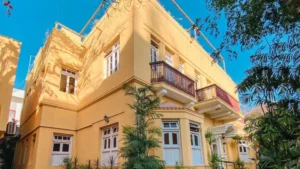
One of the most charming historical sites in Karachi is TDF Ghar, located near M. A. Jinnah Road. This restored colonial-era home has been preserved to maintain its original wooden architecture, antique furnishings, and early 20th-century aesthetic. Managed by The Dawood Foundation, TDF Ghar now serves as a cultural hub where heritage walks, literary sessions, exhibitions, and educational activities are held.
Its rooftop offers a direct view of Mazar-e-Quaid, making it not only historically significant but also visually iconic. TDF Ghar represents Karachi’s residential colonial heritage and demonstrates how private spaces can be transformed into public cultural landmarks.
Karachi Mayor Announces Plan to Complete All Ongoing Development Projects in 100 Days
Punjab Announces Major Fire Safety Overhaul with 1,100 New Hydrants After Karachi Tragedy
2. Tooba Masjid – The Architectural Icon of DHA
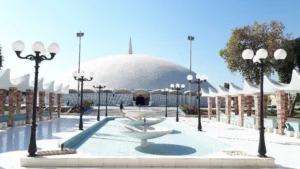
Located in DHA Phase 2, Tooba Masjid, also known as Gol Masjid, stands out among historical sites in Karachi due to its massive white marble dome. Built in 1969, the mosque reflects a modern Islamic architectural style. The structure is notable for its acoustics, which allow sermons to be heard clearly without electronic amplification.
The mosque remains an active place of worship and an architectural landmark. Its minimalist yet grand design symbolizes Karachi’s evolving religious architecture during the late 20th century.
3. Chaukhandi Tombs – An Ancient Necropolis
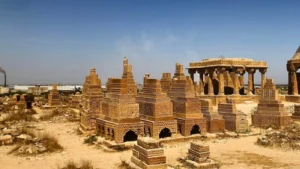
Among the oldest historical sites in Karachi are the Chaukhandi Tombs, located along the National Highway near Landhi. This ancient graveyard dates back to the Mughal period and is famous for its intricately carved sandstone tombs.
Believed to belong to the Jokhio and Baloch tribes, the graves feature geometric patterns and symbolic carvings that reflect Sindh’s tribal artistry. Despite environmental damage and limited conservation, the site remains a significant archaeological and historical attraction.
4. Merewether Clock Tower – Colonial-Era Landmark
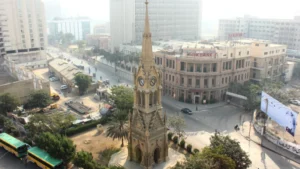
Standing at the intersection of M. A. Jinnah Road and I. I. Chundrigar Road, the Merewether Clock Tower is one of the most recognizable colonial historical sites in Karachi. Built in 1892 in memory of Sir William Merewether, the structure features Gothic Revival architecture and is constructed from Gizri sandstone.
Once marking the entrance to colonial Karachi, the clock tower remains operational today. Although surrounded by commercial activity and heavy traffic, it continues to symbolize the city’s British-era past.
5. St. Patrick’s Cathedral – A Gothic Revival Church
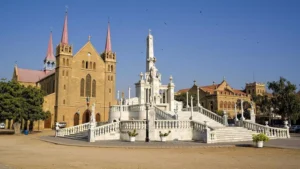
Completed in 1881 and located in Saddar, St. Patrick’s Cathedral is among the oldest Christian historical sites in Karachi. Designed in Gothic Revival style, the cathedral features pointed arches, stained-glass windows, and a peaceful courtyard.
It remains the seat of the Catholic Archdiocese of Karachi and hosts regular religious services, weddings, and community events. The cathedral stands as a testament to Karachi’s religious diversity and colonial architectural heritage.
6. Wazir Mansion – Birthplace of Quaid-e-Azam
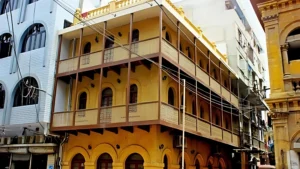
Wazir Mansion, situated in the Kharadar area, is one of the most politically significant historical sites in Karachi. It is the birthplace of Quaid-e-Azam Muhammad Ali Jinnah, the founder of Pakistan.
Now preserved as a museum, the building displays photographs, documents, and memorabilia related to Jinnah’s life. The mansion offers visitors insight into early 20th-century Karachi and Pakistan’s independence movement.
7. Khaliq Deena Hall – A Historic Public Gathering Space
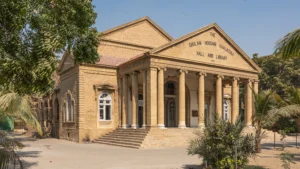
Located on M. A. Jinnah Road, Khaliq Deena Hall is another colonial-era building that has played a major role in Karachi’s civic and political life. Built in the early 1900s, the hall has hosted political meetings, literary gatherings, and public events.
Its architecture reflects the Indo-Gothic style common during British rule. Restoration efforts have aimed to preserve its façade and structural integrity, maintaining its importance among historical sites in Karachi.
8. Frere Hall – A Cultural and Literary Landmark
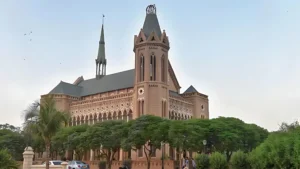
Built in 1865, Frere Hall is one of the most elegant colonial historical sites in Karachi. Located on Abdullah Haroon Road, it was originally constructed as a town hall during British rule.
Today, it houses a library and art gallery and serves as a venue for exhibitions and public events. The surrounding gardens make it a popular recreational space, blending historical significance with community engagement.
9. Quaid-e-Azam House (Flagstaff House)
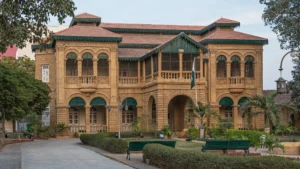
Also known as Flagstaff House, Quaid-e-Azam House is located on Fatima Jinnah Road. This building served as the residence of Muhammad Ali Jinnah after independence.
Now converted into a museum, the house preserves personal belongings, furniture, and documents associated with Pakistan’s founding leader. Its colonial architecture and historical importance make it a major attraction among heritage enthusiasts.
10. Mazar-e-Quaid – The National Mausoleum
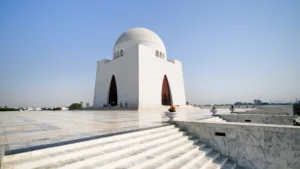
No list of historical sites in Karachi would be complete without Mazar-e-Quaid, the mausoleum of Muhammad Ali Jinnah. Located on Muhammad Ali Jinnah Road, the monument is an iconic white marble structure that dominates the city’s skyline.
The mausoleum is not only a national symbol but also an architectural masterpiece combining modernist and Islamic design elements. It attracts thousands of visitors annually, including students, tourists, and foreign dignitaries.
Why Historical Sites in Karachi Matter
Karachi is home to more than 350 protected heritage sites under the Sindh Cultural Heritage Act. These landmarks represent different periods — from Mughal-era burial grounds to British colonial structures and post-independence monuments.
Preserving historical sites in Karachi is essential for:
- Protecting cultural identity
- Promoting tourism
- Educating future generations
- Encouraging architectural conservation
Despite challenges such as urban expansion and environmental damage, restoration efforts continue to safeguard these irreplaceable landmarks.
Conclusion
The historical sites in Karachi reflect the city’s layered identity — tribal, colonial, religious, and national. From ancient tombs and colonial halls to mosques and cathedrals, these ten landmarks collectively showcase Karachi’s rich heritage.
Exploring these historical sites in Karachi allows residents and visitors alike to reconnect with the city’s past and appreciate the architectural and cultural foundations upon which modern Karachi stands today.