
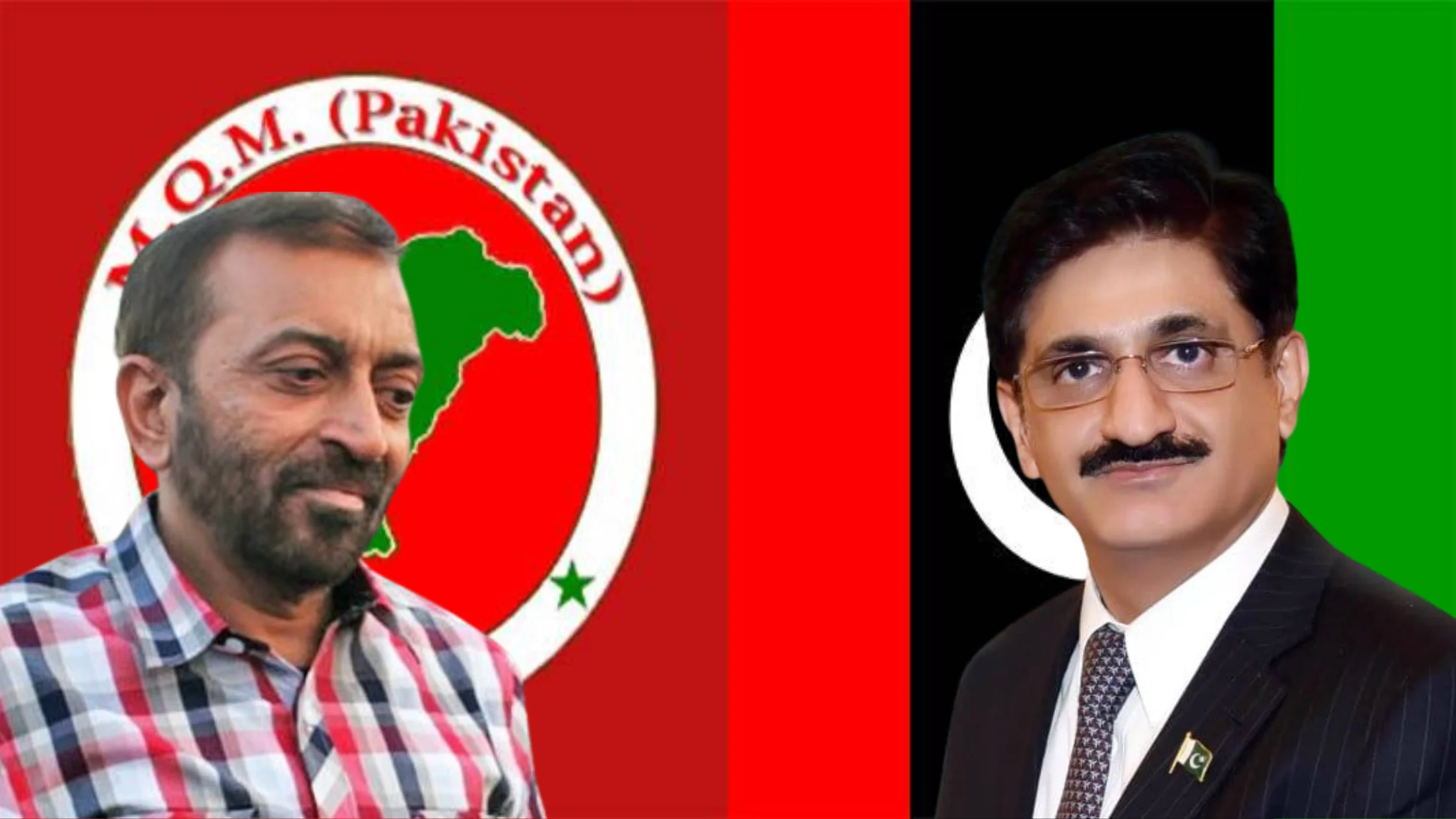
In a significant political development, sources have claimed that the Pakistan Peoples Party (PPP) is ready to move toward reconciliation with MQM-Pakistan. The reported development comes amid ongoing political tensions in Karachi and is being viewed as a potential step toward improving political stability in Sindh’s capital.
According to media reports, senior leadership within the PPP has shown willingness to ease tensions and reopen dialogue channels with MQM-Pakistan in the interest of Karachi’s development.
Instructions for Softer Political Tone
Sources indicate that PPP leadership has directed its party members to adopt a more lenient tone in their public statements regarding MQM-P. The decision reportedly includes filing what is being described as a “one-sided ceasefire,” meaning that the PPP will avoid escalating rhetoric even if criticism continues from the other side.
The strategy suggests that if MQM-P chooses to remain silent or avoids confrontation, the PPP will also refrain from responding to political criticism. This move is being interpreted as a calculated attempt to de-escalate tensions between the two major political stakeholders in Karachi.
Karachi’s Development at the Center
According to insiders, the primary motivation behind the reconciliation effort is the development of Karachi. Sources claim that continuous political clashes between PPP and MQM-P have negatively impacted governance and slowed progress in the city.
Both parties hold significant influence in Sindh and urban Karachi, and prolonged disputes have reportedly created administrative and political hurdles. By reducing confrontation, the PPP aims to foster cooperation that could benefit infrastructure projects, municipal governance, and public services in the metropolis.
Top 5 Universities in Karachi: Leading Institutions for Higher Education
Recent Controversies and Political Strains
The reported reconciliation effort follows recent tensions, including statements made by MQM-P regarding the Sania Gul Plaza incident, which sources describe as a major political setback for the Sindh government led by PPP.
Additionally, PPP sources have claimed that certain political forces are attempting to use MQM-P for their own interests. According to these claims, a third political party is allegedly fueling tensions between PPP and MQM-P for strategic gain.
PPP leadership has reportedly conveyed a message that MQM-P should not allow itself to be used by any other political entity to create instability in Sindh or Karachi.
Message to a Third Political Party
Sources further allege that PPP has also sent a message to a “third political party,” warning against interference in the evolving political dynamics between PPP and MQM-P. While no specific party has been named, the claim suggests broader political maneuvering behind the scenes.
The reported outreach appears to be part of a larger strategy to stabilize alliances and minimize political fragmentation in Karachi.
Political Implications
If confirmed, reconciliation between PPP and MQM-P could significantly reshape Karachi’s political landscape. Historically, relations between the two parties have fluctuated between cooperation and rivalry. Any renewed understanding could:
- Reduce political tensions in Sindh
- Improve coordination in urban governance
- Strengthen legislative cooperation
- Influence upcoming electoral strategies
However, as of now, the development remains based on sources’ claims, and no official joint statement has been issued by either party.
Conclusion
The reported willingness of PPP to pursue reconciliation with MQM-P marks a potentially important shift in Karachi’s political environment. With the city facing numerous administrative and infrastructure challenges, political cooperation could play a key role in accelerating development efforts.
Observers are now watching closely to see whether these behind-the-scenes efforts translate into formal negotiations and public agreements between the two parties in the coming days.