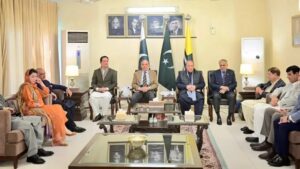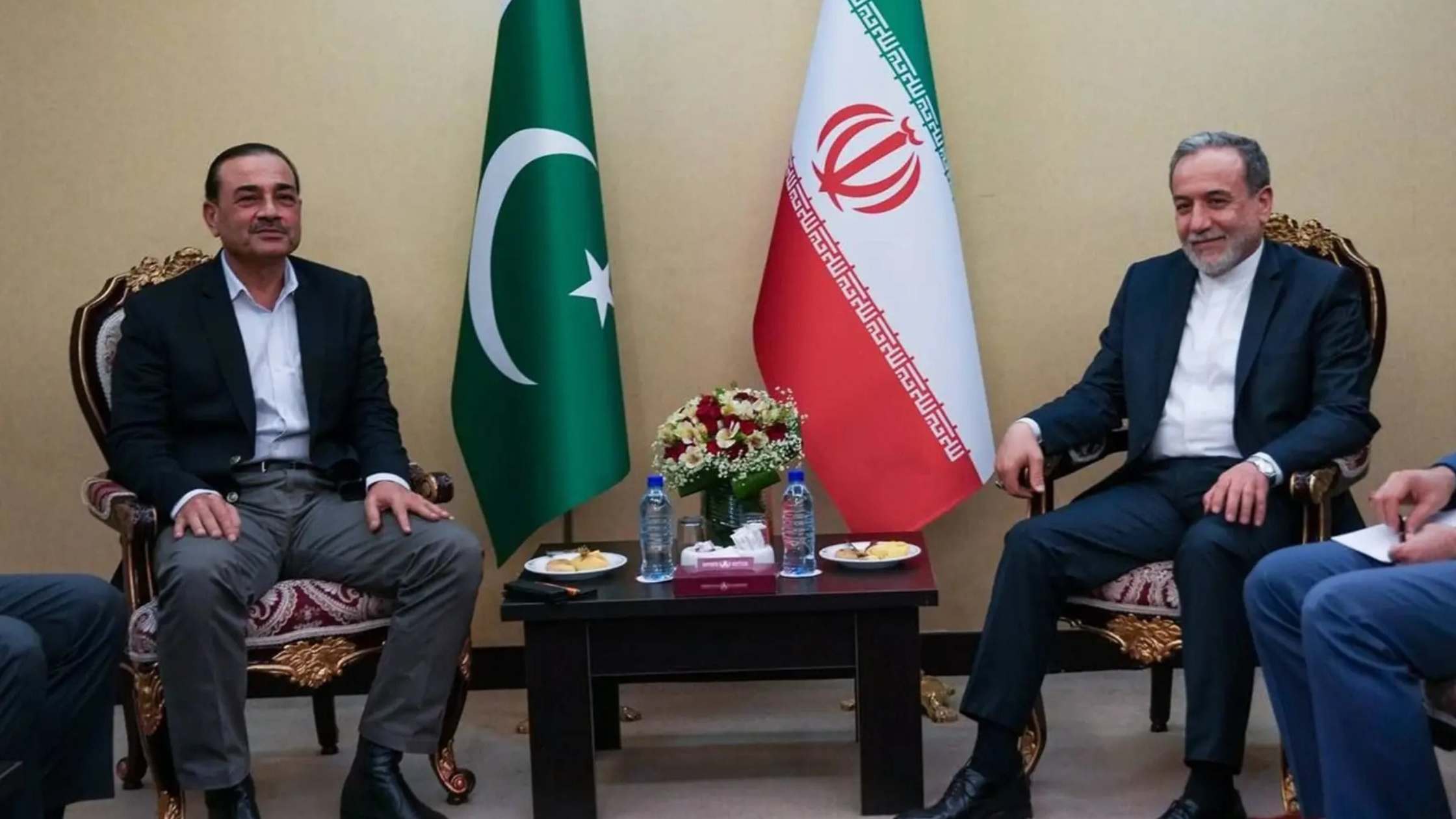
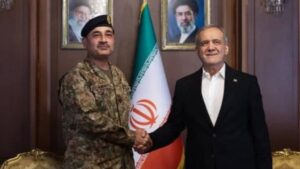
Pakistan’s Field Marshal Asim Munir has visited Tehran for high-level meetings with Iranian President Masoud Pezeshkian, Parliament Speaker Mohammad Bagher Ghalibaf, and other senior officials. According to Iranian media reports, the discussions focused on regional tensions, Pakistan-Iran border issues, and efforts to reduce the risk of further conflict between the United States and Iran.
The visit comes at a sensitive time for the region, as diplomatic negotiations between Washington and Tehran have yet to produce a final agreement. Pakistan is continuing its efforts to facilitate dialogue between the two countries, while tensions over Iran’s nuclear programme, economic sanctions, and regional security remain unresolved.
Interior Minister Mohsin Naqvi accompanied Field Marshal Munir during the visit. Iranian state and semi-official media outlets provided extensive coverage, although the article reports that Pakistan’s military and Ministry of Information had not issued an official statement about the visit at the time of publication.
What Happened During Asim Munir’s Visit to Iran?
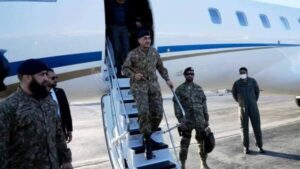
According to Iranian news agencies, Field Marshal Munir met President Masoud Pezeshkian shortly after arriving in Tehran. The Iranian president reportedly stressed that meaningful negotiations with the United States would require Washington to end pressure, threats, and sanctions.
Pezeshkian also expressed concern about Iran’s lack of trust in the United States, arguing that negotiations would be difficult if Tehran believed it could face another military attack.
Field Marshal Munir subsequently met Iranian Parliament Speaker Mohammad Bagher Ghalibaf. Iranian media reported that Ghalibaf referred to seven conditions presented by Iran to the United States and said Washington would need to address Tehran’s concerns before rebuilding trust. He also stated that Iran did not seek war but was prepared to defend its sovereignty and national dignity.
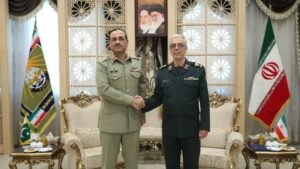
The Pakistani delegation also met Mohsen Rezaei, who was identified in Iranian media coverage as a senior national security figure. According to reports, the discussions included Iran’s nuclear position and the situation along the Pakistan-Iran border.
These meetings indicate that Pakistan is maintaining direct communication with Iran’s political and security leadership as regional diplomatic efforts continue.
Ishaq Dar Meets Iranian Foreign Minister Abbas Araghchi in New York
Pakistan-Iran Border Closure Becomes a Key Issue
The status of the Pakistan-Iran border was another important issue surrounding the visit. Major border crossings had reportedly remained closed for five days, disrupting trade and leaving hundreds of cargo containers stranded on both sides.
The closures affected commercial activity through Balochistan and created difficulties for traders and transport operators who depend on cross-border routes.
Iranian media reported that the border crossings would reopen following discussions involving Field Marshal Munir. However, the report also noted that Pakistani officials had not issued an official notification confirming the reopening and that local authorities continued to report the crossings as closed at the time.
This distinction is important: reports of an agreement to reopen the border should not be treated as confirmation that normal trade has resumed. An official announcement from the relevant Pakistani authorities would be needed to establish the current status.
A resolution would matter for both countries because cross-border trade supports local businesses, transport networks, and the movement of essential goods. Continued closures could increase costs and deepen economic pressure on communities that rely on bilateral commerce.
Why Is Pakistan Mediating Between the US and Iran?

Pakistan has been attempting to facilitate communication between Washington and Tehran amid continuing regional tensions. Previous visits by Field Marshal Munir to Iran, including trips reported in April, May, and August, were also linked to diplomatic efforts.
The latest visit represents a continuation of that process rather than proof that a final agreement is close.
Pakistan has reasons to support de-escalation. A wider conflict could disrupt regional trade, threaten energy supplies, increase oil prices, and create additional security challenges for neighbouring countries. Pakistan is particularly exposed to changes in global energy prices because higher oil costs can increase its import bill and put pressure on the economy.
Foreign Minister Ishaq Dar has also stated that Pakistan will continue its mediation efforts between the United States and Iran.
The diplomatic challenge is significant because both sides have serious disagreements over Iran’s nuclear programme, sanctions, military threats, and the conditions required for negotiations. Pakistan can provide a channel for dialogue, but any final agreement would depend on decisions made by Washington and Tehran.
Iran’s Nuclear Programme Remains a Major Obstacle
Iran’s nuclear programme remains one of the central obstacles to an agreement with the United States. During the reported meetings, Iranian officials maintained a firm position on their national interests and nuclear-related demands.
Iranian media quoted Mohsen Rezaei as saying that not a single particle of enriched uranium would leave Iran. The statement highlights Tehran’s resistance to proposals it considers unacceptable and illustrates the challenges facing diplomatic negotiators.
The United States and Iran must bridge substantial differences before a comprehensive agreement can be reached. These include the future of Iran’s nuclear activities, sanctions relief, security guarantees, and the possibility of renewed military action.
Pakistan’s diplomatic role may help keep communication open, but the reported meetings do not establish that either side has changed its position.
Could the Visit Lead to a New US-Iran Agreement?
Experts cited in the report believe that diplomatic engagement is continuing, but they caution against expecting an immediate breakthrough.
International relations expert Dr. Muqtedar Khan suggested that US domestic political considerations and the possibility of reopening the Strait of Hormuz could influence Washington’s approach. He also noted that Iran would be reluctant to make concessions that could provide political advantages to the US administration.
Dr. Farooq Hasnat, a Middle East affairs expert, similarly argued that diplomatic efforts have not ended, although a major breakthrough may not be imminent. He highlighted the importance of reducing regional tensions and stabilising energy markets.
Other analysts have warned that increased diplomatic activity does not necessarily mean the underlying disagreements are narrowing. Continued communication may reflect a shared desire to avoid another costly military confrontation rather than an immediate willingness to compromise.
For this reason, the visit is best understood as part of an ongoing diplomatic process. Its significance will depend on whether the discussions lead to concrete steps, such as renewed negotiations, progress on border issues, or measures to reduce military tensions.
Why the Strait of Hormuz Matters to Pakistan
The Strait of Hormuz is one of the world’s most important energy shipping routes. Any prolonged disruption could affect international oil supplies and push energy prices higher.
For Pakistan, higher oil prices can increase fuel costs, transportation expenses, electricity generation costs, and inflationary pressure. A reopening or stabilisation of the route could help ease some of these pressures, although the actual effect would depend on global market conditions.
Pakistan’s efforts to encourage dialogue between Washington and Tehran therefore have economic as well as diplomatic importance. Preventing further escalation could reduce the risk of supply disruptions and help protect regional trade.
However, the Strait of Hormuz is only one part of the wider crisis. A lasting reduction in tensions would also require progress on the nuclear dispute, sanctions, and broader security concerns.
What the Iran Visit Means for Pakistan
Field Marshal Asim Munir’s visit highlights Pakistan’s attempt to maintain relations with Iran while facilitating communication between Tehran and Washington. Pakistan must balance its regional relationships, border security concerns, economic interests, and wider diplomatic commitments.
The situation is also complicated by other regional security arrangements and ongoing conflicts. Any escalation could affect Pakistan’s ties with neighbouring countries and increase pressure on its foreign policy.
At the same time, Pakistan has a direct interest in reopening border crossings, restoring trade, and preventing instability from spreading across the region. These practical concerns make continued engagement with Iran important regardless of whether US-Iran negotiations achieve an immediate breakthrough.
Conclusion
Asim Munir’s Iran visit comes at a critical moment for regional diplomacy. His reported meetings with Iran’s president, parliament speaker, and senior security figures covered issues ranging from bilateral border tensions to the broader confrontation between the United States and Iran.
The reported discussions suggest that diplomatic channels remain active, but there is no confirmed evidence in the supplied report of a final US-Iran agreement or a verified reopening of all Pakistan-Iran border crossings.
For Pakistan, the priorities are clear: support de-escalation, protect cross-border trade, reduce the risks of energy disruption, and maintain communication with key regional partners. Whether the visit produces meaningful progress will depend on the concrete decisions taken by the parties in the days ahead.