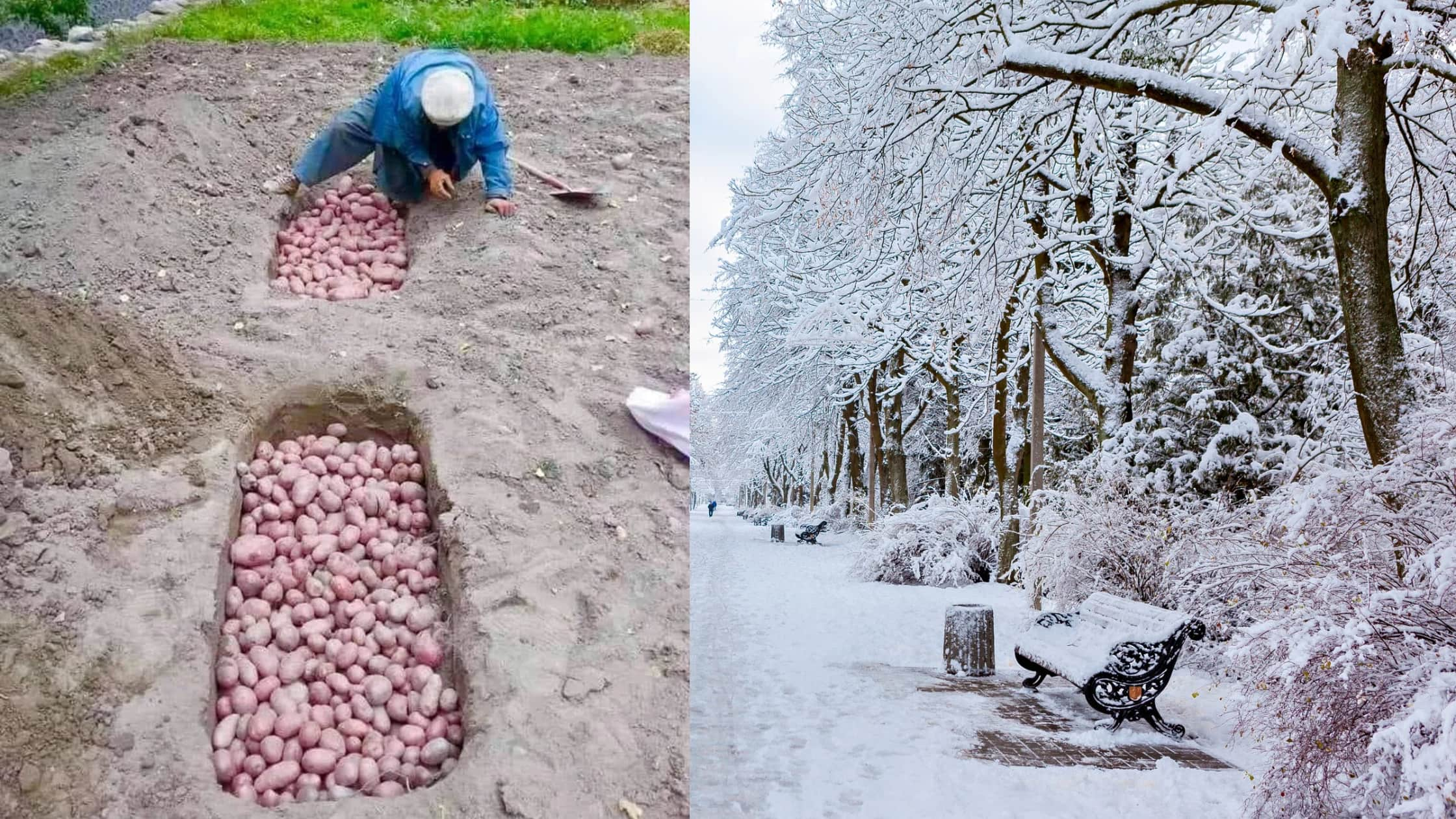
This traditional preservation method plays an important role in communities where winter weather can isolate villages for weeks or even months. Heavy snowfall often blocks roads, disrupts transportation and makes it difficult to bring fresh vegetables and other essential supplies from nearby cities.
By storing their harvest underground, local farmers can protect vegetables from extreme winter conditions and reduce the risk of food shortages. According to local accounts, potatoes and other stored vegetables can remain usable for up to three months through this method.
The practice reflects the resourcefulness and agricultural knowledge passed down through generations in the region. In areas where modern storage facilities may not always be available, traditional methods continue to support rural households and help communities prepare for challenging winters.
Burying potatoes is more than an old farming technique; it is a practical example of how people in Gilgit-Baltistan and Kashmir have adapted to their environment and developed ways to preserve food using locally available resources.