

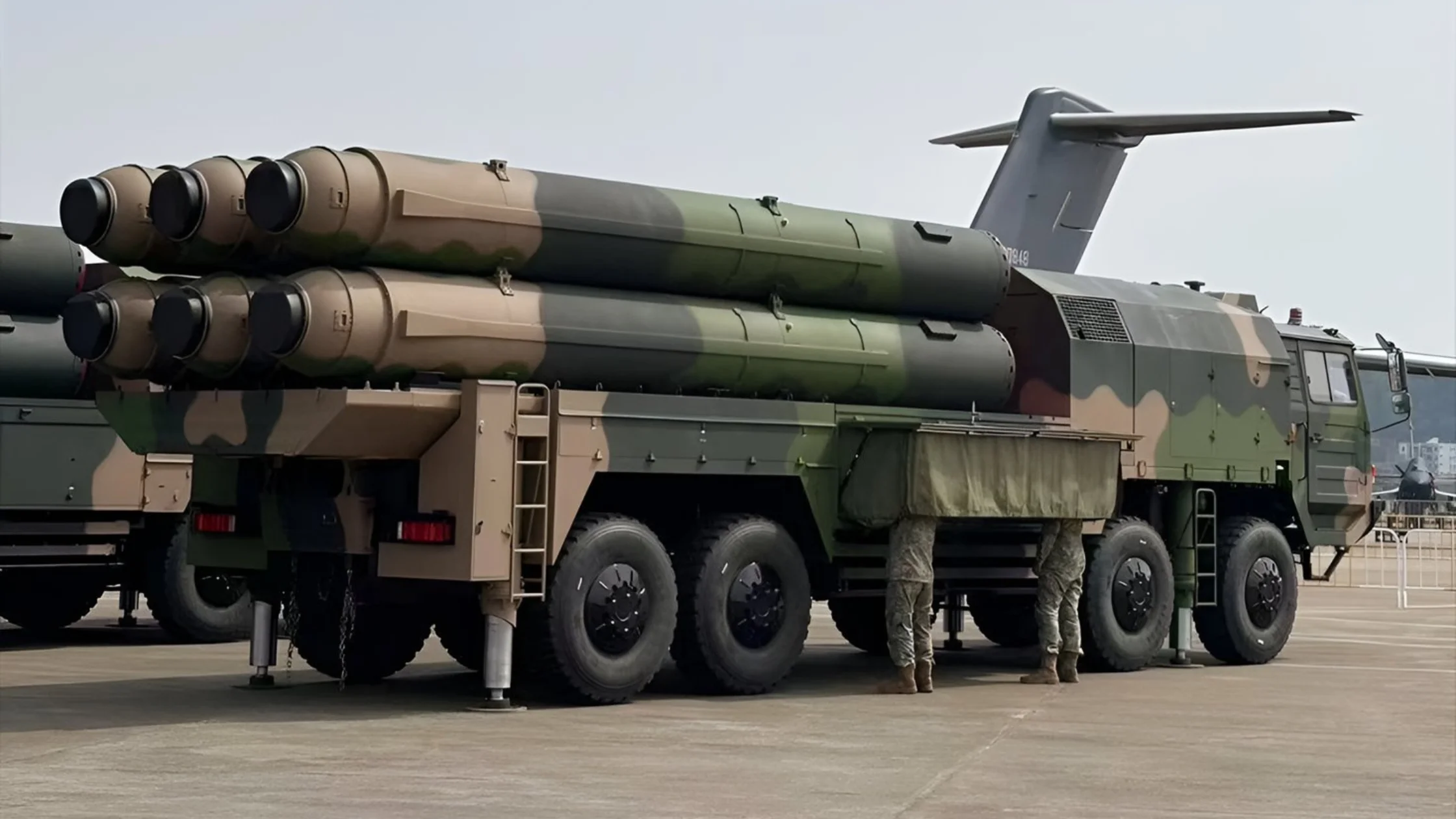
Reports suggesting that Pakistan may acquire advanced Chinese defence systems, including the HQ-19, J-35A, and KJ-500, are drawing significant attention from defence analysts across the region. The reported deal, estimated at around $12 billion, could represent one of the most important military developments in South Asia in recent years.
The HQ-19 system is believed to provide high-altitude missile interception capabilities, potentially allowing Pakistan to improve its defence against ballistic missiles, hypersonic glide vehicles, and long-range precision strikes. Combined with stealth fighter technology and advanced airborne surveillance systems, the acquisition could significantly strengthen Pakistan’s overall air defence and early warning network.
Military experts suggest that integrating these systems may help Pakistan develop a more advanced “kill chain” architecture — a coordinated network that links detection, tracking, communication, and interception capabilities in real time. With Chinese technological support, such a system could improve battlefield awareness and response speed across multiple domains.
The reported move is also being viewed through a broader regional lens. Analysts believe it could influence India’s military planning and escalation calculations, particularly regarding missile defence and strategic deterrence. At the same time, the deployment of advanced Chinese-origin systems may extend Beijing’s technological and sensor presence closer to the Indian Ocean region, increasing China’s strategic influence in South Asian security affairs.
Observers note that the development highlights the growing military and strategic partnership between Pakistan and China. If finalized and operationalized, the systems could reshape regional defence balances and redefine deterrence dynamics between nuclear-armed neighbors.
While official confirmations remain limited, the reported acquisition has already intensified debate among defence experts about the future of regional stability, strategic competition, and the evolving nature of modern warfare in South Asia.