
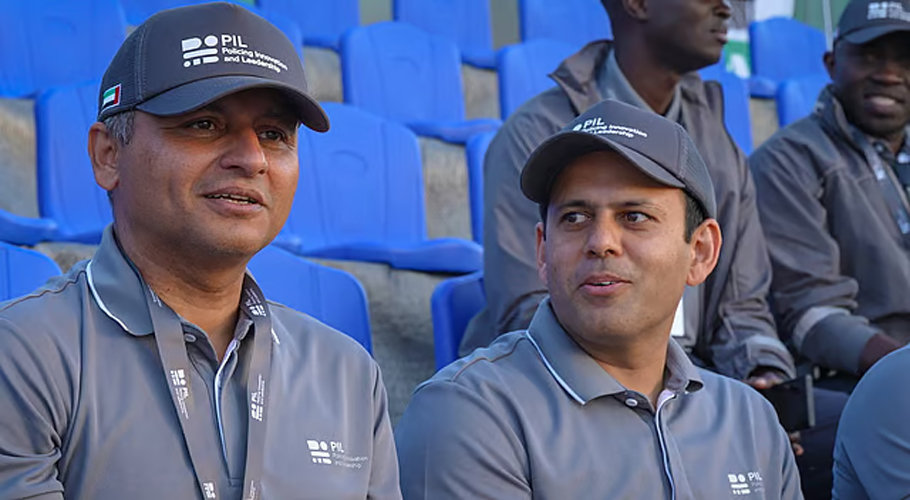
Two distinguished senior officers from Pakistan’s law enforcement, Colonels Kamran Ali and Umar Farooq, have been awarded the highly esteemed Police Innovation and Leadership Diploma (PIL) by Dubai Police. This award, which recognizes excellence in policing leadership and innovation, is part of an initiative developed through a partnership between Dubai Police and the prestigious Rochester Institute of Technology (RIT). The program seeks to promote cutting-edge strategies and best practices in law enforcement globally.
This collaboration reflects Dubai Police’s ongoing commitment to advancing law enforcement standards and nurturing innovation across the police force. The diploma program aims to equip police leaders worldwide with the skills and knowledge to implement more effective, secure, and community-driven policing solutions.
The two officers, who were honored for their commitment to modernizing Pakistan’s law enforcement framework, spoke highly of Dubai Police’s revolutionary “Smart. Secure. Together” initiative. This initiative integrates advanced artificial intelligence technologies, community-centered policing, and proactive security measures, all of which have played a key role in transforming Dubai into one of the safest cities in the world.
Colonel Kamran Ali described the Dubai Police model as a global benchmark, asserting, “It transcends geographical boundaries, inspiring countries like Pakistan to implement meaningful policing reforms.” Dubai’s approach, which blends technology with strong community engagement, has made it a leader in modern law enforcement practices. Colonel Ali emphasized that Pakistan, like many countries, faces unique law enforcement challenges, and it is vital to adopt adaptable yet innovative models like Dubai’s to create a safer environment for its citizens.
With decades of operational experience in policing, Colonels Ali and Farooq are committed to leveraging the lessons learned from the Dubai Police experience to meet the specific needs of Pakistan’s law enforcement sector. They aim to refine Pakistan’s policing structure by incorporating AI-driven solutions and community collaboration, much like the model pioneered by Dubai.
Colonel Ali noted, “This represents the future of policing. As technology evolves, it is essential to integrate it into law enforcement strategies to build trust and ensure efficiency.” He further acknowledged the importance of developing a system where law enforcement is not only about maintaining order but also about building stronger, positive relationships with communities.
Colonel Umar Farooq, who is also a key figure in Pakistan’s efforts to reform policing, added, “This diploma is more than an academic achievement; it’s an investment in the future of policing in Pakistan.” Their participation in the PIL program is seen as a significant step toward revitalizing the Pakistan Police system, and it aligns with their goal of infusing modern, progressive practices into the country’s law enforcement.
Both officers emphasized the need for a shift in how policing is perceived, advocating for a blend of traditional law enforcement with modern, technology-driven methods to better meet public safety challenges. Their work reflects a broader vision for the future of global policing—one that is efficient, inclusive, and forward-thinking.