
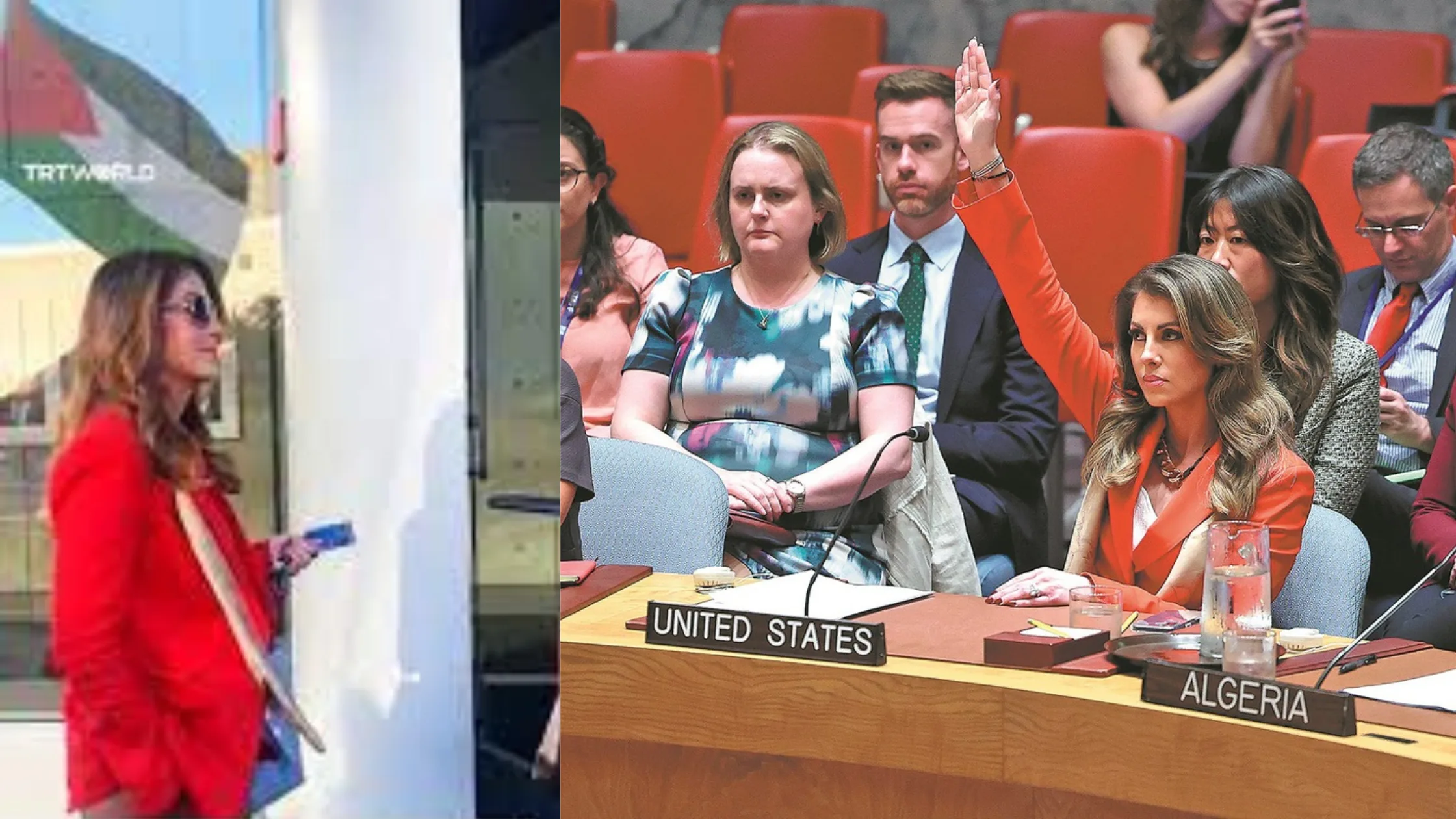
In a move that has sparked international outrage, the United States vetoed a United Nations Security Council resolution calling for an immediate G@za Ceasefire. The resolution, which had broad support from the council’s ten non-permanent members, also demanded the rapid delivery of humanitarian aid and the release of all Israeli captives. US Ambassador to the UN Morgan Ortagus faced immediate backlash, with protesters confronting her as she exited the chamber, chanting, “Shame on you!”
The US decision to block the resolution comes at a critical time, as Israeli military operations intensify across G@za, particularly in Gaza City. The death toll has now reached approximately 70,000, with widespread destruction worsening an already severe humanitarian crisis. The veto has been met with condemnation from diplomats, humanitarian organizations, and governments worldwide, who accuse the US of enabling continued violence and suffering.
Donald Trump Assures Qatar’s PM Israeli Attack Will Not Happen Again
The resolution represented one of the most concerted diplomatic efforts to halt the ongoing conflict, which has displaced over 1.8 million people and left G@za’s infrastructure in ruins. The US, as one of five permanent Security Council members with veto power, single-handedly prevented the measure from moving forward, citing ongoing efforts behind the scenes to broker a deal.
Critics argue that the veto undermines not only peace efforts but also the credibility of the UN itself. As humanitarian conditions deteriorate, with shortages of food, water, and medical supplies reaching catastrophic levels, many see the US action as a direct contributor to the deepening crisis.
—
Frequently Asked Questions (FAQs)
1. Why did the US veto the UN G@za Ceasefire resolution?
The US stated that the resolution could disrupt ongoing diplomatic negotiations, though critics argue the veto prevents immediate relief for civilians.
2. What was in the proposed resolution?
It demanded an immediate G@za Ceasefire, accelerated humanitarian aid access, and the release of Israeli prisoners held in Gaza.
3. How have people reacted to the US veto?
The decision has been met with protests and strong condemnation from many countries, humanitarian groups, and activists.
4. What is the current situation in Gaza?
Gaza faces severe bombardment, with a high civilian casualty count and extreme shortages of essential supplies like food, water, and medicine.
5. What happens next after the veto?
Diplomatic efforts continue, but the veto delays immediate UN-backed action, leaving Gaza’s civilian population at continued risk.