
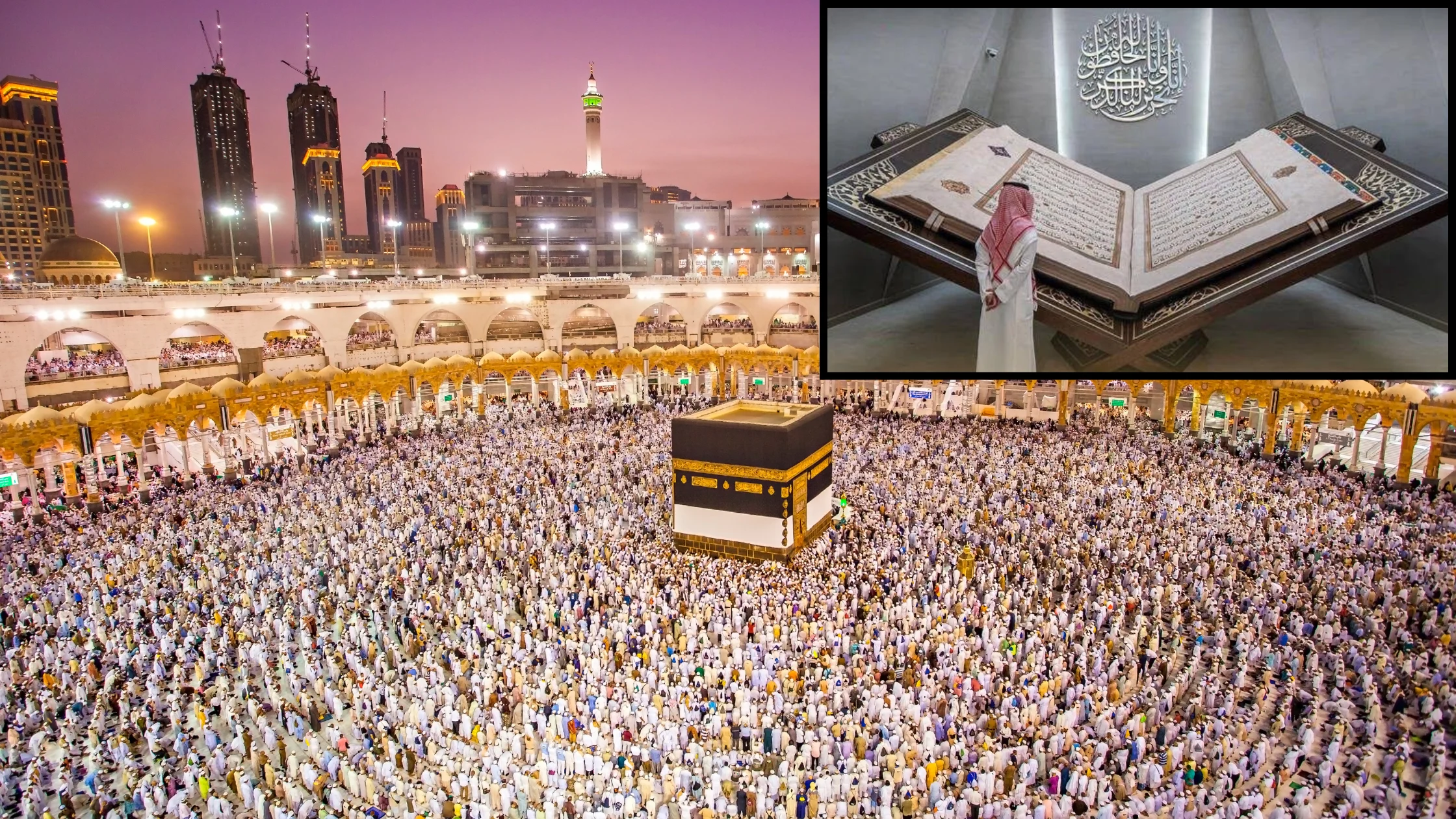
The newly expanded Hira Cultural Center in Makkah has unveiled a breathtaking attraction — the world’s largest Qur’an, now on display for the public. This remarkable addition sits at the foot of Cave Hira, the sacred site where Prophet Muhammad (PBUH) received the first divine revelation over 1,400 years ago. The expansion has transformed the center into a hub of faith, history, and education for millions of visitors each year.
The Qur’an Museum, part of the center, showcases the spiritual and artistic evolution of Islam’s holiest book. Visitors can explore ancient manuscripts that trace the development of Qur’anic writing styles, from early Kufic script to modern calligraphy. The museum also presents rare artifacts, including a section of the Kaaba’s Kiswa (covering), a detailed model of the Kaaba’s door, and a replica of Cave Hira, allowing pilgrims to experience the profound atmosphere of revelation.
Officials describe the museum as a bridge between faith and knowledge — a place that preserves Islamic heritage while inspiring future generations. The massive Qur’an on display, crafted with intricate calligraphy and exquisite design, symbolizes devotion and reverence for the Holy Book. Scholars and tourists alike have praised the project for combining tradition with technology, as many exhibits are enhanced with interactive digital guides available in multiple languages.
The Hira Cultural Center now stands as a beacon of Islamic history, attracting researchers, pilgrims, and families eager to deepen their understanding of the Qur’an and the life of Prophet Muhammad (PBUH).
Frequently Asked Questions (FAQs)
1. Where is the Hira Cultural Center located?
The center is located at the base of Cave Hira in Makkah, Saudi Arabia, a place of immense spiritual significance in Islam.
2. What can visitors see at the Qur’an Museum?
Visitors can view the world’s largest Qur’an, ancient manuscripts, rare Islamic artifacts, and replicas of holy sites such as the Kaaba’s door and Cave Hira.
3. Is the Qur’an on display an original manuscript?
The Qur’an displayed is a modern masterpiece, created by expert calligraphers to honor the sacred text’s beauty and message.
4. Are there digital or interactive exhibits?
Yes, the museum offers interactive screens and multilingual digital guides to enhance the visitor experience.
5. Why is this museum important for Muslims?
It connects believers to the origins of revelation, preserving Islamic history while promoting education, reflection, and faith.