
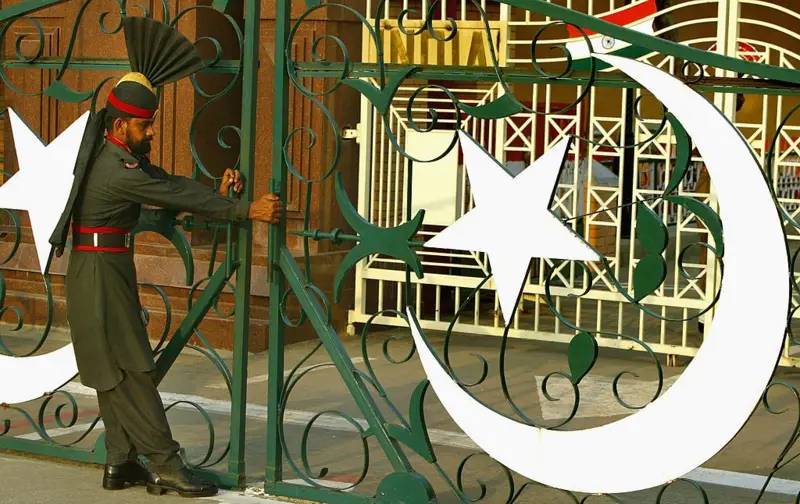
Following the April 22 attack in Pahalgam, in Indian-administered Kashmir, which resulted in the deaths of 26 people, India took extraordinary measures against Pakistan. These included suspending the Indus Waters Treaty, closing the Attari-Wagah Border, withdrawing visa facilities, and limiting diplomatic ties.
In response, Pakistan announced countermeasures, suspending all bilateral agreements including the Simla Agreement closing borders and airspace, halting trade, banning India’s use of its airspace, and imposing restrictions at the diplomatic level.
Pakistan, mirroring India’s moves, ordered Indian defense attachés and their aides to leave and limited diplomatic staff.
After a high-level security cabinet meeting, Indian Foreign Secretary Vikram Misri announced the immediate closure of the Attari-Wagah border. While Prime Minister Modi’s government has not directly blamed Pakistan, officials hinted at “cross-border” connections to the Pahalgam attack.
In the press conference, Vikram Misri announced the revocation of the SAARC visa facility for Pakistani citizens, and ordered Pakistanis currently in India to leave within 48 hours. The media was not allowed to ask questions after the announcement.

India Faces Greater Losses, Particularly via Afghanistan
The severing of trade ties will impact both nations. However, bilateral trade between India and Pakistan was already minimal due to historic tensions.
According to Zubair Motiwala, former CEO of the Trade Development Authority of Pakistan, “Pakistan’s exports to India were negligible, so the impact on Pakistan’s foreign trade will be minimal.”
However, he mentioned that Pakistan imports raw materials for pharmaceuticals from India. With the disruption, Pakistan will now have to import from other countries, at higher costs, potentially leading to an increase in medicine prices. Cotton imports from India were also minor, but their disruption will slightly affect Pakistan.
Motiwala added that India’s major loss would occur in Afghanistan’s market: Indian goods previously reached Afghanistan via Pakistan, and now they must take the costlier sea route via Iran.
Additionally, Indian airlines will suffer heavy losses due to the closure of Pakistani airspace.
Dr. Abdul Khan of Sindh University of Urology mentioned that Pakistani patients often traveled to India for treatment, especially in traditional medicine where India excels. With visa restrictions, this avenue is closed, further impacting India.
Trade Statistics
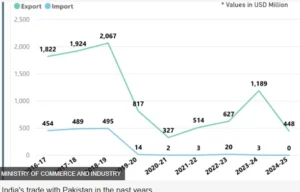
- From April to January 2024–25, Pakistan’s exports to India were only $0.42 million, but its imports from India amounted to $447.65 million.
- 2023–24: Exports and imports were $1.18 billion and $2.88 million, respectively.
The Attari-Wagah border, also known as the “Attari Land Port,” is located 28 km from Amritsar and served as India’s sole land route for trade with Pakistan and Afghanistan.
Trade between India and Pakistan had already collapsed after India’s revocation of Kashmir’s special status on August 5, 2019.
Afghanistan Goods in Uncertainty
- 2023–24: Trade worth ₹3,886 crores occurred through Attari, with 71,563 people crossing.
- 2017–18: Trade worth ₹4,148 crores and 80,314 border crossings.
With border closures, movement of goods and people has halted. It’s uncertain whether goods from Afghanistan will reach India through alternative routes.
India previously promoted air trade corridors with Afghanistan and utilized Iran’s Chabahar Port. After the Taliban’s takeover in 2021, direct air cargo continued to some extent.
Traders’ Reactions
Badesh Jindal, President of the World MSME Forum in Ludhiana, mentioned that most Indian exports to Pakistan are currently shipped by sea. Now, dry fruits from Afghanistan can no longer arrive through Attari, increasing costs.
Young Baloch Body to Be Repatriated from Indian Hospital Amid Rising Tensions
Rajdeep Uppal, former President of CII’s Amritsar Zone, said trade via Attari was nearly dead since 2019. “We must expand trade via sea routes with Afghanistan and Central Asia,” he emphasized.

What was India Exporting to Pakistan?
In 2023–24:
- India exported goods worth ₹10,096 crores to Pakistan.
- Imports from Pakistan were worth ₹25 crores.
Key exports included:
- Pharmaceuticals
- Sugar
- Auto parts
Even before the tensions, Pakistan was not a major trading partner for India compared to other South Asian countries.
In February 2024, Indian minister Piyush Goyal confirmed that since 2019, only medical product exports were permitted.
Effect on Common Citizens
Anil Kumar Bamba, former chairman of India’s Land Port Authority, noted that Pakistan’s imports from India are minimal, mainly including fresh vegetables, fruits, clothes, and occasionally cement. High-value goods were routed via Dubai before reaching Pakistan.
With Wagah closure:
- Pakistani common citizens will be most affected.
- Thousands of people used to cross the border on foot, especially when direct flights between the two nations were suspended.
Ajay Srivastava, a trade expert, estimated that informal trade through third countries like UAE and Singapore was about ₹85,000 crores annually. Closure of official routes will halt formal trade but not the demand.
Past Trade Fluctuations
Historically, trade between India and Pakistan has suffered due to political tensions post-1999 Kargil War, 2009 Mumbai attacks, and others. However, trade resumed intermittently.
Before 2019:
- Pakistan primarily imports cotton, organic chemicals, plastics, and machinery from India.
- India imports from Pakistan mainly consist of fruits, minerals, soda ash, and salt.
Despite political disputes, countries like India and China maintain $100 billion+ trade — a missed opportunity for India and Pakistan.
FAQs
Q1: Why did India close the Wagah border?
A1: Following the Pahalgam attack in April 2025, India cited concerns over cross-border terrorism and responded by suspending the Wagah-Attari border, along with implementing other measures.
Q2: How much trade happens via Wagah border?
A2: In 2023–24, approximately ₹3,886 crores worth of goods passed through Wagah-Attari, mainly related to India-Afghanistan trade via Pakistan.
Q3: Who will be affected more Pakistan or India?
A3: India will suffer greater losses in the Afghanistan market and aviation sectors. Pakistan’s pharmaceutical industry will face higher raw material costs.
Q4: Can India bypass Pakistan for Afghanistan trade?
A4: India is shifting to sea routes via Iran’s Chabahar Port, but this is costlier and logistically challenging.
Q5: Will unofficial trade continue?
A5: Likely yes00 via third countries like UAE and Singapore, though it increases costs and complexities.
Q6: How important was India-Pakistan direct trade?
A6: Direct trade was minimal due to longstanding political tensions, unlike India’s robust trade with other neighbors.
Q7: Are patient movements from Pakistan to India affected?
A7: Yes, Pakistani patients seeking medical treatment in India are now restricted due to visa bans.
Conclusion
The Wagah border closure is another reflection of the deeply strained India-Pakistan relationship. While both countries will experience economic repercussions, India, ironically, may suffer greater losses, especially in accessing the Afghan market and bearing increased airline costs. Meanwhile, Pakistan faces increased production costs in pharmaceuticals and minor trade disruptions. Historically, both nations have allowed political tensions to overshadow economic logic — unlike other global rivals like India and China.
Ultimately, it’s the ordinary citizens and small businesses on both sides who will bear the brunt of geopolitical hostilities.