

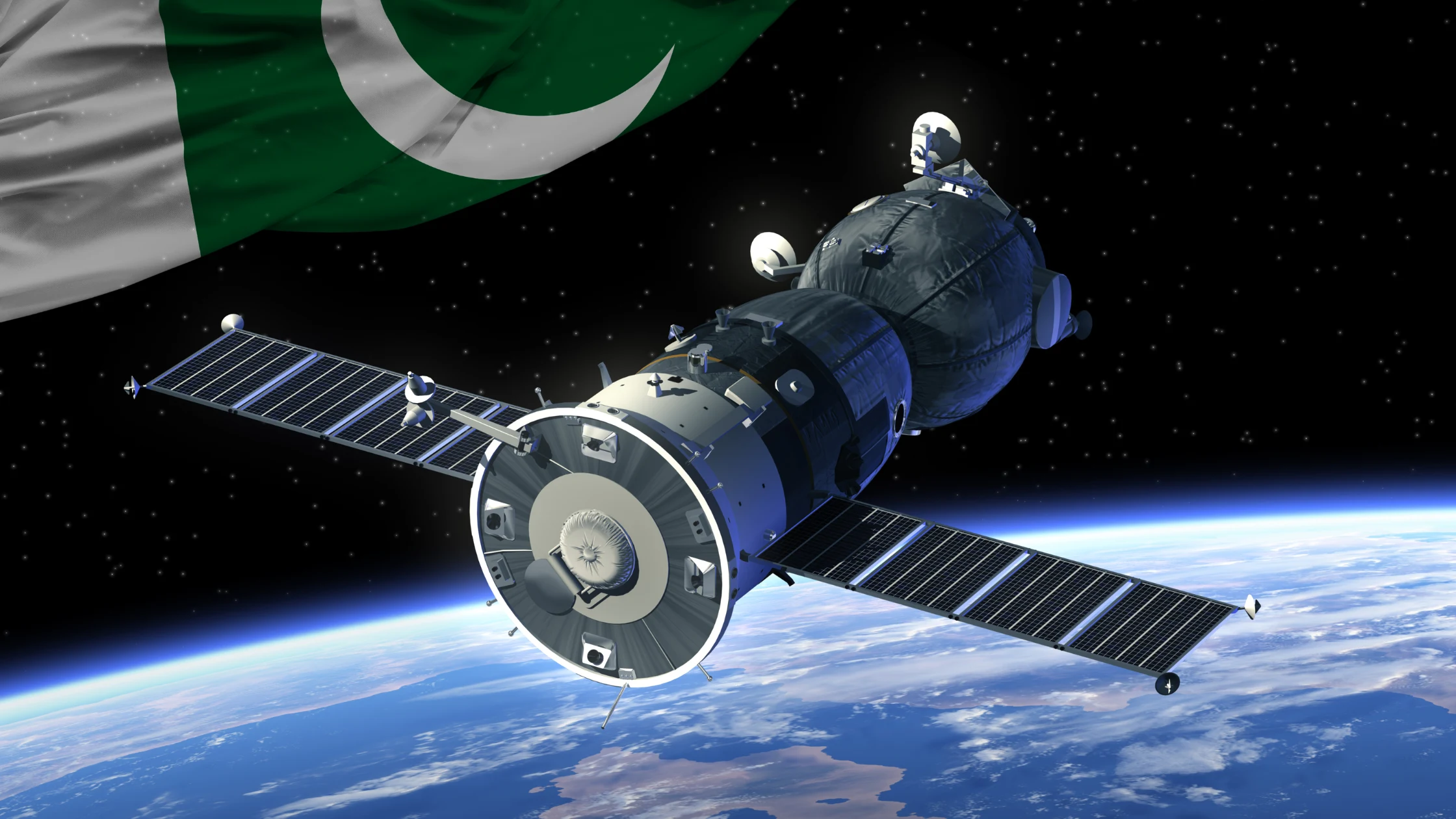
In a landmark advancement for Pakistan’s space technology program, the Space and Upper Atmosphere Research Commission (SUPARCO) has announced the upcoming launch of the country’s first Hyperspectral Satellite (HS-1). The satellite will be launched from China’s Jiuquan Satellite Launch Centre on October 19, marking a historic step in Pakistan’s journey toward technological self-reliance and scientific innovation.
The HS-1 satellite is designed to play a vital role in agriculture, disaster management, urban development, and environmental monitoring. Using advanced hyperspectral imaging, it can analyze the Earth’s surface in multiple spectral bands, providing highly detailed data for sustainable planning and decision-making.
Hyundai Elantra 2.0 Limited Edition Launched in Pakistan at PKR 6.85 Million
One of its key applications will be in precision agriculture, where it can help improve crop yield estimation by up to 20 percent. The satellite will also strengthen flood prediction, landslide detection, and geo-hazard assessment, offering valuable support for communities vulnerable to natural disasters, especially in Pakistan’s northern regions.
HS-1 will work in tandem with Pakistan’s existing satellites — PRSS-1, EO-1, and KS-1 — to build a robust remote sensing and observation network. This integration will enhance the country’s ability to monitor land use, water resources, and climate change impacts.
The project is part of SUPARCO’s Vision 2047, which aims to leverage space technology for national development, scientific progress, and environmental sustainability. With HS-1, Pakistan joins the list of countries using hyperspectral imaging satellites, positioning itself for greater regional and global collaboration in space research.
FAQs
1. What is the HS-1 satellite?
HS-1 is Pakistan’s first hyperspectral Earth observation satellite designed to capture high-resolution spectral data for agriculture, disaster management, and environmental monitoring.
2. When and where will HS-1 be launched?
It will be launched on October 19, 2025, from China’s Jiuquan Satellite Launch Centre.
3. What are the main benefits of HS-1 for Pakistan?
The satellite will help improve crop monitoring, predict floods and landslides, and assist in urban and environmental planning.
4. How does HS-1 support national development?
By providing accurate satellite data, HS-1 will enhance decision-making in agriculture, infrastructure, and climate resilience, contributing to Pakistan’s economic and social growth.
5. What is SUPARCO’s Vision 2047?
Vision 2047 is SUPARCO’s long-term plan to develop space-based technologies for sustainable national progress, innovation, and global collaboration.