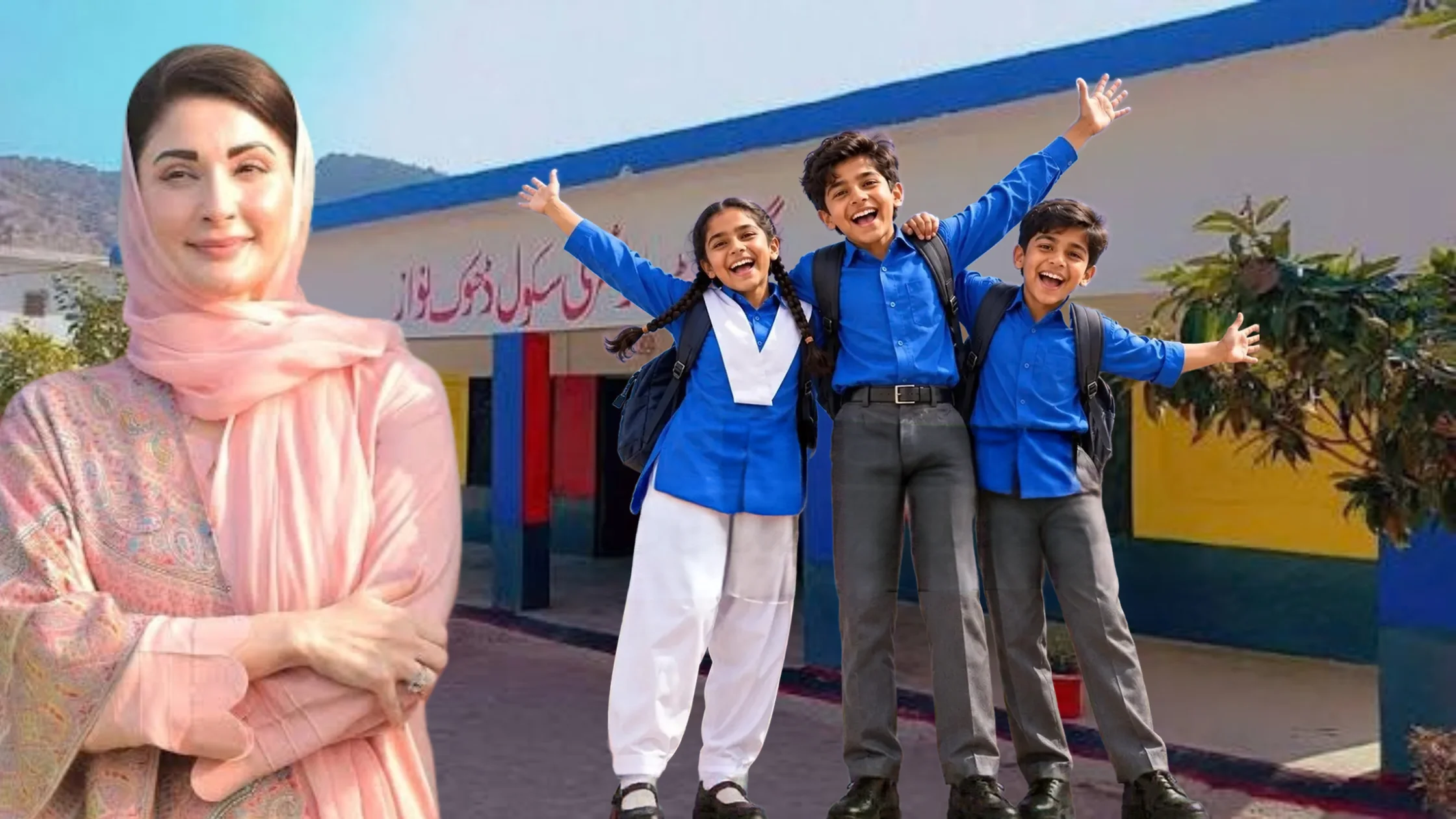
Punjab has approved a major overhaul of its school curriculum, introducing changes aimed at reducing textbook pressure, moving students away from rote memorisation and bringing more technology into classrooms.
The new curriculum was approved during a meeting chaired by Punjab Chief Minister Maryam Nawaz in September 2026. The initial curriculum covers Early Childhood Care and Education (ECCE) to Grade 5, while the government has separately directed officials to finalise an artificial intelligence curriculum from Grade 1 to Grade 12.
Among the most notable proposals are a 25% reduction in textbook volume, QR codes linking books to video lessons, teacher training by textbook authors, mental health training for teachers and legislation aimed at ending corporal punishment in schools.
The changes are expected to reshape how students learn in Punjab’s schools, although several parts of the reform package still require further development and implementation.
Punjab Plans to Reduce Textbook Burden by 25%
One of the biggest changes is the planned 25% reduction in textbook volume.
According to the Punjab Education Curriculum, Training and Assessment Authority (PECTAA), the revised curriculum is intended to reduce unnecessary content and place greater emphasis on learning outcomes rather than memorising large amounts of information.
The reduction is also expected to lower the physical burden of schoolbooks and potentially reduce textbook costs because the revised books will contain fewer pages.
However, reducing the number of textbook pages does not automatically mean that students will have less academic work. The effect will also depend on examinations, homework, classroom assessments and how teachers implement the revised curriculum.
The broader objective is to make learning more focused and encourage students to understand concepts instead of simply remembering textbook material.
New Curriculum Expected From April 2027
The new curriculum from ECCE to Grade 5 is planned for implementation with the academic session beginning in April 2027.
PECTAA CEO Musa Ali Bukhari told Dawn that the revised curriculum was developed and then sent to Cambridge International Education for assessment and comparison with international curricula.
The final content is expected in December 2026, after which PECTAA plans to begin printing the new textbooks in January.
The initial subjects under review include English, Mathematics, Urdu, Social Studies and Early Childhood Care and Education.
This means parents and students should not expect the new books to replace the existing curriculum immediately. The transition is being planned for the 2027 academic year.
AI Education Planned From Class 1 to Class 12
Another major part of Punjab’s education reform is the proposed introduction of artificial intelligence education from Grade 1 to Grade 12.
Chief Minister Maryam Nawaz directed education officials to finalise the AI curriculum and develop computer laboratories alongside the new curriculum.
The plan follows earlier work by Punjab education authorities to introduce technology-focused learning at the foundational level.
A proposal reviewed earlier in 2026 included areas such as digital literacy, computational thinking, robotics and ethical AI practices, with greater emphasis on project-based and practical learning.
Introducing AI at an early age does not necessarily mean that young children will study advanced artificial intelligence concepts. At primary level, the focus can instead be on basic digital skills, logical thinking, responsible technology use and age-appropriate understanding of AI.
The success of this part of the reform will depend heavily on whether schools have computers, internet access and teachers who are properly trained.
UAE Plans New Fujairah Port to Reduce Reliance on Strait of Hormuz
QR Codes Will Connect Textbooks With Video Lessons
Punjab’s new textbooks are also planned to include QR codes.
Students and teachers will be able to scan the codes to access video lessons connected to the relevant topics in their books.
This could give students another way to understand difficult subjects instead of relying only on written explanations.
For example, a science topic could be accompanied by a video demonstration, while a mathematics chapter could provide a visual explanation of a difficult concept.
However, access to smartphones, computers and reliable internet will influence how widely students can use these digital resources. This makes the development of computer laboratories and digital infrastructure an important part of the wider reform.
Textbook Authors Will Train Teachers
The reform plan also places greater emphasis on teacher training.
Authors involved in developing the new textbooks are expected to conduct training sessions to help teachers understand the revised content and teaching approach. Cambridge officials involved in the curriculum development process are also expected to contribute to teacher training.
The Punjab government has also proposed dedicating Saturdays to teacher training across the province.
This is important because changing textbooks alone cannot completely change classroom teaching.
Teachers will need to understand what has changed, how lessons should be delivered and how students should be assessed under a curriculum that places more emphasis on understanding and application.
Mental Health Training for Teachers
For the first time in Punjab, the reform package includes mental health training for teachers.
The government has also considered appointing visiting psychologists in every district and developing online counselling facilities for students.
The aim is to give teachers greater awareness of students’ emotional and psychological needs.
Teachers are often among the first adults in a school environment to notice changes in a student’s behaviour, attendance or classroom participation. Training could help them identify situations that require additional support and understand when professional counselling may be needed.
The proposed psychologist and online counselling systems would require sufficient qualified professionals, clear referral procedures and appropriate privacy protections.
Punjab Moves Toward Ending Corporal Punishment
Another important part of the education reform is the proposed legislation against corporal punishment in schools.
The meeting agreed in principle on the need for legislation aimed at eliminating physical punishment and discussed alternative disciplinary measures.
A proposal was made to establish “discipline corners” in classrooms as an alternative to physical punishment.
The official reports describe these as discipline corners rather than classroom discipline counsellors, so the proposal should not yet be presented as a completed system of school counsellors.
The government has said the purpose is to encourage more constructive approaches to managing student behaviour.
Any legislation would still need to go through the relevant legal and administrative process before becoming an enforceable framework.
Shift From Rote Learning to Concept-Based Education
The overall direction of the reform is a move away from rote memorisation and toward concept-based learning.
PECTAA had already been working on curriculum changes for Grades 1 to 5, with the stated goal of reducing unnecessary learning outcomes and focusing more on conceptual understanding, critical thinking and adaptability.
The new curriculum continues that approach.
Instead of measuring learning mainly through how much information students can reproduce, the revised system aims to place greater importance on whether students understand ideas and can apply what they have learned.
This approach could also require changes to examinations and classroom assessments so that testing matches the new curriculum objectives.
Computer Laboratories Will Be Important
The AI education plan also comes with a practical requirement: schools need suitable technology infrastructure.
Maryam Nawaz has directed officials to develop computer laboratories alongside the new curriculum.
This is particularly important because previous reporting identified infrastructure challenges in Punjab’s government schools, including shortages of computers, internet connectivity, trained teachers and digital classrooms.
As a result, introducing AI education across thousands of schools will require more than adding a subject to textbooks.
Schools will need functioning equipment, electricity, connectivity, teacher training and appropriate digital content.
English Training Has Already Reached Thousands of Teachers
The government has also reported progress in teacher development.
According to the briefing presented during the curriculum meeting, 35,000 teachers in 31 tehsils across 12 districts had completed English-language training.
The new curriculum places additional demands on teachers, making continuous professional development an important part of the reform.
Training will need to cover not only individual subjects but also classroom management, digital tools, concept-based teaching and the use of new textbooks.
Why the New Curriculum Is Important
The curriculum changes affect several parts of school education at the same time.
The government is attempting to reduce the physical volume of textbooks while changing the way students learn. At the same time, it wants to introduce digital resources, AI education and greater teacher training.
The reforms also address areas outside traditional academic subjects, including student mental health and school discipline.
This makes the initiative broader than simply replacing old textbooks with new ones.
The most important part will be implementation. New books, QR codes and an AI syllabus will have limited impact if schools do not have the resources and trained teachers needed to use them effectively.
What Students Could Experience Under the New System
If the reforms are implemented as planned, students could experience several changes over the coming academic years.
Younger students may receive shorter and more focused textbooks, while QR codes could provide access to additional video lessons.
Students from Grade 1 onward are expected to receive age-appropriate AI education as the broader Grade 1-12 curriculum is developed.
Teachers may receive more structured training, while schools could gain access to counselling services and new approaches to classroom discipline.
The curriculum is also intended to give students more opportunities to understand and apply concepts instead of simply memorising information.
Parents Will Also See Changes
Parents are likely to notice the reform most directly through changes in textbooks and homework.
A 25% reduction in textbook volume could make schoolbags lighter and reduce the amount of printed material students need to carry.
However, parents should also expect a gradual transition rather than an immediate province-wide change to every grade.
The currently approved curriculum covers ECCE to Grade 5, with the new books planned for the academic session beginning in April 2027. The AI curriculum, meanwhile, is being developed for Grades 1 to 12.
The Bigger Challenge Will Be Implementation
Punjab’s education reform contains several ambitious targets, but implementation will determine how students actually experience them.
Reducing textbook volume requires curriculum writers, publishers, teachers and examination authorities to follow the same learning objectives.
AI education requires technology infrastructure and teacher preparation.
QR-based learning requires access to devices and reliable digital content.
Mental health support requires trained professionals and appropriate referral systems.
And ending corporal punishment requires clear rules, monitoring and effective alternative approaches to classroom discipline.
These elements will therefore need to work together rather than operate as separate initiatives.
Punjab’s New Education Model
The new curriculum represents an effort by Punjab to move its school system toward lighter textbooks, technology-assisted learning, teacher development and more student-focused education.
The planned 25% reduction in textbook volume could address concerns about excessive academic material, while QR codes may connect traditional textbooks with digital learning.
The proposed AI curriculum could introduce students to technology from an early stage, while teacher mental health training and proposed changes to school discipline broaden the reform beyond academic performance.
The new ECCE-to-Grade-5 curriculum is expected to reach schools from April 2027, while work continues on the wider Grade 1-12 AI curriculum.
The coming months will therefore be important for finalising curriculum content, printing textbooks, preparing teachers and developing the infrastructure needed to put these plans into classrooms.
FAQs
1. What is changing in Punjab’s new curriculum?
The Punjab government plans to reduce textbook volume by 25%, add QR codes for video lessons, move toward concept-based learning, introduce AI education and expand teacher training and student support measures.
2. From which class will AI education start in Punjab?
The government has directed officials to finalise an AI curriculum covering Grade 1 to Grade 12.
3. When will the new textbooks be introduced?
The revised ECCE-to-Grade-5 textbooks are planned for the academic session beginning in April 2027.
4. Will Punjab ban corporal punishment in schools?
The government has agreed in principle on legislation aimed at ending corporal punishment, but the legislative process still needs to be completed. A proposal for classroom “discipline corners” has been discussed as an alternative.
5. What will the QR codes in textbooks do?
Students and teachers will be able to scan QR codes in the new textbooks to access video lessons related to the topics being studied.