

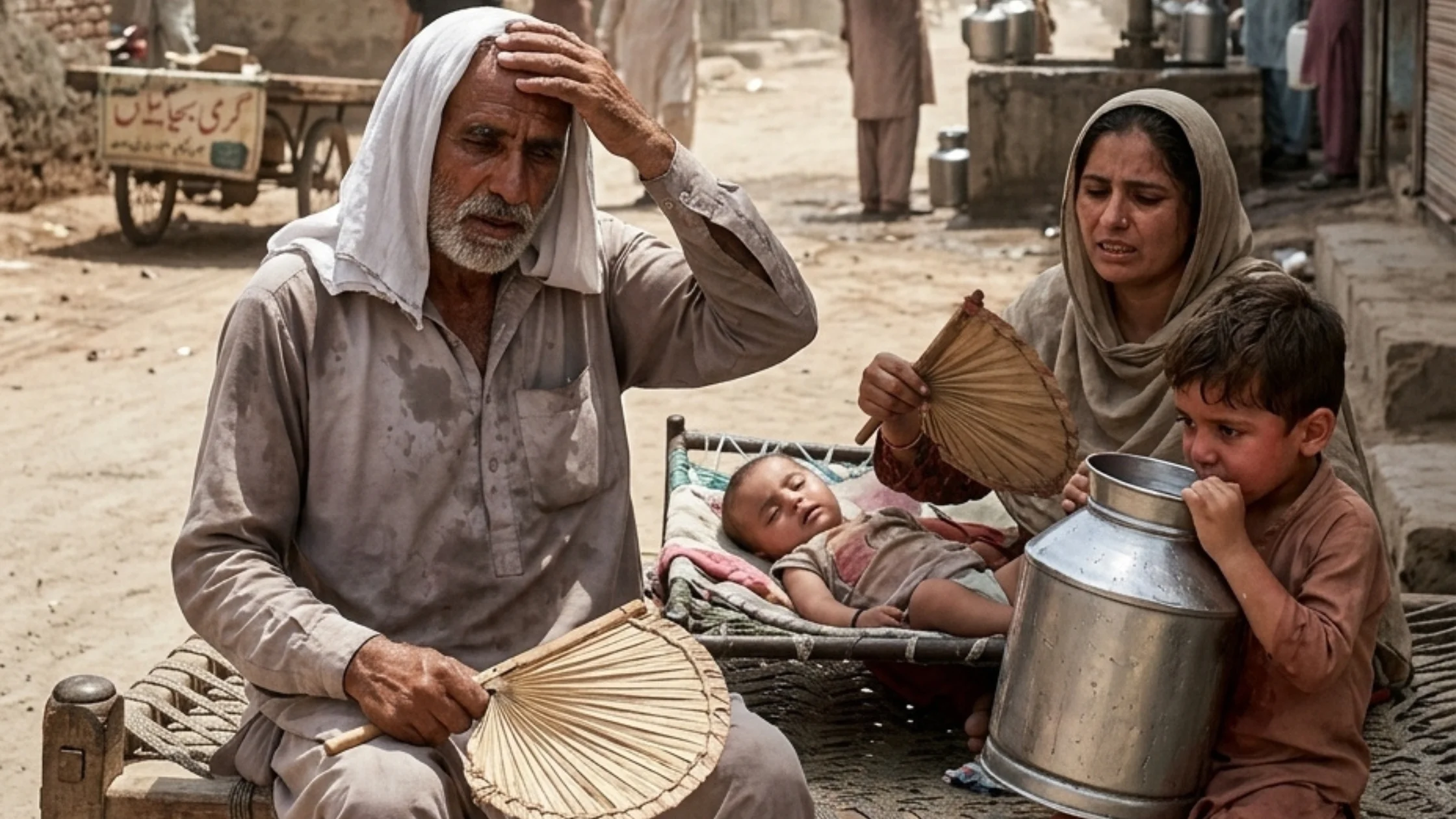
A new international study has warned that Pakistan could face more than 150,000 additional heat-related deaths every year by 2050 if rising temperatures continue and access to affordable cooling remains limited.
The research, conducted by the Climate Impact Lab at the University of Chicago, estimates that climate change could contribute to around 430,000 extra deaths globally each year by the middle of the century. Pakistan has been identified as one of 18 countries caught in a “mortality-cooling trap,” where extreme heat, limited cooling access, and economic challenges combine to increase health risks.
According to the report, 89% of Pakistan’s population could be living in regions most vulnerable to dangerous heat conditions by 2050. Researchers emphasized that the challenge extends beyond electricity availability. High electricity costs, unreliable power supplies, and the unaffordability of air conditioners and other cooling technologies leave millions of people exposed to life-threatening temperatures.
Pakistan to End Local Sales by Export Processing Zones Under IMF Commitments
Experts stressed that protecting communities from extreme heat will require more than expanding access to air conditioning. They recommended stronger heat action plans, improved early warning systems, reliable and resilient power infrastructure, increased urban green spaces, and the establishment of public cooling centers to help vulnerable populations during heatwaves.
The study also highlighted the importance of investing in renewable energy and introducing long-term policy reforms to make cooling technologies more affordable for households.
As climate change continues to intensify heatwaves across South Asia, researchers say immediate action is essential to reduce future health risks, strengthen climate resilience, and protect millions of lives from the growing threat of extreme temperatures.