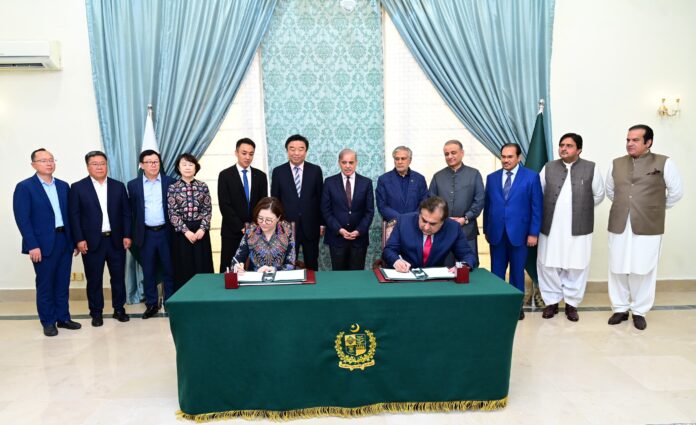
In a landmark agreement, the Board of Investment of Pakistan signed a Memorandum of Understanding (MoU) with RUYI Shandong, a leading Chinese textile firm, to establish international-standard textile parks in Pakistan. This initiative marks a significant milestone in the country’s journey towards economic growth and highlights the strengthening economic ties between Pakistan and China.
The project is expected to generate around 0.5 million jobs and boost textile exports to an impressive $5 billion. The partnership underscores Pakistan’s potential as a global textile hub, offering opportunities for employment, export enhancement, and a sustainable future. Here’s a closer look at how this deal will positively impact Pakistan’s economy and why it is a pivotal step in enhancing the country’s global image.

Strengthening Pakistan’s Textile Sector
Pakistan’s textile industry has long been a backbone of its economy, contributing a significant share to exports and employment. The MoU between Pakistan’s Board of Investment and RUYI Shandong will pave the way for the development of textile parks in Punjab and Sindh. These parks are set to transform the sector by inviting 100 Chinese textile firms to invest, bringing world-class technology and practices into the country.
The project aligns perfectly with Pakistan’s ambition to increase textile production, modernize infrastructure, and offer sustainable solutions such as solar-powered zero-carbon facilities. The aim is to not only cater to local demand but also position Pakistan as a competitive player in the international textile market.
Bilateral Ties: Strengthening China-Pakistan Friendship
Prime Minister Shehbaz Sharif hailed this initiative as a testament to the ever-growing economic partnership between China and Pakistan. This MoU follows the prime minister’s recent visit to China and highlights the mutual benefits that such collaborations offer. China’s investment under the China-Pakistan Economic Corridor (CPEC) has already contributed to critical infrastructure projects in Pakistan, and this latest investment in the textile sector is another feather in the cap for this enduring partnership.
The historical ties between the two countries continue to deepen, with RUYI Group Chairman Qiu Yafu expressing that the firm has come to Pakistan not just as an investor but as a friend. This reflects the spirit of trust and cooperation between the two nations, which can significantly boost investor confidence in Pakistan.
Economic Boost and Job Creation
The economic impact of this agreement is monumental. The textile parks, once completed, are projected to generate 0.3 to 0.5 million jobs, offering employment opportunities across various sectors, particularly for youth and skilled labor. In a country where employment is a critical concern, this project can alleviate the pressure and improve the livelihoods of hundreds of thousands of families.
Moreover, with an expected export value of $2 billion in the first phase and $5 billion in the second phase, this project has the potential to reshape Pakistan’s export landscape. The influx of foreign investment and collaboration with international textile firms will elevate Pakistan’s standing in the global market.
Shehbaz Speed: Accelerating Development Projects
Chairman Qiu Yafu highlighted the term “Shehbaz Speed,” referring to the prime minister’s reputation for swiftly executing development projects during his tenure as Punjab Chief Minister. The same speed is anticipated in the textile park initiative, with the first phase of development scheduled to begin by the end of the year and expected to be completed within three years. This swift pace of progress will ensure that Pakistan reaps the economic benefits of this project sooner rather than later.
Future Plans: Wholesale Commodity Centers
In addition to the textile parks, RUYI Shandong plans to establish wholesale commodity centers in Karachi and Lahore, further expanding the scope of this partnership. These centers will create new trade opportunities, link Pakistan with international markets, and promote a robust economic environment for further investments.