
Introduction
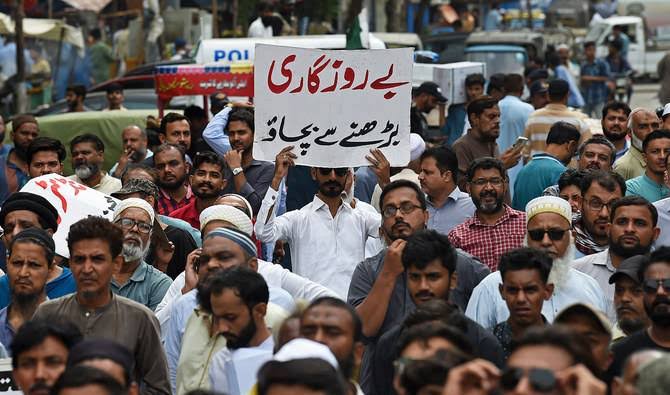
Pakistan, a country with a rich history and a diverse culture, has faced numerous economic challenges over the decades. Among these, the issue of unemployment stands out as a significant obstacle to the nation’s economic stability and social progress. Employment is not just a measure of economic success; it is a critical factor in maintaining social harmony and reducing poverty. However, despite various efforts, Pakistan continues to grapple with high unemployment rates. This article delves into the complex issue of unemployment in Pakistan, exploring its causes, impacts, and potential solutions.
Definition and Types of Unemploymente
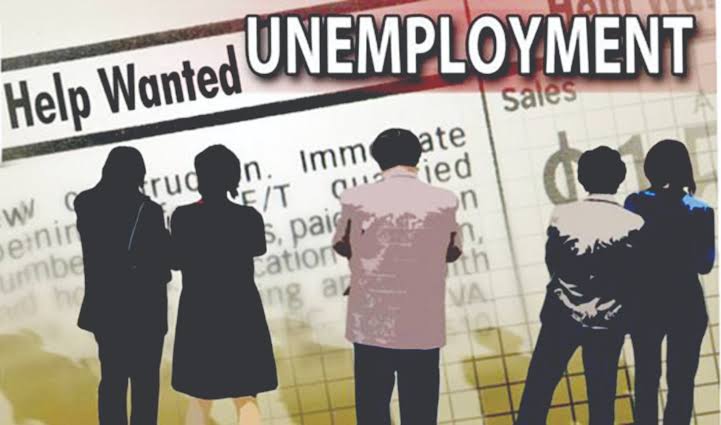
Unemployment is generally defined as the situation where individuals who are capable and willing to work cannot find suitable employment. It’s a multifaceted issue with different types, each reflecting unique underlying problems.
Frictional Unemployment
This occurs when people are temporarily unemployed while transitioning from one job to another. It’s usually short-term and part of the natural turnover in the labor market.
Structural Unemployment
This type of unemployment happens when there is a mismatch between the skills workers possess and the skills needed by employers. Structural unemployment often arises due to technological changes or shifts in the economy.
Cyclical Unemployment
This is directly related to the economic cycle. During recessions, demand for goods and services decreases, leading to a reduction in production and, consequently, a loss of jobs.
Measuring Unemployment in Pakistan
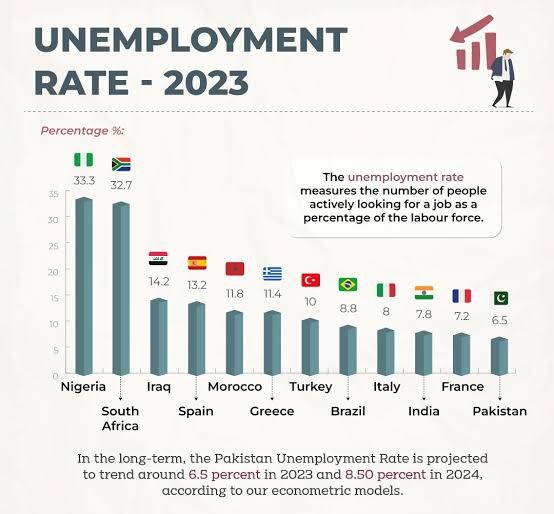
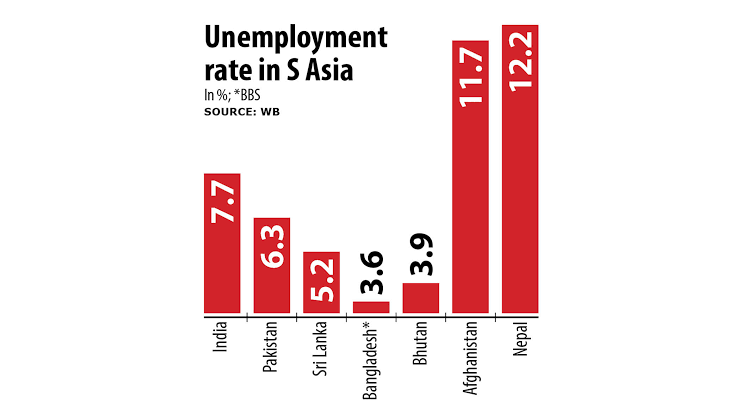
In Pakistan, the unemployment rate is primarily measured by the Pakistan Bureau of Statistics (PBS). The official unemployment rate is calculated based on surveys that estimate the number of people actively seeking work but unable to find it. However, these statistics often do not fully capture the reality, particularly in a country with a large informal sector where many are underemployed or working in precarious conditions.
Historical Perspective on Unemployment in Pakistan
Pre-Independence Era and Early Years
The roots of unemployment in Pakistan can be traced back to the pre-independence era. The partition of 1947 caused significant displacement and disruption, which had a profound impact on employment. The early years of independence were marked by efforts to stabilize the economy and create jobs, but the challenges were immense.
Industrialization and Economic Policies (1950s-1980s)
During the 1950s to the 1980s, Pakistan underwent significant industrialization, shifting from an agrarian economy to a more diversified industrial economy. However, this period also saw fluctuations in employment due to inconsistent economic policies and the lack of infrastructure to support sustainable job creation.
Economic Liberalization (1990s-2000s)
The 1990s brought economic liberalization and globalization, which opened up new opportunities but also exposed the economy to international competition. While some sectors benefited, others struggled, leading to job losses and increased unemployment in certain areas.
Recent Trends (2010s-Present)
In the last decade, political instability and frequent changes in economic policies have further exacerbated unemployment. Moreover, the global economic downturns, such as the financial crisis of 2008 and the COVID-19 pandemic, have had a significant impact on Pakistan’s job market.
Key Factors Contributing to High Unemployment in Pakistan
Population Growth and Labor Force Expansion
One of the most pressing issues contributing to high unemployment in Pakistan is its rapidly growing population. With a large youth population entering the labor force every year, the economy struggles to create enough jobs to absorb this influx. The high population growth rate has turned what could be a demographic dividend into a potential disaster if not managed effectively.
Education System and Skill Mismatch
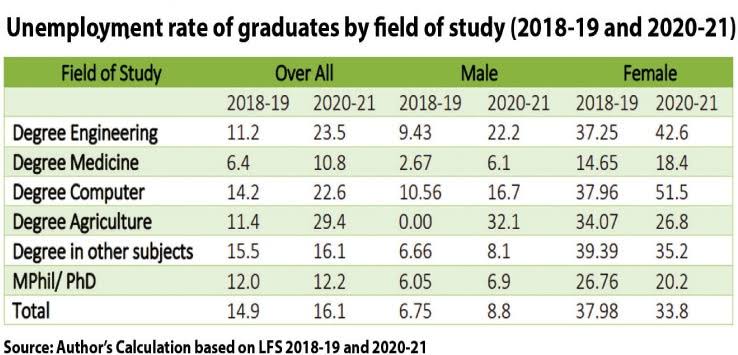
The education system in Pakistan is another critical factor. While the number of graduates has increased, many of them lack the skills required by the job market. The emphasis on rote learning and outdated curricula fails to equip students with practical skills, leading to a significant skill mismatch. Furthermore, vocational training is often neglected, leaving many young people unprepared for the demands of the modern economy.
Economic Instability and Political Uncertainty
Economic instability, fueled by political uncertainty, has deterred both local and foreign investment, which is crucial for job creation. Investors are often hesitant to commit resources in a volatile environment, leading to slow economic growth and fewer employment opportunities.
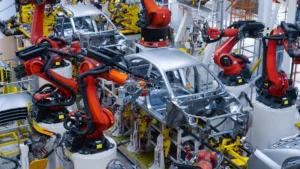
Technological Advancements and Automation
While technological
advancements are essential for progress, they also pose a threat to traditional jobs. Automation and digitalization have made certain jobs obsolete, particularly in industries like manufacturing and agriculture, where technology has replaced human labor.
Gender Disparities in Employment
Gender disparities also play a significant role in Pakistan’s unemployment problem. Women, who make up nearly half of the population, face numerous barriers to employment, including cultural constraints, lack of education, and limited access to job opportunities. This not only reduces the overall employment rate but also limits economic growth.
Rural-Urban Employment
There is a stark contrast between employment opportunities in urban and rural areas. While cities like Karachi, Lahore, and Islamabad offer more job opportunities, rural areas lag far behind. This discrepancy has led to increased migration to cities, further straining urban infrastructure and leading to underemployment and informal work.
Social and Economic Consequences of Unemployment
Poverty and Income Inequality
Unemployment is a direct contributor to poverty and income inequality in Pakistan. Without stable income, individuals and families struggle to meet their basic needs, leading to a cycle of poverty that is difficult to break. Income inequality also widens as those with jobs or assets continue to thrive, while the unemployed fall further behind.
Social Unrest and Crime
High unemployment rates can lead to social unrest and an increase in crime.