

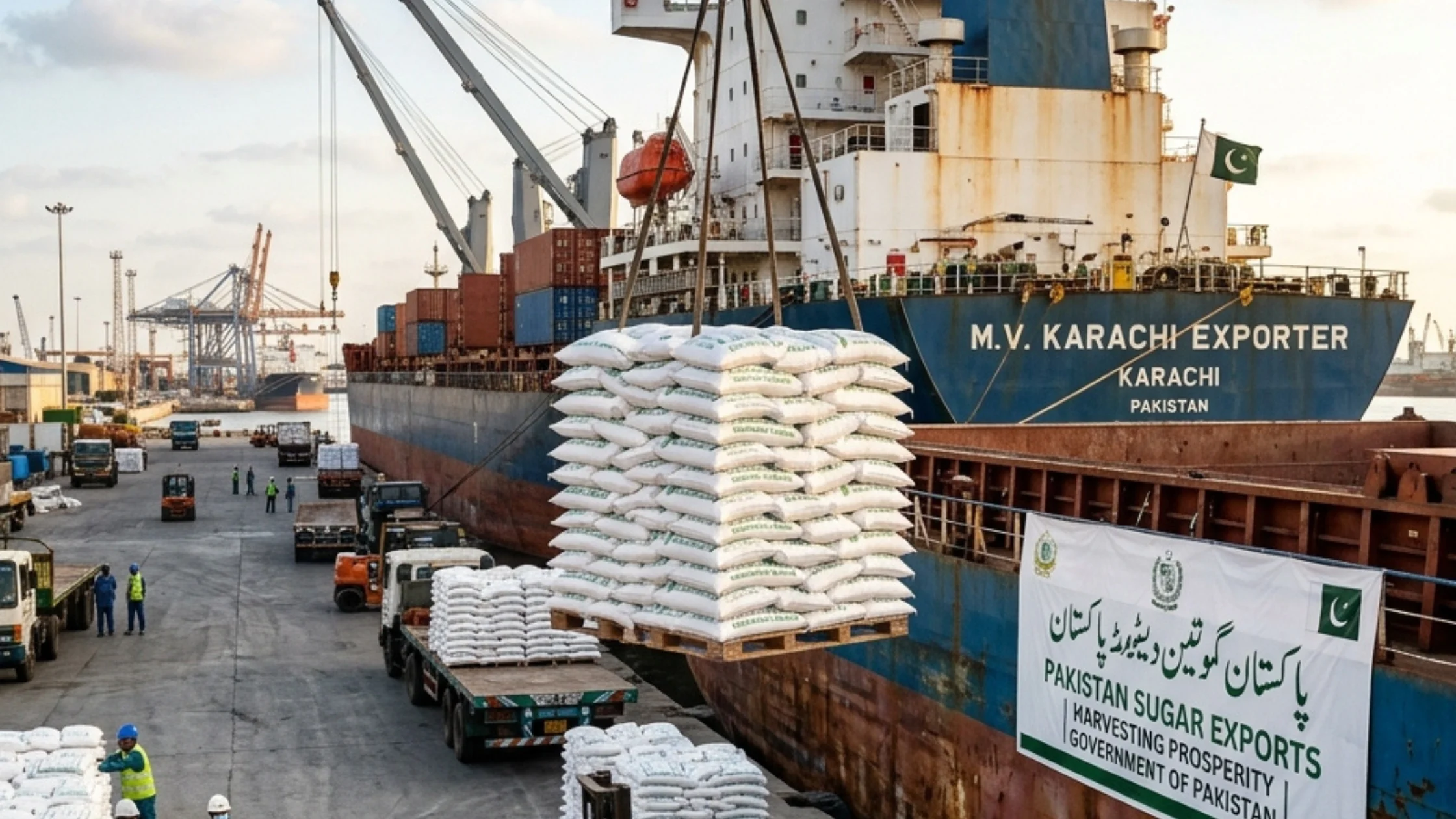
A new government decision to allow the export of expensive imported sugar at a lower price has raised concerns about potential losses running into billions of rupees for Pakistan’s national exchequer.
According to sources, permission has reportedly been granted for the export of 100,000 tonnes of imported sugar, a move that has disappointed some stakeholders. At the same time, a proposal to export 250,000 tonnes of cheaper locally produced sugar could not receive approval.
The decision has sparked questions over why imported sugar, which was purchased at a higher cost, is being allowed to leave the country at a lower price. Critics fear that the difference could ultimately place an additional financial burden on the national treasury.
Sugar mill owners have also raised concerns about the potential impact on the local industry. They have warned that purchasing sugarcane from farmers could become difficult if market conditions change and mills face pressure from falling sugar prices or reduced profitability.
Natural Food Combinations That Support Digestion and Energy
The government, however, maintains that exporting the imported sugar is intended to help prevent domestic sugar prices from rising further. Officials appear to be balancing the need to manage local supply and prices with concerns surrounding the financial impact of the export decision.
The development has placed Pakistan’s sugar sector under renewed scrutiny, particularly over import costs, export pricing, farmer payments and government policy.
The key question is whether the move will successfully stabilize sugar prices for consumers—or create unnecessary losses for the national exchequer.
Do you think exporting imported sugar at a lower price is the right decision? Share your views below. 👇