
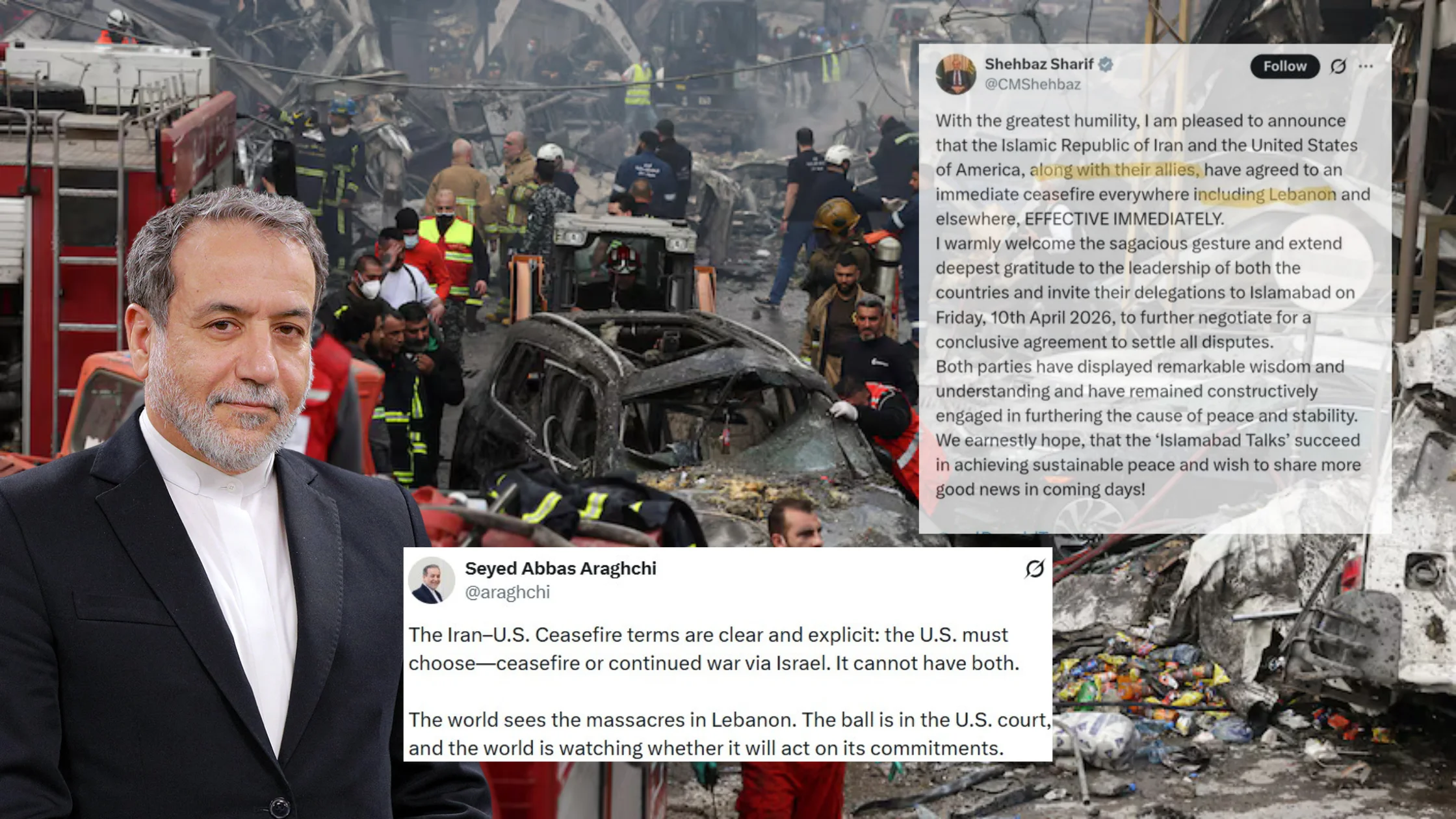
Iranian Foreign Minister Abbas Araghchi has responded on social media to statements shared by Pakistani Prime Minister Shehbaz Sharif regarding ceasefire arrangements that reportedly include Lebanon. His remarks come amid growing confusion over whether the ceasefire terms are being fully respected on the ground.
In his post on X, Araghchi emphasized that the Iran–U.S. ceasefire terms are “clear and explicit,” stating that the United States must make a decisive choice between maintaining a ceasefire or allowing continued conflict through its regional ally Israel. He stressed that both outcomes cannot exist at the same time, signaling strong criticism of the ongoing situation.
Trump Considers Asking Arab States to Help Fund Iran War, Says White House
The Iranian Foreign Minister further highlighted reports of continued violence in Lebanon, stating that the international community is witnessing ongoing civilian casualties. He urged global actors to take responsibility for enforcing commitments made under diplomatic agreements and warned that failure to do so could further escalate tensions in the region.
Araghchi also stated that the responsibility now lies with the United States, suggesting that the world is closely observing whether Washington will act in line with its stated commitments or allow further deterioration of the situation. His comments reflect Iran’s position that ceasefire agreements must be fully implemented by all involved parties without exception.
The exchange follows recent claims and counter-claims regarding the scope and enforcement of a regional ceasefire framework, with differing interpretations emerging from various governments. While Pakistan has been referenced in diplomatic discussions, conflicting statements from multiple sides have added uncertainty to the actual status of the agreement.
Overall, the remarks underscore rising tensions and the fragile nature of ongoing diplomatic efforts, as leaders continue to debate responsibility, enforcement, and accountability in one of the region’s most sensitive conflicts.