
Kashmir—the land of mesmerizing beauty and untold agony—remains the biggest thorn in the subcontinent’s history. A conflict born out of the ill-fated Partition of 1947, Kashmir’s story is one of broken promises, brutal occupation, and the unyielding struggle of its people against India’s iron-fisted rule. For Pakistan, Kashmir isn’t just a territorial dispute; it’s a matter of justice, humanity, and the right of Kashmiris to decide their own fate.
The Betrayal of Kashmir’s Right to Choose
The British exit from India was supposed to grant the people of Kashmir the right to choose their own destiny. But the Maharaja of Kashmir—rattled by an uprising and fearing the inevitable—threw in his lot with India under duress. India sent troops under the guise of protection, but in reality, this was the beginning of an occupation that has since turned into one of the longest-running human rights crises in modern history.

Decades of Broken Promises and Bloodshed
From the 1947 Indo-Pak War to the Simla Agreement of 1972, Pakistan has pushed for Kashmiris to have their say. India, however, has consistently stonewalled all efforts to let Kashmiris decide their future. The UN resolutions calling for a plebiscite remain unfulfilled, while India continues to tighten its grip on the region. Every uprising, every call for self-determination, is met with bullets, mass arrests, and enforced disappearances.
The Abrogation of Article 370: A Colonial Mindset at Play
If there was any doubt about India’s intentions, August 5, 2019, removed it. The Modi government unilaterally revoked Article 370, stripping Jammu and Kashmir of its special status and subjecting its people to direct rule from New Delhi. What followed was an Orwellian crackdown—mass arrests, a media blackout, and a complete lockdown of the region. This wasn’t just an administrative move; it was a calculated step towards demographic engineering, aimed at turning Kashmiris into a minority in their own land.
The Human Cost: Unrelenting State Terror
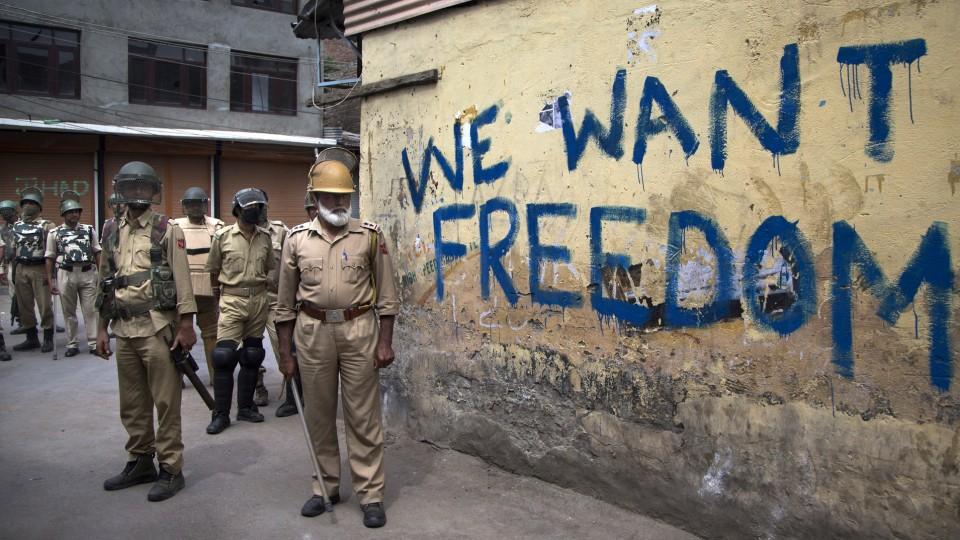
Under Indian occupation, Kashmir has turned into a war zone. Innocent civilians are caught in the crossfire of brutal military operations. Entire towns are locked down, communication is cut off, and thousands of Kashmiri youth are detained without trial. Pellet guns—banned in most warzones—are freely used to blind and maim protesters, including children. Reports of mass graves, torture chambers, and sexual violence against Kashmiri women paint a picture of an occupation that rivals the worst human rights violations in history.
Pakistan’s Stance: Justice for Kashmiris
Pakistan has always stood firm on its stance: Kashmir belongs to the Kashmiris. Islamabad has taken the fight to the global stage, exposing India’s atrocities and advocating for the Kashmiri people’s right to self-determination. From raising the issue at the UN to rallying support from Muslim nations, Pakistan remains the voice for those silenced by Indian oppression.
A Nuclear Flashpoint the World Can’t Ignore
Kashmir is not just an isolated conflict; it’s a ticking time bomb between two nuclear-armed nations. Every flare-up along the Line of Control (LoC) brings the region dangerously close to war. The 2019 Pulwama-Balakot crisis proved how easily tensions can spiral out of control. The world cannot afford to ignore Kashmir, lest it witnesses a catastrophe of unimaginable proportions.
For peace to prevail, India must end its occupation and allow Kashmiris to exercise their right to self-determination. The world must pressure India to stop its human rights violations and fulfill the promises made to the Kashmiri people. Until then, Pakistan will continue to stand with Kashmir, come what may.
The struggle for Kashmir is far from over, but history has shown that no amount of military might can suppress a people’s desire for freedom. Kashmir will rise, and when it does, it will not be with shackles—but with the echoes of azadi (freedom) ringing through its valleys.