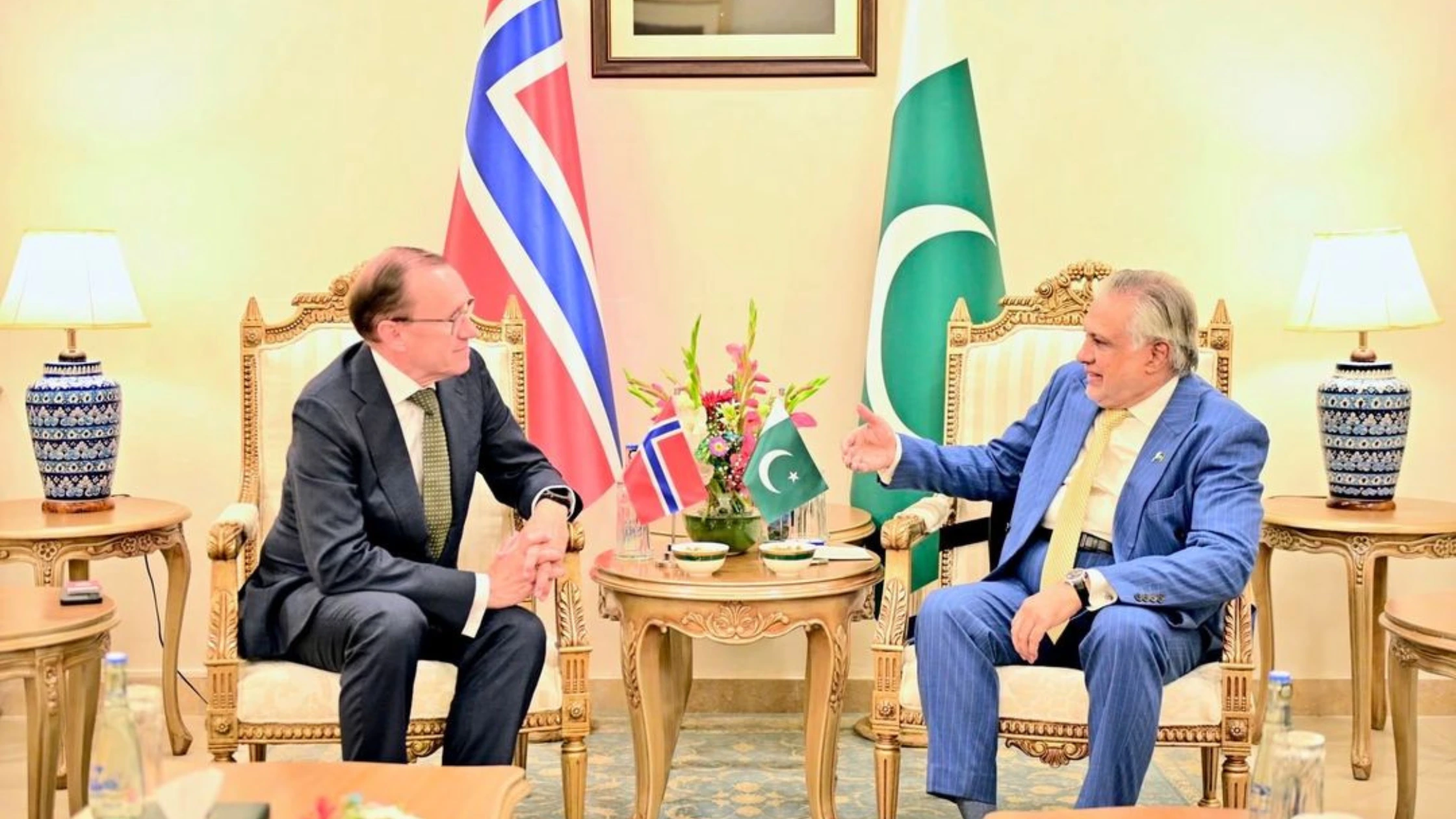
Pakistan and Norway are looking to deepen their bilateral relationship following a high-level visit by Norwegian Foreign Minister Espen Barth Eide to Islamabad. The visit marks the highest-level diplomatic exchange between the two countries in around a decade and signals renewed interest in strengthening political, economic and people-to-people ties.
The discussions focused on areas with significant potential for both countries, including trade, renewable energy, information technology, agriculture and skilled workforce mobility. The two sides also discussed ways to expand cooperation beyond traditional diplomatic relations and build stronger economic connections.
Norway also acknowledged Pakistan’s recent diplomatic engagement in international and regional affairs. Norwegian officials praised Pakistan’s efforts to facilitate dialogue and support peace initiatives in the Middle East, describing the country’s diplomatic contribution as an important service to the wider international community.
Trade Relations Could Expand Beyond $200 Million
One of the key priorities discussed during the visit was increasing bilateral trade. Pakistan and Norway currently have trade relations worth around $200 million, but both sides see considerable room for expansion.
The two countries are interested in creating more opportunities for Pakistani exports while encouraging Norwegian companies to invest in Pakistan. Increased business-to-business cooperation could help Pakistani manufacturers and exporters gain greater access to Norwegian and wider European markets.
Future cooperation could cover agriculture, technology, renewable energy, industrial products and other sectors where both countries have complementary strengths.
A stronger trade relationship could also encourage Norwegian businesses to explore Pakistan as a market for investment and production, while Pakistani companies could benefit from greater exposure to Norway’s advanced economy and European business networks.
Yara International Plans Agricultural Joint Venture
Agriculture emerged as another important area of cooperation. Norwegian agricultural and fertilizer company Yara International is reportedly preparing a major joint venture in Pakistan.
The project could strengthen cooperation between the two countries in agricultural inputs, fertilizer technology and modern farming practices. For Pakistan, such investment could be particularly important because improving agricultural productivity remains a major economic priority.
Pakistan Unveils Two New Long-Range Loitering Munitions at 2026 Defence Expo
Turkish Petroleum to Begin Offshore Drilling in Pakistan Soon
The involvement of an international company such as Yara could also create opportunities for technology transfer, professional training and the development of more efficient agricultural systems.
If implemented successfully, the joint venture could become an example of how bilateral relations can translate into practical economic projects and employment opportunities.
Green Energy Becomes a Major Focus
Renewable energy and green technology are also expected to play an increasingly important role in Pakistan-Norway relations.
Norway has considerable experience in clean energy, sustainable development and green technologies. Pakistan, meanwhile, is looking for ways to increase its renewable energy capacity and reduce dependence on expensive conventional energy sources.
Greater cooperation could open doors for investment and technical collaboration in areas such as solar power, hydropower, energy efficiency, battery storage and other clean-energy technologies.
For Pakistan, green investment could help address energy challenges while supporting its broader transition toward cleaner and more sustainable economic growth.
New Opportunities for Skilled Pakistani Workers
Workforce mobility was another important element of the discussions. Pakistan is seeking legal and regulated pathways that could allow qualified Pakistani workers to find employment opportunities in Norway.
Such arrangements could benefit both countries. Pakistani professionals and skilled workers could gain access to international employment opportunities, while Norway could address shortages in sectors where qualified workers are needed.
The emphasis on legal migration is particularly significant because both countries also want to address the issue of irregular migration. Creating transparent and regulated routes for skilled workers could help provide safer alternatives to undocumented migration.
For Pakistanis with relevant qualifications and professional experience, expanded legal pathways could potentially create new opportunities in the Norwegian labour market.
Cooperation in Information Technology
Information technology is another promising area for future cooperation between Pakistan and Norway.
Pakistan has a rapidly growing IT and digital services sector, with a large pool of young professionals working in software development, freelancing, cybersecurity, artificial intelligence and other technology-related fields.
Norwegian companies and institutions could benefit from Pakistan’s expanding technology talent, while Pakistani IT businesses could gain access to international partnerships and investment opportunities.
Greater cooperation in technology could therefore support both trade and employment while connecting Pakistani digital businesses with European markets.
Pakistan’s Growing Diplomatic Role
The Norwegian foreign minister’s visit also comes at a time when Pakistan is seeking to strengthen its role as a diplomatic facilitator.
Norway’s appreciation of Pakistan’s mediation and diplomatic engagement in Middle Eastern conflicts highlights Islamabad’s efforts to present itself as a constructive participant in international diplomacy.
Pakistan has increasingly sought to use dialogue and diplomatic engagement to help address regional tensions. Recognition from international partners could strengthen Islamabad’s diplomatic standing and create opportunities for further cooperation.
A Broader Economic Partnership
The discussions between Pakistan and Norway go beyond a single trade agreement or investment project. They indicate an effort to develop a broader economic partnership based on investment, technology, energy, agriculture and human resources.
For Pakistan, Norwegian investment could provide capital, technology and international business expertise. For Norway, Pakistan offers a large consumer market, a growing technology sector and a significant pool of skilled workers.
The challenge will be turning diplomatic commitments into concrete projects. Successful implementation of investment agreements, trade initiatives and workforce programmes will determine how much impact the renewed relationship has on both economies.
What This Could Mean for Pakistan
The potential benefits for Pakistan are significant. Increased Norwegian investment could create jobs, strengthen industrial capacity and introduce new technologies into important sectors.
Greater access to legal employment opportunities could also benefit Pakistani workers and their families through increased remittances and international professional experience.
At the same time, stronger cooperation in renewable energy and agriculture could support Pakistan’s long-term development goals.
However, sustained progress will require clear policies, effective implementation and close cooperation between government institutions and the private sector.
A New Chapter in Pakistan-Norway Relations
The Norwegian foreign minister’s visit represents an important moment in Pakistan-Norway relations. After years without a visit at this level, the renewed diplomatic engagement provides an opportunity to build stronger economic and political ties.
With trade targeted for expansion, a major agricultural joint venture on the horizon, greater cooperation in green energy and potential legal pathways for skilled workers, the relationship could enter a more practical and economically focused phase.
If these initiatives move forward successfully, Pakistan and Norway could build a partnership that delivers benefits beyond diplomacy—creating new investment, jobs, technology, trade and clean-energy opportunities for both countries.
Conclusion
Pakistan and Norway appear to be entering a new phase of cooperation. The visit by Foreign Minister Espen Barth Eide has placed trade, investment, green energy, IT and skilled workforce mobility at the centre of the bilateral relationship.
The proposed Yara International joint venture, efforts to increase trade beyond the current $200 million level and discussions on legal employment pathways could provide tangible benefits for Pakistan.
For Islamabad, the priority now will be converting these discussions into long-term projects and agreements. If that happens, the latest diplomatic breakthrough could become the foundation for a stronger Pakistan-Norway economic partnership in the years ahead.