
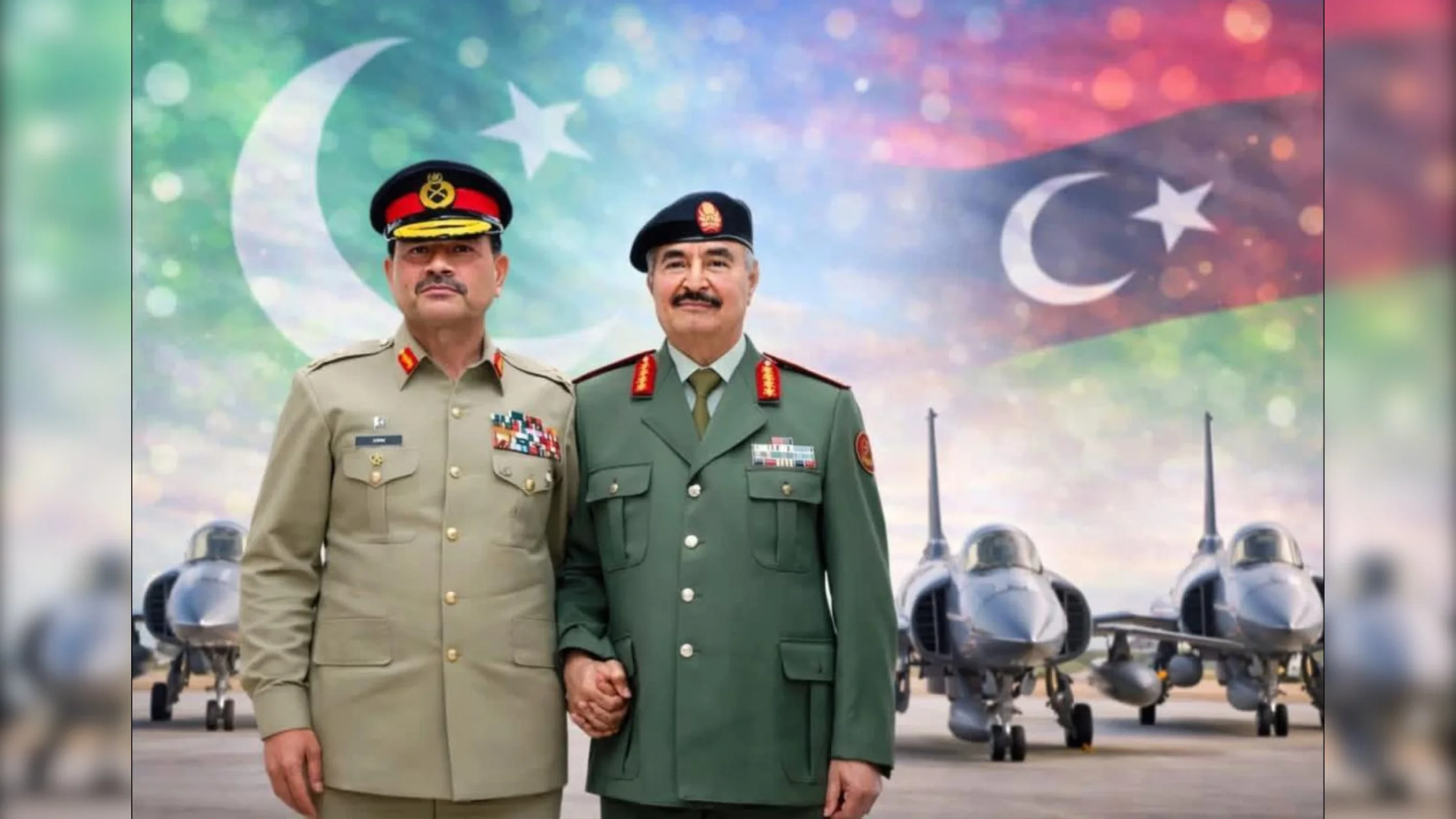
Pakistan has reportedly finalized a major defence export agreement worth over $4 billion with Libya’s Libyan National Army (LNA), marking one of the largest military export deals in the country’s history. The agreement is being described as a significant breakthrough for Pakistan’s defence industry and export-driven economic strategy.
According to reports, the wide-ranging deal covers military equipment across land, sea, and air domains. A key highlight of the agreement is the possible export of 16 JF-17 Thunder fighter jets, Pakistan’s indigenously co-developed multi-role combat aircraft. The package may also include Super Mushshak trainer aircraft, along with other defence systems and support services.
The agreement was reportedly finalized after high-level meetings between Pakistani and Libyan military leadership held in Benghazi. These discussions focused on defence cooperation, capability enhancement, and long-term strategic collaboration between the two sides.
Mohsin Naqvi Shares Important Updates for Pakistanis Going Abroad
Defence analysts say the inclusion of the JF-17 fighter jets is particularly significant. The aircraft has already been exported to several countries and is known for its cost-effectiveness, modern avionics, and combat versatility. If confirmed, the Libya deal would further strengthen the JF-17’s position in the international defence market.
Officials familiar with the development described the agreement as a major boost for Pakistan’s defence exports, highlighting the growing global confidence in Pakistani military technology and production capabilities. The deal is also seen as supporting Pakistan’s broader goal of earning foreign exchange through high-value exports.
The Pakistan Aeronautical Complex (PAC), which manufactures the JF-17 and Super Mushshak aircraft, is expected to play a central role in fulfilling the contract. Successful execution of the deal could open doors for additional defence exports to Africa and the Middle East.
However, the reported agreement comes amid ongoing international scrutiny related to Libya’s arms embargo. Observers note that any defence exports would need to comply with international regulations and approval mechanisms. Pakistani officials have not yet issued a detailed public statement confirming the final structure of the deal.
If fully realized, the $4 billion agreement would represent a landmark achievement for Pakistan’s defence industry, reinforcing its status as an emerging global defence exporter and strengthening economic and strategic ties with Libya.