
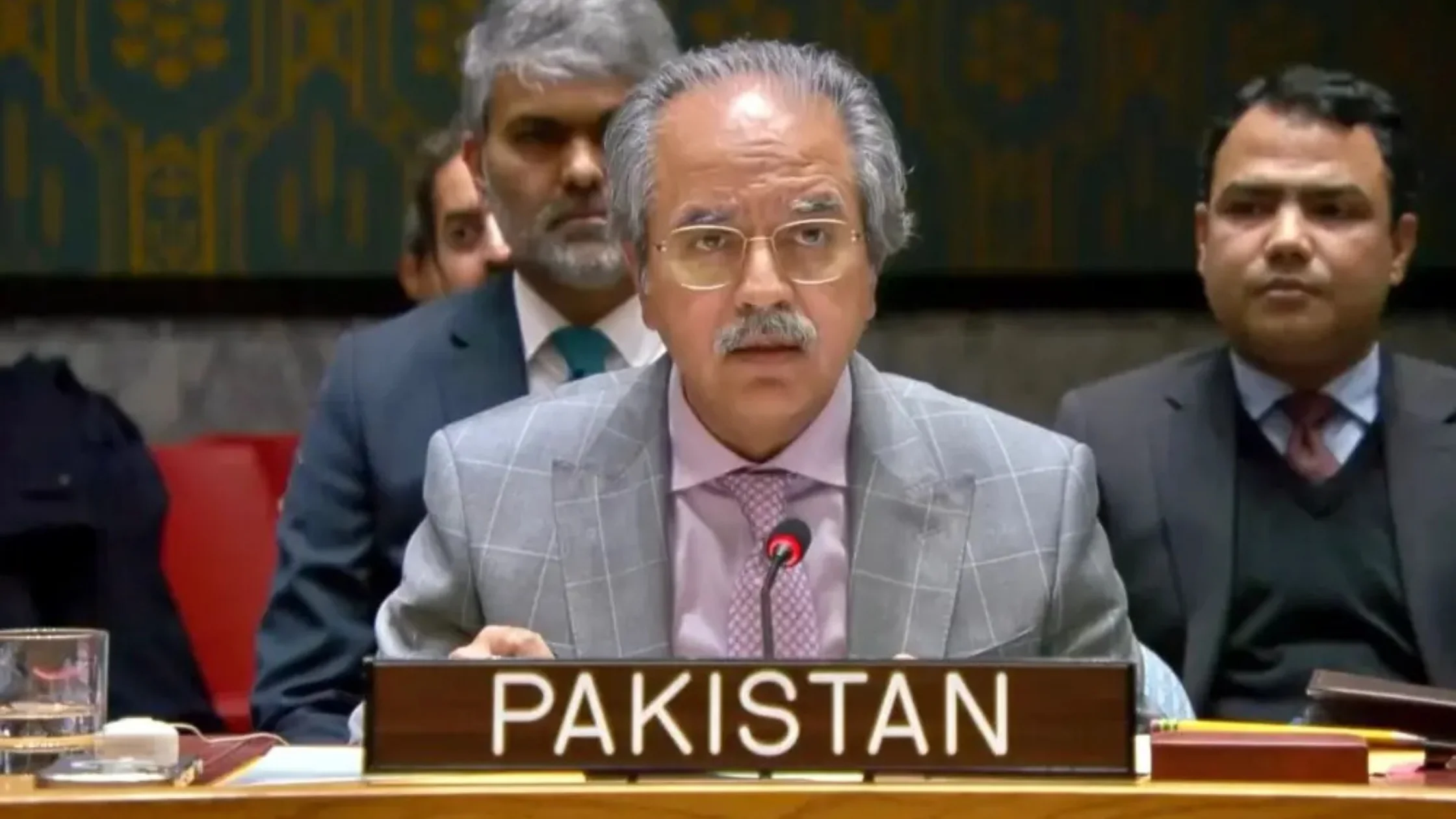
Pakistan has reiterated its firm commitment to the principles of sovereignty, non-interference, and international law while addressing the UN Security Council (UNSC), expressing hope for an early normalization of the situation in Iran. Islamabad emphasized that stability in Iran is crucial not only for its own people but also for regional and global peace, particularly at a time when the Middle East is facing multiple overlapping crises.
In its statement to the Security Council, Pakistan underlined that the UN Charter and established norms of international law clearly prohibit external interference in the internal affairs of sovereign states. Pakistani representatives stressed that unilateral actions, coercive measures, or foreign intervention can further aggravate tensions and undermine prospects for lasting peace. Instead, Pakistan called for patience, restraint, and diplomacy as the most effective tools to address internal and regional challenges.
Pakistan highlighted that Iran is an important country in the region, playing a significant role in regional security, trade routes, and energy dynamics. Any prolonged instability within Iran could have spillover effects, including economic disruption, refugee movements, and heightened security risks for neighboring countries. Islamabad therefore urged the international community to adopt a responsible and balanced approach that prioritizes dialogue and de-escalation over confrontation.
The statement also reaffirmed Pakistan’s long-standing position that disputes and internal political issues should be resolved through peaceful means and inclusive dialogue. Pakistan encouraged all stakeholders to support efforts that promote reconciliation, mutual understanding, and respect for the will of the people. According to Pakistan, sustainable peace can only be achieved when countries are allowed to address their internal matters without undue external pressure.
United States Suspends Immigrant Visa Processing for Pakistan and 74 Other Countries
Islamabad further warned that selective application of international law and double standards weaken the credibility of global institutions. Pakistan emphasized that the same principles of sovereignty and non-interference must apply universally, regardless of a country’s political alignment or strategic importance. Upholding these principles, Pakistan argued, is essential for maintaining trust in the international system and preventing future conflicts.
The Pakistani delegation also pointed out that the UN Security Council has a responsibility to act as a forum for constructive engagement rather than a platform for political pressure. Pakistan urged Council members to encourage diplomatic channels and confidence-building measures that could help reduce tensions and pave the way for normalization in Iran. It stressed that inflammatory rhetoric or punitive actions could complicate the situation and reduce space for meaningful dialogue.
Pakistan’s call comes amid heightened global concern over instability in different parts of the Middle East. Islamabad reiterated its belief that regional peace is interconnected and that instability in one country can have far-reaching consequences. As a country that has consistently advocated peaceful coexistence and multilateralism, Pakistan reaffirmed its readiness to support international efforts aimed at promoting stability, dialogue, and respect for international law.
In conclusion, Pakistan’s message to the UN Security Council was clear and consistent: peace cannot be imposed through interference or coercion. True stability in Iran and the wider region can only be achieved by respecting sovereignty, adhering to international law, and prioritizing diplomacy. Pakistan expressed hope that collective wisdom will prevail, leading to an early normalization of the situation and a reduction in regional tensions.