
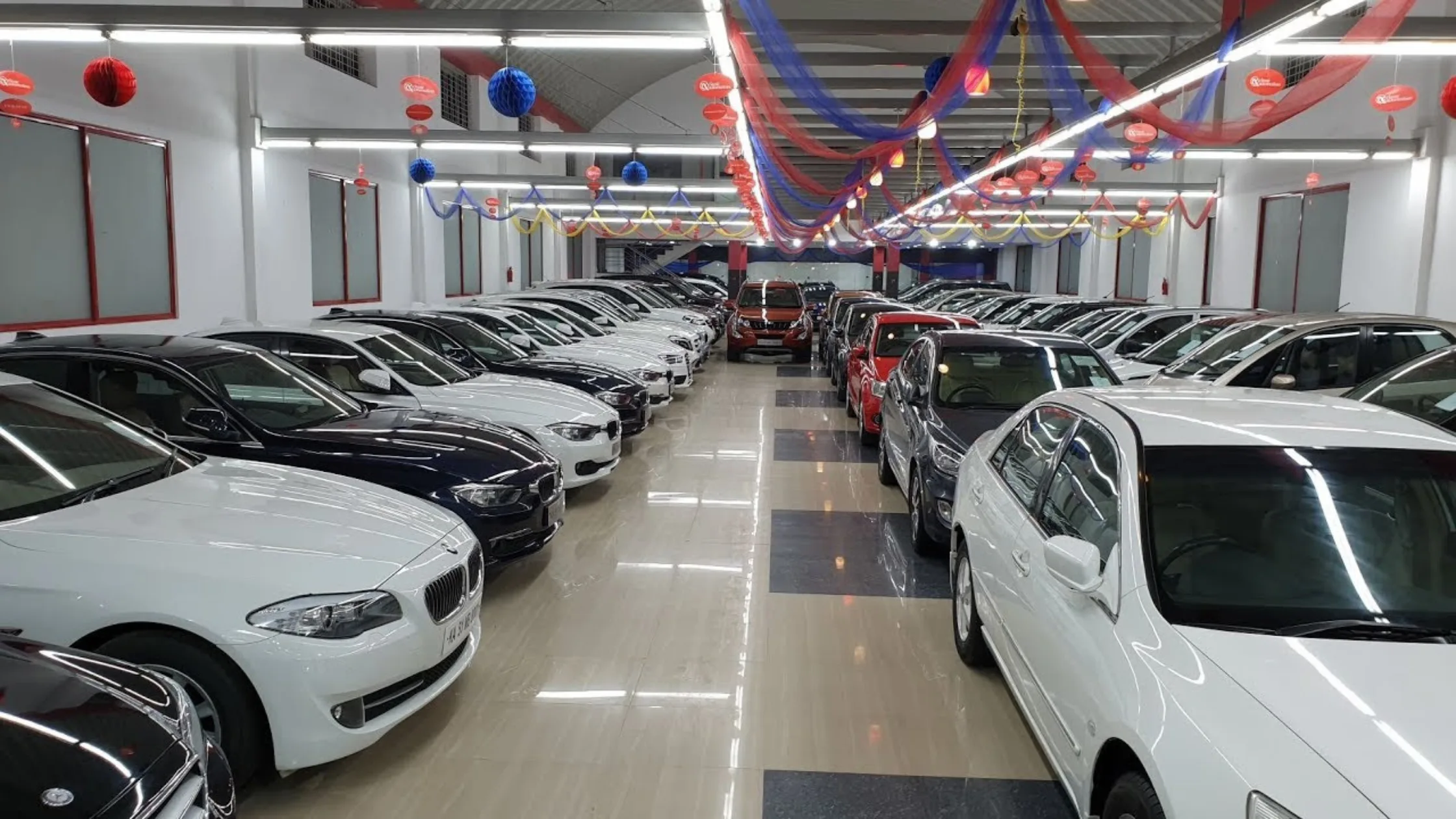
Pakistan’s auto industry today is less about cars and more about contradictions. On one hand, the sector has been the symbol of aspiration for the country’s middle class, the moment when a family feels it has “arrived.” On the other, every fresh batch of new cars rolling out of showrooms deepens Pakistan’s dependence on imported oil, pushes the current account closer to the edge, and suffocates cities under an additional layer of smog. The auto sector’s trajectory is now inseparable from the country’s broader struggle with climate change, energy security, and economic vulnerability.
The numbers tell their own story. In 2024, Pakistan spent over $17 billion on petroleum imports, almost a third of the country’s entire import bill. Every Corolla, Civic or crossover that joins the roads is essentially a long-term commitment to foreign fuel. Unlike India, which pushed CNG adoption in the 2000s and is now aggressively pivoting to electric, Pakistan has been stuck in a cycle of importing oil, importing car kits, and importing inflation when global prices spike. A rise in car sales may look like economic revival, but it’s also a slow tightening of the financial noose.
The environmental cost is equally unforgiving. Transport contributes nearly 40 percent of urban air pollution in major Pakistani cities. The smog season in Lahore and the choking congestion in Karachi are not isolated phenomena; they are the direct outcomes of policies that prioritized private car ownership while ignoring public transport. The 2022 floods should have been a turning point, a wake-up call that climate risk is not an abstract concept but a direct economic threat. Yet the country’s auto policies continue to rely on tariff gymnastics and protectionist measures, with very little structural commitment to climate resilience or sustainable urban planning.
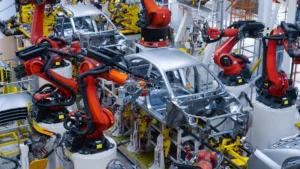
What complicates the picture further is the industry’s reliance on global supply chains. Pakistan remains an assembly economy rather than a manufacturing one, dependent on imported CKD kits and foreign components. When the rupee crashes, prices of cars spiral out of reach. When semiconductors became scarce during the global shortage, Pakistan’s assembly plants slowed to a crawl. The weakness is structural: without investment in real localization; electronics, batteries, motors, even chip packaging, the auto sector remains a hostage to external shocks, unable to claim resilience or independence.
Into this mix enters geopolitics. China’s BYD, the world’s largest EV maker, is setting up local assembly in Karachi with operations targeted for 2026. On paper, this could be a game-changer: the arrival of genuine electric technology, new supply chains, and perhaps the first step towards breaking oil addiction. But it is also a reminder that Pakistan’s automotive future is being negotiated not just in Islamabad, but in Beijing. The Chinese see Pakistan as part of their broader EV strategy, a staging ground for regional exports into right-hand-drive markets from Africa to the Gulf. Whether Pakistan leverages this for its own long-term mobility independence or merely becomes another consumer base for Chinese dominance will depend on how intelligently the policy framework is designed.
The uncomfortable truth, however, is that no auto industry, no matter how reformed, can fix Pakistan’s transport crisis alone. Mass transit, not cars, is the real solution to urban congestion and pollution. Electric buses, rickshaws, and two-wheelers would transform Pakistani cities far more than an additional thousand imported SUVs ever could. Yet successive governments have obsessed over car sales as an economic indicator, while leaving buses and public transit projects half-baked, underfunded, or politically contested. If the ambition is to lower emissions and improve urban quality of life, the focus must shift away from subsidizing private cars and toward electrifying the vehicles that actually dominate the roads: motorbikes, rickshaws, and buses.
The auto industry is therefore not just at a commercial crossroads, but at a philosophical one. Does Pakistan want to be a country that merely assembles and consumes whatever technology the world throws at it, locking itself into cycles of foreign fuel and foreign parts? Or does it want to seize the climate emergency as an opportunity to leapfrog, to build supply chains, attract climate finance, and become a hub for green mobility in the region? The answer will not be decided by engineers or marketers alone. It will be decided by the government’s ability to deliver predictable policy, by the industry’s willingness to invest in real localization, and by society’s readiness to rethink what “mobility” means in a climate-vulnerable country.
In the next five years, the automobile sector can either continue as a playground for imports and oil addiction, or it can become a cornerstone of a new kind of industrial and environmental strategy. The stakes are higher than ever: this isn’t just about how Pakistanis get from point A to point B, it’s about whether the country can break free from cycles of vulnerability and drive towards a future that is both economically and ecologically sustainable.