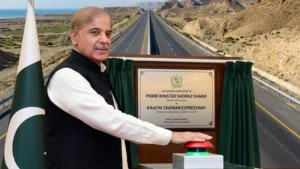


Prime Minister Shehbaz Sharif announced a wide-ranging set of austerity measures aimed at managing Pakistan’s fuel and economic challenges caused by the ongoing Middle East crisis. In his address to the nation, the prime minister said the government had decided to adopt emergency energy-saving policies and reduce public spending in order to stabilize the economy and deal with rising global fuel prices.
The PM Shehbaz Sharif austerity measures include a four-day work week for government offices, work-from-home arrangements for employees, reductions in government fuel usage, and cuts in salaries for cabinet members and lawmakers. These decisions were taken during a high-level meeting attended by both federal and provincial government representatives.
Four-Day Work Week and Work-From-Home Policy Introduced
One of the most significant decisions announced under the PM Shehbaz Sharif austerity measures is the introduction of a four-day work week for government offices. The prime minister said this step will help reduce fuel consumption and lower transportation costs during the ongoing energy crisis.
In addition, 50% of employees in both public and private sectors will work from home, except for essential services. This measure is expected to significantly reduce daily commuting and fuel consumption across the country.
However, the four-day work week policy will not apply to banks, and industries as well as agricultural sectors will continue their operations as usual to ensure production and exports are not affected.
Fuel Usage for Government Vehicles Cut by 50%
To conserve energy, the government has decided to reduce fuel allocations for government vehicles by 50% for the next two months. According to the prime minister, around 60% of vehicles used by government departments will remain off the roads during this period.
This decision is part of the broader PM Shehbaz Sharif austerity measures plan, which aims to minimize unnecessary fuel consumption and reduce pressure on the country’s energy resources.
Ambulances and other essential emergency services will remain exempt from these restrictions.
PM Shehbaz Sharif Pays Tribute to Pakistani Women on International Women’s Day
Cabinet Members and Lawmakers Face Salary Cuts
Another major step under the PM Shehbaz Sharif austerity measures is a reduction in salaries for government officials and lawmakers.
The prime minister announced that federal cabinet members, ministers, advisers, and special assistants will not receive salaries for the next two months. In addition, the salaries of members of parliament will be reduced by 25% during the same period.
Senior government officials in Grade 20 and above, who earn more than Rs300,000 per month, will also contribute by having two days’ salary deducted to support relief measures for the public.
Government Spending to Be Reduced by 20%
As part of the national austerity plan, the government has also decided to reduce non-salary expenditures across all departments.
Prime Minister Shehbaz Sharif announced that all government departments will reduce their operational expenditures by 20%, except for essential salary payments.
The government has also banned the purchase of vehicles, furniture, air conditioners, and other equipment by public departments to control unnecessary spending.
These steps are intended to strengthen Pakistan’s economic stability and reduce pressure on national finances during the ongoing global energy crisis.
Ban on Foreign Visits and Official Events
The PM Shehbaz Sharif austerity measures also include restrictions on official travel and government events.
The prime minister announced a complete ban on foreign visits by federal and provincial ministers, advisers, special assistants, governors, and other government officials unless the travel is considered essential for national interest.
To further reduce government spending, official dinners and government-funded Iftar parties have been completely banned. Seminars and conferences will now be held at government facilities rather than hotels.
Government officials have also been encouraged to use teleconferencing and online meetings instead of physical meetings to reduce expenses.
Schools Closed for Two Weeks, Online Classes Introduced
To help conserve energy and fuel, the prime minister announced that all schools across the country will remain closed for two weeks starting at the end of the current week.
Meanwhile, all universities and higher education institutions will immediately switch to online classes to ensure that students’ education continues without interruption.
The decision is part of the broader national effort to reduce energy consumption during the current crisis.
Warning Against Hoarding and Price Manipulation
During his address, Prime Minister Shehbaz Sharif also issued a strong warning to traders and businesses against hoarding fuel or essential commodities.
He said strict legal action will be taken against anyone found exploiting the situation or creating artificial shortages in the market.
The government has already directed provincial authorities to closely monitor markets and take immediate action against profiteers.
Middle East Crisis Impacting Global Fuel Prices
The prime minister explained that the current austerity measures were necessary because of the global fuel crisis triggered by the ongoing conflict involving the United States, Israel, and Iran.
According to him, global oil prices have increased sharply, rising from around $60 per barrel to over $100 per barrel in a short period.
Pakistan depends heavily on energy supplies coming from the Gulf region, and disruptions in global supply routes have created serious challenges for the country’s economy.
He added that the government had to increase petrol and diesel prices recently, acknowledging that it was a difficult decision.
Government Working to Protect the Economy
Prime Minister Shehbaz Sharif said Pakistan had previously faced the risk of economic default but managed to stabilize its economy through difficult reforms and public support.
He stated that inflation has started to decline and electricity prices have been reduced, showing signs of economic improvement.
The government, he said, will continue taking responsible decisions to protect Pakistan’s economy while trying to minimize the burden on the public.
Pakistan Calls for Unity During Global Crisis
In his address, the prime minister urged the nation to remain united during this challenging period.
He noted that the world is entering a phase of new geopolitical alliances and changing global power dynamics. At the same time, Pakistan continues to face security challenges along its western borders.
The prime minister emphasized that national unity, responsible governance, and cooperation between the public and government are essential to overcome the current crisis.