
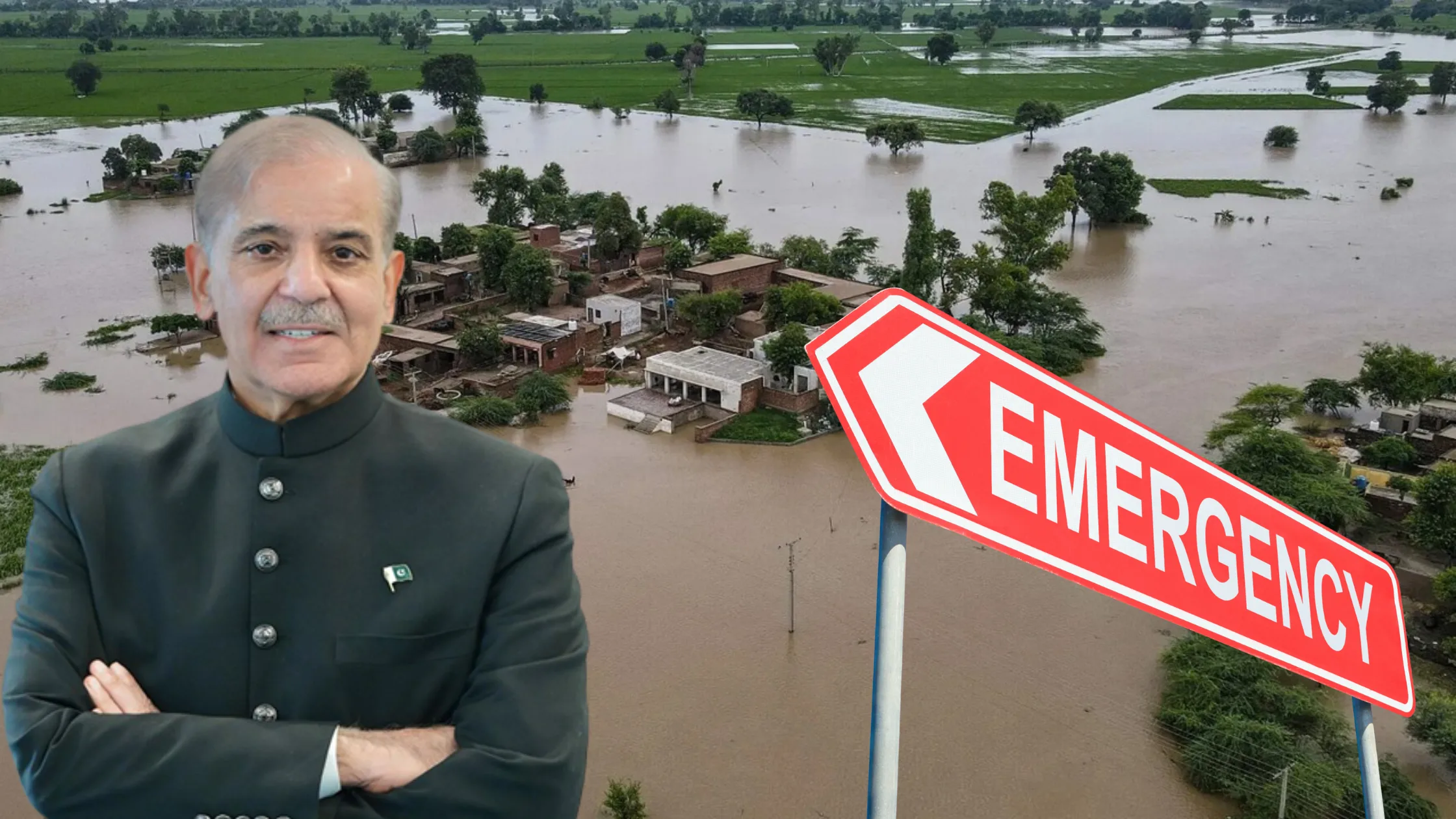
Prime Minister Shehbaz Sharif has officially declared an agricultural and climate emergency across Pakistan. The announcement came after a federal cabinet meeting on Wednesday, which focused on the widespread devastation caused by this year’s heavy monsoon rains and floods.
The Prime Minister shared that the government will soon hold a national conference with the chief ministers of all four provinces. The purpose of the meeting is to consult on a comprehensive action plan to reduce the impact of climate change and protect the agricultural sector, which has been hit the hardest.
During the cabinet briefing, officials reported severe damage to crops and farmland across multiple regions, especially in Punjab, where thousands of acres have been destroyed. Farmers have lost standing crops, threatening both food security and livelihoods in flood-affected areas.
Acknowledging the scale of the crisis, Sharif stressed that climate challenges cannot be solved overnight. However, he highlighted that a united national effort and long-term roadmap are essential to secure Pakistan’s future against worsening environmental risks.
The declaration of an agricultural and climate emergency reflects the government’s recognition of the growing threat posed by extreme weather, which has already displaced communities, damaged infrastructure, and disrupted supply chains across the country.
FAQs
1. Why did the Prime Minister declare a climate emergency?
Due to massive crop loss and destruction caused by this year’s monsoon rains and floods.
2. Which areas have been most affected?
The worst-hit region is Punjab, where thousands of acres of farmland were destroyed.
3. What steps will the government take next?
A conference with provincial chief ministers will be held to draft a national action plan.
4. How does this emergency affect agriculture?
Farmers have lost crops and fertile land, which threatens food supply and rural livelihoods.
5. Can climate issues be solved quickly?
No. The Prime Minister emphasized that while quick fixes are not possible, a united and long-term national strategy is crucial.