

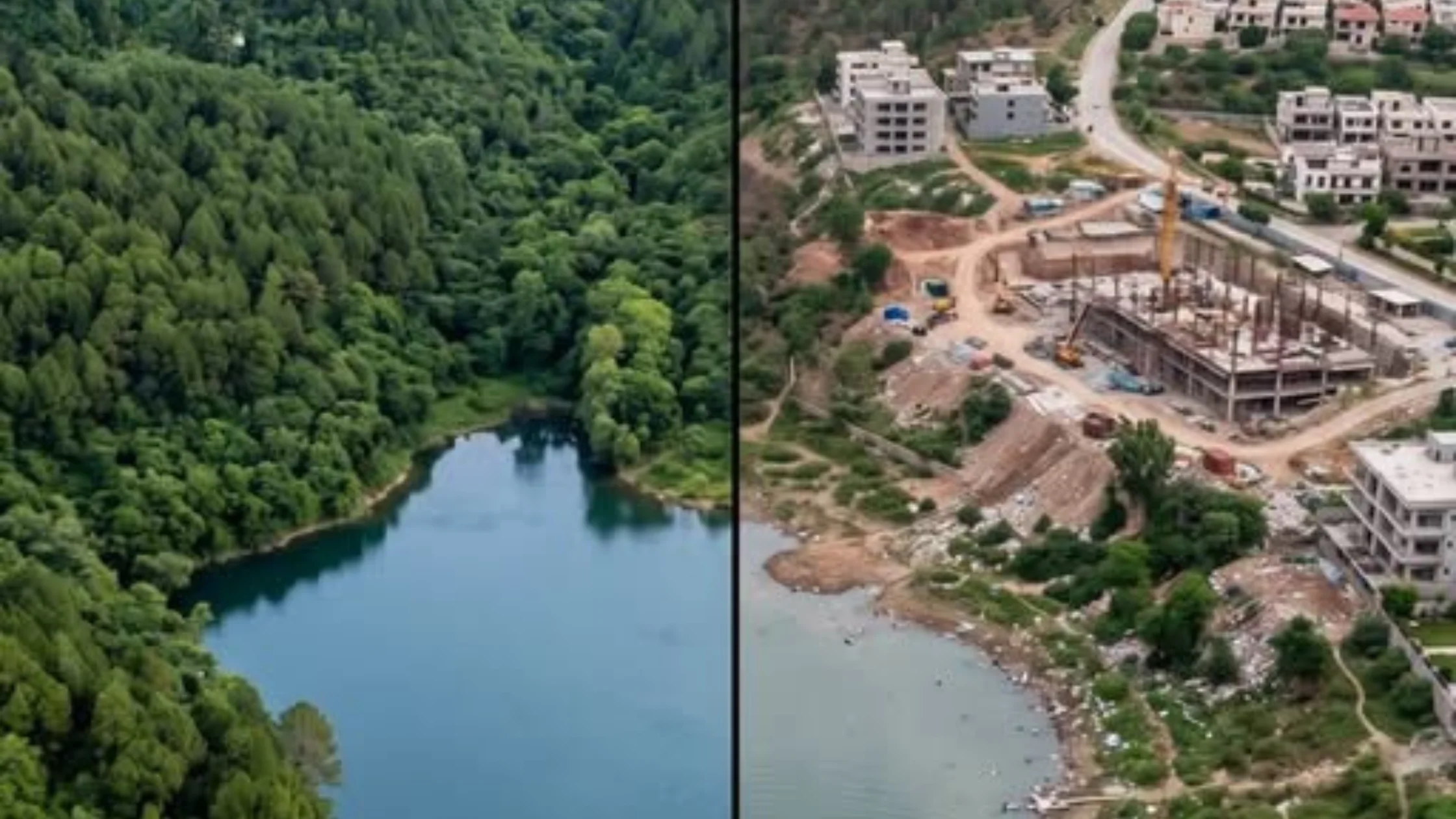
Rawal Lake Park has lost 50 percent of its tree cover over the past two decades, according to satellite images released by the Pakistan Space and Upper Atmosphere Research Commission (SUPARCO). The comparison between images from 2004 and 2024 highlights the significant environmental impact of rapid urban expansion and increasing human activity around one of Islamabad’s most important recreational and ecological sites.
The satellite imagery shows that the once densely forested Lake View Point has experienced extensive deforestation, while the water in Rawal Dam has changed from a greenish hue in 2004 to a much darker, almost blackish shade in recent years. Environmental experts suggest the discoloration may be linked to algae growth, while also expressing concern over untreated sewage and waste flowing into the lake from upstream areas and nearby settlements.
Pakistan Invites Saudi Arabia to Invest Billions in Power Sector
Pollution remains a growing challenge for the area. During a cleanup campaign in June, the Pakistan Environmental Protection Agency (Pak-EPA) recovered hazardous waste, including used syringes, hospital waste, and large quantities of plastic from the lake’s shoreline.
Officials have described the pollution of Rawal Lake as a serious environmental issue and announced plans to improve the area’s ecological health. As part of these efforts, authorities intend to distribute 500,000 seed balls across Islamabad, including areas surrounding the lake, to promote reforestation and restore the region’s natural ecosystem.
Environmentalists stress that stronger conservation measures and better waste management are essential to protect Rawal Lake for future generations.