

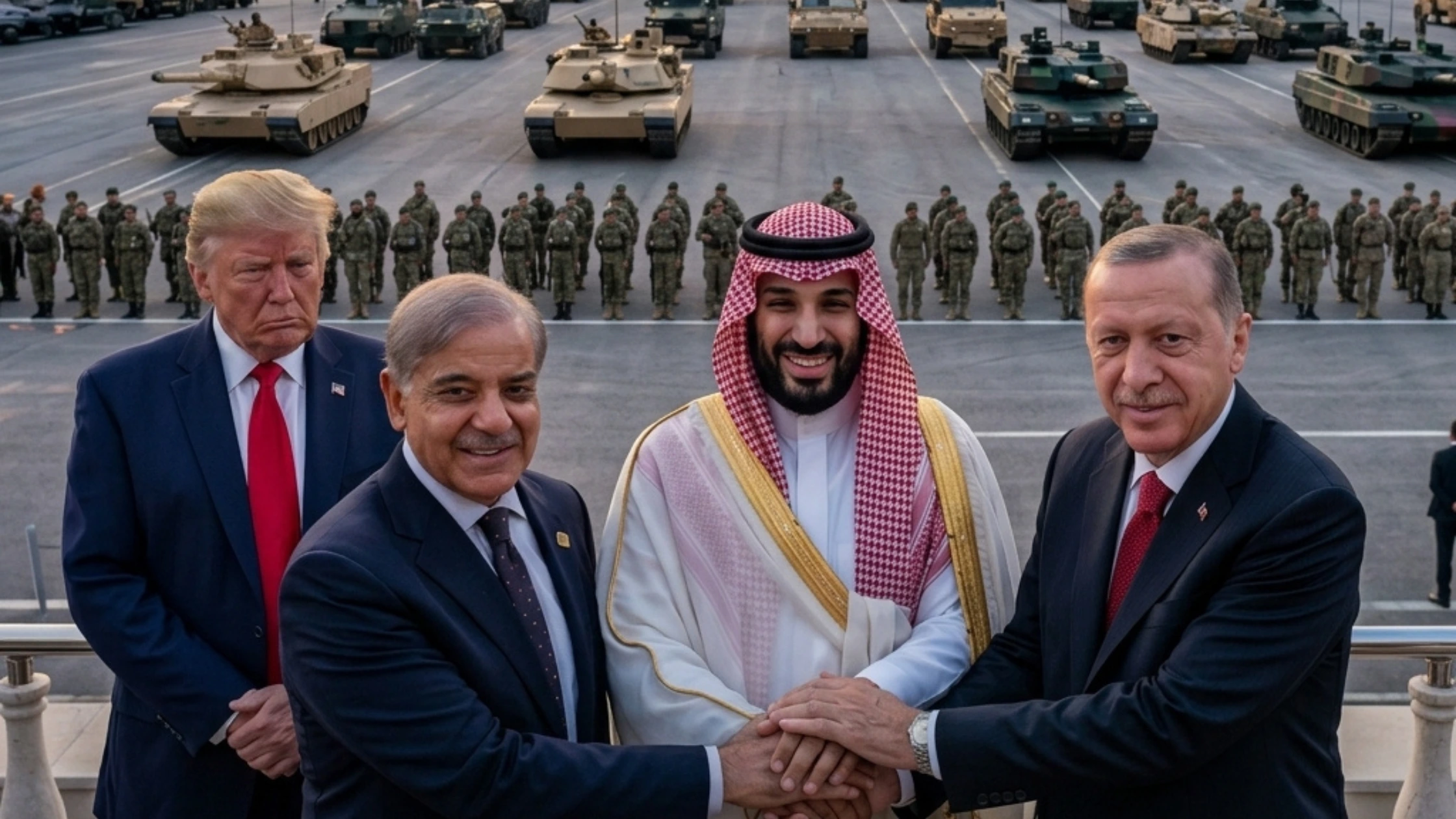
A new analysis has highlighted a possible shift in the Middle East’s long-standing security structure following the Makkah Joint Defence Agreement signed by Pakistan, Saudi Arabia and Türkiye on August 7.
The agreement reflects growing efforts by regional powers to strengthen their own security cooperation and develop a more independent framework for addressing regional challenges. Analysts say the pact could also reflect concerns among some Gulf states about the reliability of traditional external security partners.
The emerging partnership gives Pakistan and Türkiye a potentially larger role in regional security affairs while strengthening Saudi Arabia’s strategic ties with both countries. The development could challenge aspects of the U.S.-backed security architecture that has shaped the Gulf for decades.
Some analysts also see the agreement as a potential foundation for competing or overlapping regional blocs alongside existing arrangements, including the Abraham Accords.
However, the pact is officially described as defensive in nature and not directed against any particular country. Its stated objective is to strengthen cooperation, regional stability and collective security.
The development nevertheless marks an important moment in Middle Eastern geopolitics, as regional countries increasingly seek greater strategic autonomy and stronger partnerships beyond traditional alliances.