
The 1965 war between Pakistan and India was a pivotal moment in the history of South Asia, shaping the geopolitical dynamics of the region for decades to come. This conflict, which lasted from August to September 1965, was the second major war between the two neighboring nations following their independence in 1947. Rooted in the long-standing Kashmir dispute, the war witnessed intense battles, strategic maneuvers, and heroic sacrifices. Although the war ended in a ceasefire brokered by international mediation, its repercussions continue to influence Indo-Pak relations today.
Background: The Kashmir Dispute and Rising Tensions
The origins of the 1965 war can be traced back to the unresolved issue of Kashmir, which had been a point of contention since the Partition of British India. In 1947-48, both countries fought their first war over the princely state of Jammu and Kashmir. The war ended with the establishment of the Line of Control (LoC) under the United Nations’ intervention, but the dispute remained unresolved.
Throughout the 1950s and early 1960s, tensions simmered between Pakistan and India. The situation escalated after the Sino-Indian War of 1962, in which India suffered a defeat against China. Pakistan, seeing India weakened, believed it was the right time to push for control over Kashmir. This belief led to Operation Gibraltar, a military strategy in which Pakistani forces and insurgents infiltrated Indian-administered Kashmir in August 1965, aiming to incite rebellion among Kashmiri Muslims against Indian rule.
The Outbreak of War
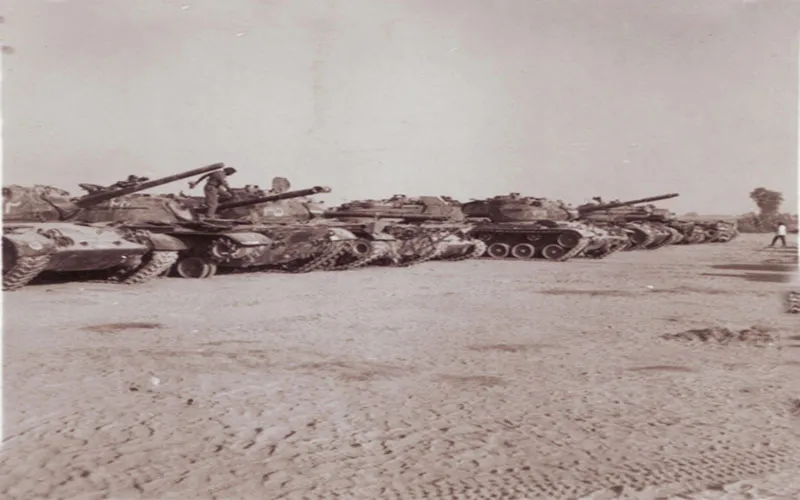
India responded swiftly to Operation Gibraltar, launching a counter-offensive in Kashmir. As hostilities intensified, the conflict expanded beyond Kashmir, with full-scale battles erupting along the Punjab and Rajasthan borders. Both sides deployed heavy artillery, tanks, and air forces, resulting in some of the fiercest engagements in South Asian history.
One of the most significant battles took place in the Sialkot sector, where the largest tank battle since World War II occurred. Pakistani and Indian armored divisions clashed in intense combat, with heavy casualties on both sides. Meanwhile, in the Lahore sector, the Indian Army made advances but was met with fierce resistance from Pakistani forces, particularly at the Burki front, where Pakistani soldiers displayed immense bravery in defending their positions.

Role of the Air Forces
The air forces of both nations played a crucial role in the war. The Pakistan Air Force (PAF), despite being smaller in size compared to the Indian Air Force (IAF), performed exceptionally well, achieving numerous aerial victories. Notable Pakistani pilots such as MM Alam emerged as heroes, with Alam famously shooting down five Indian aircraft in less than a minute, setting a world record.
The Ceasefire and the Tashkent Agreement
As the war continued, the international community, particularly the United Nations and the Soviet Union, stepped in to mediate peace. The conflict ended on September 23, 1965, following a ceasefire brokered by the UN. The two nations later signed the Tashkent Agreement on January 10, 1966, under the mediation of Soviet Premier Alexei Kosygin. The agreement required both Pakistan and India to withdraw to their pre-war positions, effectively restoring the status quo.
Impact and Legacy
Although the war ended without a decisive military victory for either side, it had significant implications for both countries. In Pakistan, the war bolstered national unity and reinforced the military’s role as a key institution in national security. However, the lack of territorial gains in Kashmir led to disappointment among the public. India, on the other hand, emerged with a strengthened sense of military preparedness and national resilience.
The 1965 war also had lasting consequences for Indo-Pak relations. While the ceasefire temporarily halted hostilities, the underlying issues remained unresolved, ultimately leading to another war in 1971, which resulted in the creation of Bangladesh.
Lessons from the 1965 War
The 1965 war underscored the importance of diplomatic conflict resolution and the dangers of military confrontations between nuclear-armed neighbors. It also highlighted the need for both Pakistan and India to invest in peace-building measures rather than engaging in periodic hostilities.
Despite the adversities of war, the 1965 conflict is remembered for the bravery and sacrifice of soldiers on both sides. In Pakistan, September 6 is observed as Defense Day, a tribute to the valor of the armed forces and their efforts in safeguarding national sovereignty.
The 1965 war was a defining moment in the history of South Asia, shaping the future trajectory of Indo-Pak relations. While it reinforced the deep-rooted conflict between the two nations, it also emphasized the necessity of peaceful dialogue and diplomatic solutions. More than five decades later, the lessons from this war remain relevant, serving as a reminder of the costs of conflict and the enduring need for regional stability and cooperation.