

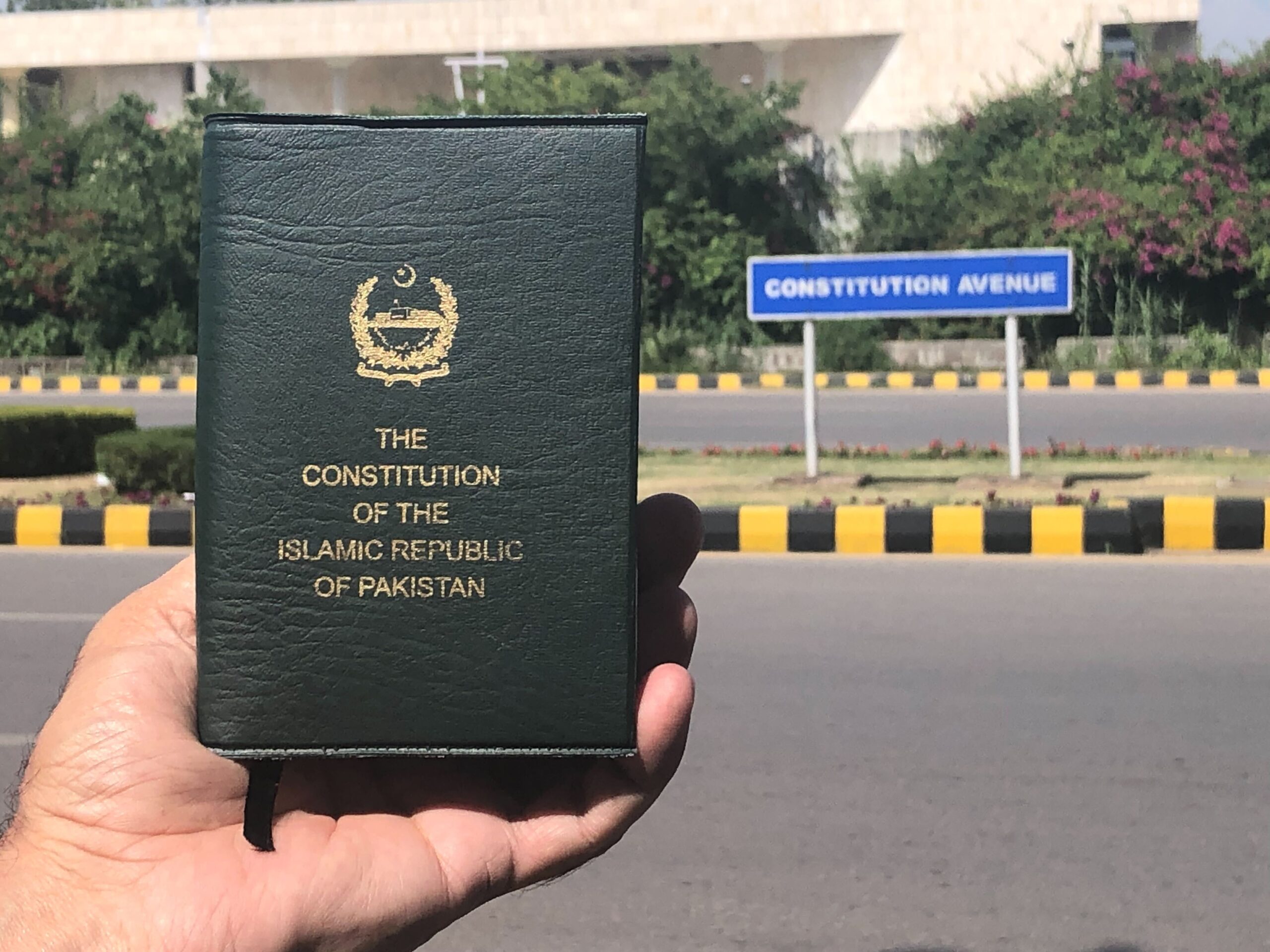
Pakistan’s constitutional history is a saga of ambition, struggle, and resilience. From its inception in 1947, the country has wrestled with the challenge of establishing a stable and democratic framework. The road to constitutionalism has been anything but smooth, marred by political instability, military interventions, and judicial compromises. Yet, the evolution of Pakistan’s constitutional landscape reflects a nation’s relentless pursuit of democratic ideals.
The 1947 Independence and the Need for a Constitution
When Pakistan emerged as an independent state on August 14, 1947, it inherited the Government of India Act 1935 as its interim constitution. While this served as a stopgap arrangement, there was an immediate need for a homegrown constitutional framework that reflected the aspirations of a newly independent Muslim-majority state. The early leaders, particularly Quaid-e-Azam Muhammad Ali Jinnah, envisioned a progressive and inclusive constitutional structure. However, Jinnah’s untimely demise in 1948 left a leadership vacuum that profoundly impacted Pakistan’s constitutional trajectory.
The 1956 Constitution: Pakistan Becomes a Republic
After years of political wrangling and delays, Pakistan finally adopted its first constitution on March 23, 1956, declaring itself the Islamic Republic of Pakistan. This historic milestone came nearly nine years after independence. The 1956 Constitution introduced parliamentary democracy, with a unicameral legislature, and officially recognized Islam as the state religion while ensuring fundamental rights for all citizens.
However, the constitution failed to provide political stability. Frequent changes in leadership and growing tensions between East Pakistan (present-day Bangladesh) and West Pakistan led to an era of chaos. The parliamentary system was plagued by weak governance, factionalism, and power struggles. This instability set the stage for a dramatic shift in Pakistan’s constitutional history.
The 1958 Martial Law and Abrogation of the Constitution
Just two years after its adoption, the 1956 Constitution was scrapped when President Iskander Mirza imposed martial law on October 7, 1958, and appointed General Ayub Khan as the Chief Martial Law Administrator. Within days, Ayub Khan ousted Mirza and assumed full control. This was the first of many military takeovers that would define Pakistan’s constitutional struggles in the decades to come.
The 1962 Constitution: The Era of Presidential Rule
In 1962, Ayub Khan introduced a new constitution, which marked a significant departure from parliamentary democracy. The 1962 Constitution established a presidential system, concentrating power in the hands of the president while limiting parliamentary authority. It also introduced the controversial “Basic Democracies” system, which was essentially a controlled form of local governance.
While the 1962 Constitution aimed at stability, it was widely criticized for undermining democratic norms. Political discontent, coupled with growing unrest in East Pakistan, eventually led to Ayub Khan’s resignation in 1969, paving the way for another martial law regime under General Yahya Khan.
The 1971 Tragedy and the 1973 Constitution
Pakistan faced its biggest constitutional and political crisis in 1971 when East Pakistan seceded to form Bangladesh after a brutal civil war. The 1971 tragedy exposed the deep flaws in Pakistan’s governance system, highlighting the need for a truly representative and democratic constitution.
Under Zulfikar Ali Bhutto’s leadership, Pakistan adopted its third and most enduring constitution on August 14, 1973. The 1973 Constitution reintroduced parliamentary democracy, established a bicameral legislature, and significantly strengthened provincial autonomy. It also laid the foundation for an independent judiciary and ensured fundamental rights, including freedom of speech and religion.
The 1973 Constitution remains Pakistan’s supreme law, though it has undergone several amendments, some of which have fundamentally altered its original spirit.

The Military Interventions and Constitutional Manipulations
Pakistan’s constitutional history has been repeatedly disrupted by military rule. General Zia-ul-Haq’s coup in 1977 resulted in the suspension of democratic processes. Under Zia, the 8th Amendment (1985) was introduced, giving the president the power to dissolve the National Assembly, a provision that was misused multiple times in the 1990s to dismiss elected governments.
Similarly, General Pervez Musharraf’s coup in 1999 led to further constitutional engineering, including the 17th Amendment (2003), which consolidated the president’s powers at the expense of parliament.
The 18th Amendment: A Step Toward True Federalism
One of the most significant constitutional reforms came in 2010 with the 18th Amendment, which restored parliamentary supremacy and transferred key powers from the president to the prime minister. It also abolished the president’s power to dissolve parliament and enhanced provincial autonomy, addressing a long-standing demand of smaller provinces.
The 18th Amendment is widely regarded as a major victory for democracy in Pakistan, though it remains a subject of political debate, especially regarding its impact on governance and provincial responsibilities.
Challenges and the Future of Pakistan’s Constitution
While the 1973 Constitution continues to be the foundation of Pakistan’s governance, it faces several challenges:
- Judicial Independence and Political Interference – The judiciary has often played a controversial role in legitimizing military regimes through the doctrine of necessity. Strengthening judicial independence remains a key challenge.
- Civil-Military Relations – The recurring dominance of the military in governance has frequently sidelined democratic institutions, leading to constitutional crises.
- Human Rights and Freedom of Expression – Although the constitution guarantees fundamental rights, issues such as media censorship, enforced disappearances, and restrictions on political dissent continue to undermine democratic values.
- Provincial Autonomy vs. Centralization – The 18th Amendment granted significant autonomy to provinces, but debates continue over its implementation and the balance of power between federal and provincial governments.
- Electoral Reforms – Ensuring free, fair, and transparent elections is crucial for sustaining constitutional democracy. Electoral processes have often been marred by allegations of rigging, judicial overreach, and external influences.
A Living Document of Hope and Struggle
Pakistan’s constitutional history is a testament to its ongoing struggle between authoritarianism and democracy. While the 1973 Constitution remains the country’s most significant legal framework, its true potential can only be realized if democratic institutions are strengthened, judicial independence is upheld, and civil-military balance is restored.
The future of Pakistan’s constitutional democracy depends on its people’s collective will to uphold democratic norms and resist attempts to subvert the constitution. As Pakistan moves forward, its constitution must not just be a legal document but a living embodiment of justice, equality, and national unity.