
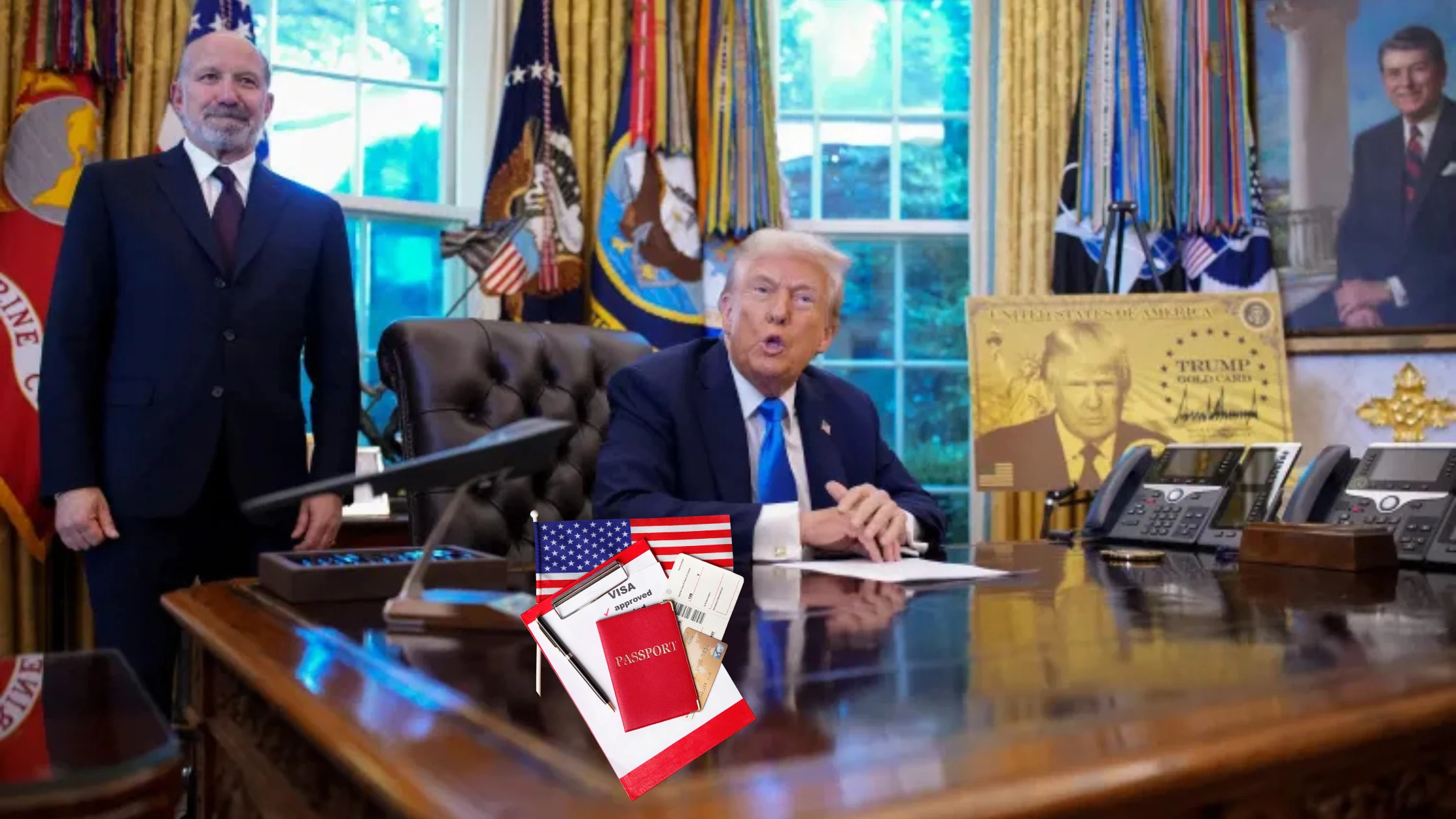
U.S. President Donald Trump has signed a new order requiring companies to pay a $100,000 annual fee to sponsor each foreign worker on an H-1B visa.
The H-1B program, created in 1990, allows U.S. companies to hire skilled foreign professionals such as engineers, scientists, and programmers. Currently, 85,000 visas are issued each year through a lottery system.
Speaking from the Oval Office, Trump said the new rule will ensure “only the best and most skilled people” come to the U.S. At the same time, he introduced a new “gold card” visa that grants U.S. permanent residency for a $1 million payment.
New Zealand Introduces Business Investor Visa 2025 for Pakistani Entrepreneurs
Big Changes for Tech Industry
The new fee could dramatically reshape the visa system, which is heavily relied upon by tech giants like Amazon, Microsoft, Google, and Apple. Smaller companies and start-ups may find it difficult to afford the cost, raising fears of reduced innovation.
Critics warn the policy will “tax away innovation”, pushing companies to move high-skill jobs overseas, especially at a time when the U.S. is competing with China in artificial intelligence and advanced technologies.
Deedy Das, a partner at Menlo Ventures, said the decision risks making the U.S. less attractive for top global talent. “If the U.S. ceases to attract the best talent, it drastically reduces its ability to innovate and grow the economy,” he said.
Support and Opposition
Trump’s Commerce Secretary Howard Lutnick defended the policy, saying big companies were ready to accept the fee. He argued that businesses should invest more in training American workers instead of relying on foreign talent.
However, immigration experts questioned the legality of the order, noting that Congress had only authorized visa fees to cover application processing, not to raise revenue.
Who Benefits from H-1B Visas?
India remains the largest source of H-1B workers, making up 71% of approvals, followed by China at 11.7%. California continues to host the largest number of H-1B employees.
For now, the new rule marks one of the most dramatic changes to U.S. work visas in decades, raising concerns about the future of innovation and global competitiveness in America.