

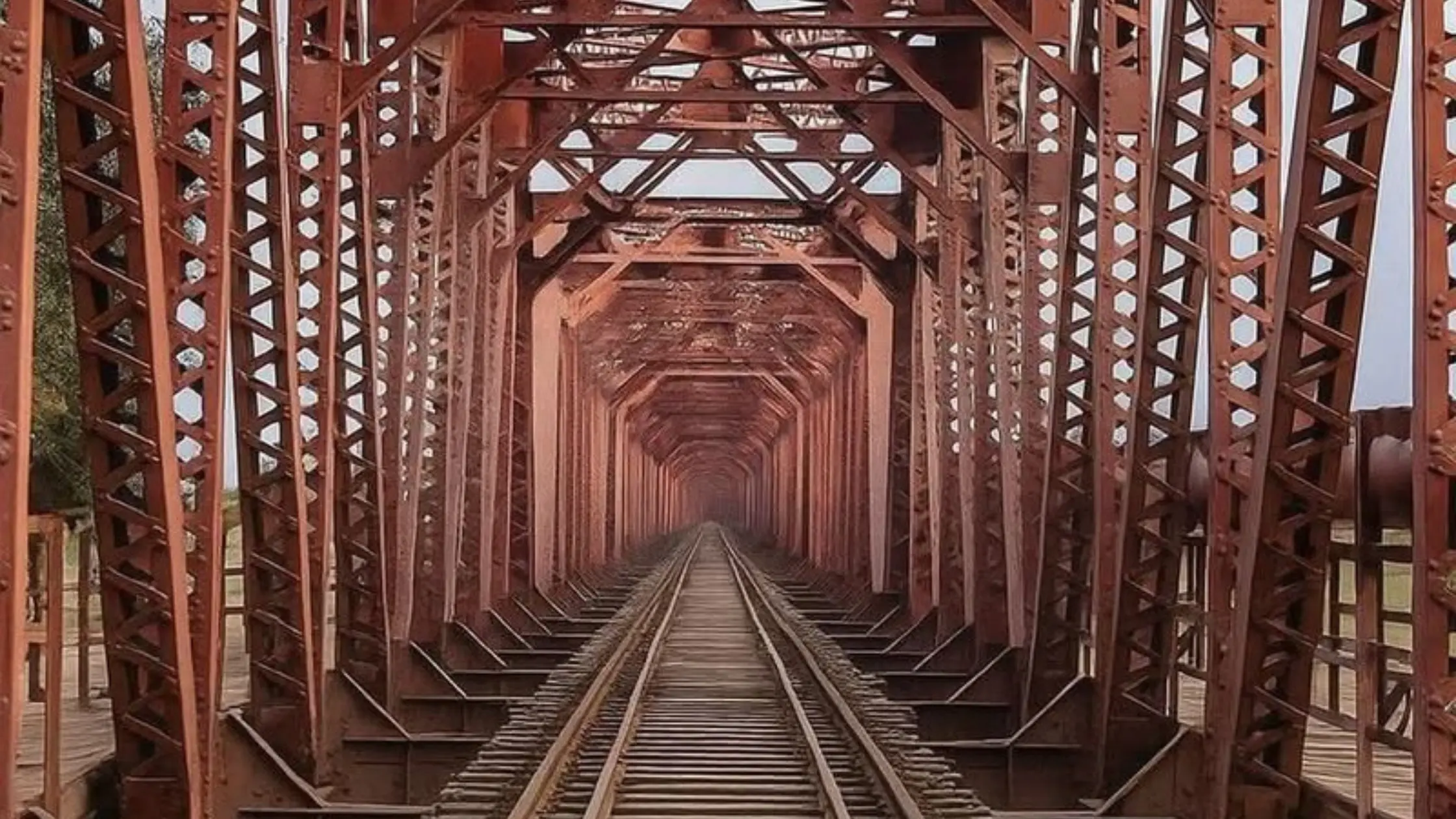
The British built the Victoria Bridge over the River Jhelum nearly 135 years ago, around 1890, and it was later repaired in 1936. This bridge is considered an engineering masterpiece and remains a remarkable place to visit even today.
The bridge was originally constructed to provide access to the Salt Range (Koh-e-Namak). After its completion, railway tracks were extended from the bridge to Khewra, Gharibwal, and Khushab. Some railway historians also say that the railway line from Lala Musa to Sargodha was initially laid for the same purpose—to reach the Salt Range.
On both sides of the bridge, pathways were built for pedestrians, cyclists, and motorcyclists. Originally, these pathways were made of wooden planks, which eventually weakened and deteriorated. Locals would repair them by placing thick wooden logs, but frequent accidents involving pedestrians and motorcycle riders continued to occur. Recently, the old wooden planks have been replaced with thick iron sheets, greatly improving safety.
Today, only one train crosses this bridge, and that too operates only between Malakwal and Pind Dadan Khan.
There was a time when traveling by train from Malakwal to Khewra was a special experience—something people still cherish. Now, from Pind Dadan Khan, passengers usually take Chingchi rickshaws to reach Khewra. The road in the area has been in poor condition for a long time; it is unclear whether it has finally been repaired or not.
If Pakistan Railways truly wishes to promote tourism, it should consider running a train from Lahore to Khewra via Malakwal, which would revive tourism and give visitors a chance to experience this historic route once again.