
Pakistan is a country that has always been in a state of flux, caught between hopes and fears, challenges and opportunities, stability and chaos. As we move further into the 21st century, the uncertainty surrounding the future of Pakistan, has reached a fever pitch. From political instability and economic turmoil to social divisions and environmental crises, the road ahead seems more like a maze than a clear-cut path. But what’s behind this uncertainty? And, more importantly, what does the future hold for this country, which has so much potential yet faces such deep-rooted challenges?
A Political Roller Coaster
To understand the uncertainty that looms over Pakistan’s future, we have to start with the political landscape. For decades, Pakistan’s political scene has been a chaotic mix of power struggles, military influence, and a volatile relationship between various political parties. Elections come and go, but the feeling of instability rarely changes.
Take, for instance, the constant shifting of governments. It seems like no political party or leader stays in power for long without facing some form of opposition, be it from the military, the judiciary, or political rivals. The government of Pakistan Tehreek-e-Insaf (PTI) under Imran Khan, for instance, was once seen as a breath of fresh air—a new hope for the country. Yet, it faced its own downfall through a combination of political missteps, economic mismanagement, and ultimately, a political rebellion. This led to political instability, further contributing to the public’s loss of confidence in the system.
Even when parties are in power, they face hurdles like corruption, a lack of accountability, and the looming shadow of military influence. The military has long been the dominant force behind Pakistan’s political decisions, often pulling the strings behind the scenes, and this creates an environment where civilian leadership struggles to truly lead. This lack of political cohesion, coupled with frequent shifts in leadership, keeps the country stuck in a perpetual cycle of instability.

Economic Challenges
Economic uncertainty is perhaps one of the most pressing issues in Pakistan today. The country’s economy has always been a point of concern, but in recent years, it has reached a critical juncture. With high inflation, a widening fiscal deficit, and a rapidly depreciating currency, Pakistan’s economy seems to be on the edge of collapse.
The IMF bailout packages that the country relies on are a temporary fix rather than a long-term solution. While the government continues to borrow from international lenders to cover its debts, it does little to implement the structural reforms needed to stabilize the economy. Pakistan’s heavy reliance on imports, including energy resources and food, exacerbates its financial strain.
What makes the situation even more complex is the growing population. Pakistan’s population continues to increase at a rapid pace, putting even more pressure on an already strained infrastructure. Unemployment rates are high, and many young people are left with little opportunity to build a future. With inflation skyrocketing and wages remaining stagnant, there’s a growing sense of frustration and hopelessness among Pakistan’s youth.
Then there’s the issue of agriculture, a sector that forms the backbone of Pakistan’s economy. The country’s agricultural productivity has been steadily declining due to water shortages, outdated farming techniques, and poor governance. Without a solid agricultural base, the nation’s ability to feed its people and generate export revenues is severely compromised.
Social Divide and Identity Crisis
Pakistan’s social fabric is becoming increasingly fragmented. The country is home to a diverse mix of ethnicities, languages, and cultures, but this diversity often breeds division. The divide between different provinces, especially between Punjab, Sindh, Khyber Pakhtunkhwa, and Balochistan, has widened over the years. These regional tensions, often exacerbated by resource allocation and political representation, create a sense of alienation among the people.
Ethnic and religious intolerance is another critical issue that deepens Pakistan’s social divide. Pakistan’s identity as an Islamic republic has often been shaped by religious extremism, which has stoked sectarian violence, particularly against minority groups. From Shia-Sunni conflicts to the persecution of religious minorities such as Hindus, Christians, and Ahmadis, intolerance runs deep in the social landscape. The growing influence of religious extremist groups, especially in the aftermath of the war on terror, has further polarized society, making it difficult to forge a common identity.
The issue of women’s rights and gender inequality also contributes to the nation’s social instability. While progress has been made in some areas, the reality is that women in Pakistan still face widespread discrimination, violence, and lack of opportunities. In rural areas, traditional patriarchal structures often limit women’s freedom, education, and career prospects, and urban areas are not immune to gender-based violence.
Environmental Crisis
Another factor that casts a long shadow over Pakistan’s future is the environmental crisis. Pakistan is already one of the most vulnerable countries to the effects of climate change. The recent floods that devastated large swaths of the country in 2022 are just one example of the increasingly erratic weather patterns that Pakistan faces.
The country’s water crisis is perhaps the most pressing environmental issue. With an ever-decreasing supply of fresh water, Pakistan faces the very real threat of becoming a water-scarce country. The melting of glaciers in the northern regions, over-extraction of groundwater, and mismanagement of water resources are exacerbating the problem. The country’s dependence on the Indus River for irrigation and drinking water makes it particularly vulnerable to water shortages.
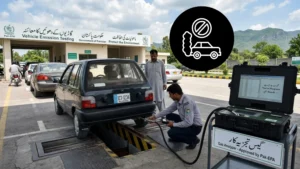
Air pollution is another significant problem, particularly in major cities like Lahore and Karachi, where smog levels frequently exceed the safe limits. The environmental degradation not only impacts public health but also hinders economic development and makes the country less attractive to foreign investment.
Security Concerns
While Pakistan has made strides in countering terrorism and insurgency in recent years, security remains a major concern. The ongoing conflict in neighboring Afghanistan, the presence of extremist groups, and the tension with India over Kashmir make Pakistan’s security situation volatile. The threat of terrorism is still present, and while the security forces have made significant gains in combating insurgents, the country remains on high alert.
The border disputes with India, particularly over the Kashmir region, continue to fuel tensions and conflict. Despite diplomatic efforts, both countries have not been able to resolve their differences, and the risk of military confrontation remains ever-present. This security uncertainty adds another layer of unpredictability to Pakistan’s future.
The Path Forward
So, what’s next for Pakistan? How can a country with so much potential break free from the chains of uncertainty?
The path to stability lies in addressing these multifaceted challenges. Politically, Pakistan needs to foster a more inclusive, transparent, and accountable governance system, where the military and civilian governments can work in tandem for the betterment of the nation. Strengthening democratic institutions and ensuring that power is decentralized can help address regional and ethnic divisions.
Economically, Pakistan must embrace structural reforms, particularly in its tax system, agriculture, and energy sectors. A shift towards a more diversified economy, less reliant on imports, and a focus on improving the ease of doing business could stimulate growth and job creation.
In terms of social cohesion, promoting inclusivity and religious tolerance, especially through education and dialogue, is essential to bridge the gaps that divide Pakistan’s communities. Gender equality and women’s empowerment should be prioritized, ensuring that women have the opportunities and freedom to contribute to society fully.
Finally, addressing the environmental crisis through better resource management, renewable energy adoption, and stronger policies to combat pollution and climate change will be crucial for safeguarding Pakistan’s future.
In conclusion, while Pakistan faces tremendous uncertainty, it is not without hope. The country’s youth, rich natural resources, and strategic geopolitical location provide a foundation for progress. If the nation can address its internal challenges, balance its political landscape, and focus on long-term development, the future could be brighter than many expect. But the path to that future requires bold leadership, unity, and a commitment to change—qualities that Pakistan will need to harness if it is to overcome the uncertainty that holds it back.