
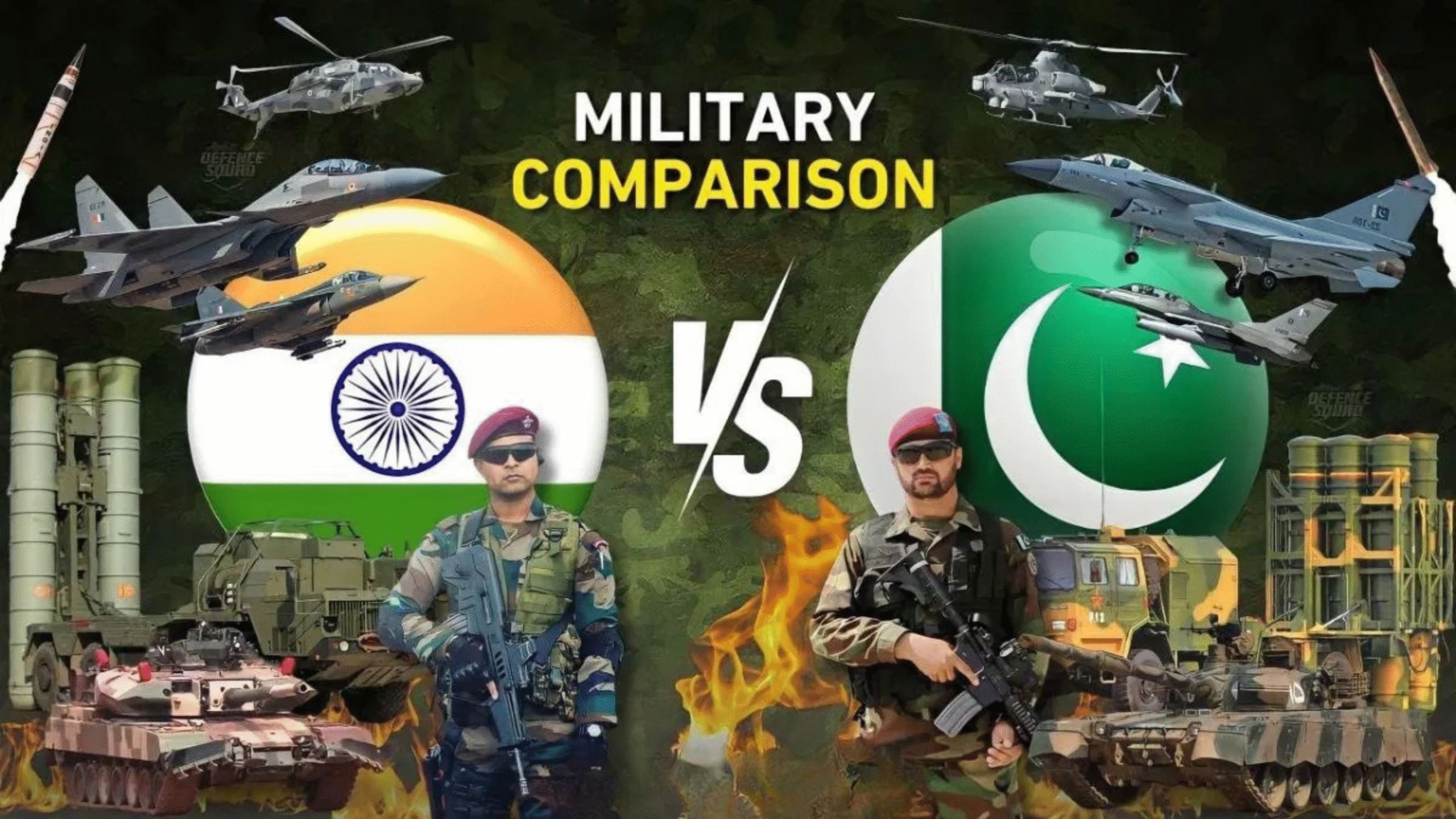
The military rivalry between India and Pakistan remains one of the most closely watched in the world. With both nations being nuclear powers, their defence capabilities are often compared not just regionally but globally. In this updated 2025 breakdown, we explore the military strength,size, defence spending, weaponry, and strategic of both countries in a clear and simplified.
Military Manpower: Boots on the Ground
| Category | India | Pakistan |
|---|---|---|
| Active Soldiers | 1.45 million | 654,000 |
| Reserve Forces | 1.15 million | Undisclosed |
| Paramilitary Units | 2.5 million | 500,000 |
IN Military Strength India has the world’s fourth-largest active military force and a substantial paramilitary presence. In contrast, Pakistan’s military is smaller but battle-hardened with experience in various conflicts, making it a formidable force despite its size difference with India. This operational experience gives Pakistan an edge in tactical capabilities.
Eventually, Pakistan and India Peace Will Come Through Dialogue
Ground Warfare Equipment

| Equipment Type | India | Pakistan |
|---|---|---|
| Tanks | 4,201 | 2,627 |
| Armoured Vehicles | 148,050 | 49,000+ |
| Artillery Systems | 4,204 | 4,619 |
In Military Strength Pakistan has an edge in artillery systems, while India’s strength lies in its larger fleet of tanks and advanced armored platforms. This gives India greater versatility on the battlefield, allowing for more diverse tactical options. India’s armored capabilities could provide a significant advantage in ground warfare, offsetting Pakistan’s artillery advantage to some extent.
Air Power Comparison
| Aircraft Category | India | Pakistan |
|---|---|---|
| Total Aircraft | 2,229 | 1,399 |
| Fighter Jets | 513 | 328 |
| Helicopters | 899 | 373 |
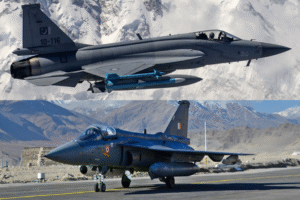
In Military Strength India’s Air Force boasts advanced 4.5-generation fighters like the Rafale, Su-30MKI, and Tejas, giving it a technological edge. Pakistan’s air force relies on JF-17 Thunder and F-16s for frontline combat. India’s advanced fleet provides superior capabilities, including better avionics and weaponry, potentially giving it an upper hand in aerial engagements. This difference in technology could impact air combat dynamics.
Naval Power: Coastal vs Ocean Control
| Naval Assets | India | Pakistan |
|---|---|---|
| Total Naval Ships | 293 | ~50 |
| Aircraft Carriers | 2 | 0 |
| Submarines | 18 | 8 |
| Destroyers | 13 | 0 |
| Frigates | Several | 10 |
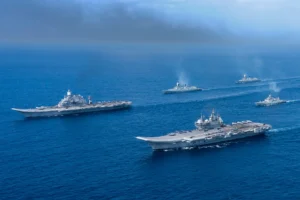
In Military Strength India operates a blue-water navy, capable of projecting power deep into the oceans. Pakistan, on the other hand, maintains a green-water navy focused on regional defence.
Nuclear Weapons & Strategy

| Nuclear Metrics | India | Pakistan |
|---|---|---|
| Estimated Warheads | 172 | 170 |
| Use Doctrine | No First Use | First Use Allowed |
| Tactical Nukes | None | Nasr (70 km range) |
In Military Strength The nuclear strategies of both countries differ. India’s military stance is defensive, and it follows a “No First Use” policy. Pakistan, however, adopts a First Use strategy with battlefield-ready tactical weapons like the Nasr missile.
Defence Spending in 2024
| Defence Budget (USD) | India | Pakistan |
|---|---|---|
| Total Spend | $86.1 billion | $10.2 billion |
India’s defense budget is over 8 times larger than Pakistan’s, enabling extensive modernization programs, indigenous production, and strategic global purchases. This significant investment allows India to acquire advanced technology and strengthen its military capabilities. In contrast, Pakistan adopts a more strategic approach, focusing on key areas like missile defense and rapid deployment capabilities. Despite budget constraints, Pakistan prioritizes investments that enhance its deterrence and response capabilities, ensuring a balance in the region’s military dynamics . This disparity in spending influences the military strategies and capabilities of both nations.
Side-by-Side Summary: India vs Pakistan (2025)
| Capability | India | Pakistan |
|---|---|---|
| Troops (Active + Reserve) | 2.6 million | ~654,000 |
| Tanks & Vehicles | 150,000+ | ~50,000+ |
| Aircraft | 2,229 | 1,399 |
| Ships & Submarines | 293 | ~50 |
| Nuclear Warheads | 172 | 170 |
| Defence Budget | $86.1 billion | $10.2 billion |
Analysis: Who Has the Upper Hand?
In Military Strength India has a larger military, stronger navy, air force, and bigger budget than Pakistan. However, Pakistan’s strategic planning, nuclear doctrine, and regional alliances provide a serious deterrent and maintain balance in South Asia.
Both India and Pakistan want to avoid war, but military readiness is crucial for deterrence and maintaining peace. A strong defense helps prevent conflicts and ensures stability in the region, allowing both nations to focus on economic and social development without the threat of violence.
Pakistan FM Radio Stations Ban Indian Songs Amid Kashmir Tensions
FAQs India vs Pakistan Military Strength
Q1. Which country has the stronger military India or Pakistan?
India leads in most metrics, including budget, personnel, and equipment. But Pakistan has strategic leverage through its first-use nuclear policy and focused defence planning.
Q2. Are both countries nuclear powers?
Both India and Pakistan possess nuclear warheads, with India having around 172 and Pakistan having approximately 170.
Q3. Who has more advanced fighter jets?
India’s air force features modern aircraft like Rafales, Su-30s, and Tejas. Pakistan’s strength lies in F-16s and JF-17s.
Q4. What’s the naval difference?
India operates two aircraft carriers and more submarines, indicating stronger naval reach. Pakistan’s navy is regionally focused.
Q5. Does a bigger budget mean a stronger military?
A larger budget enables faster modernization and global procurement, giving India a long-term edge.