

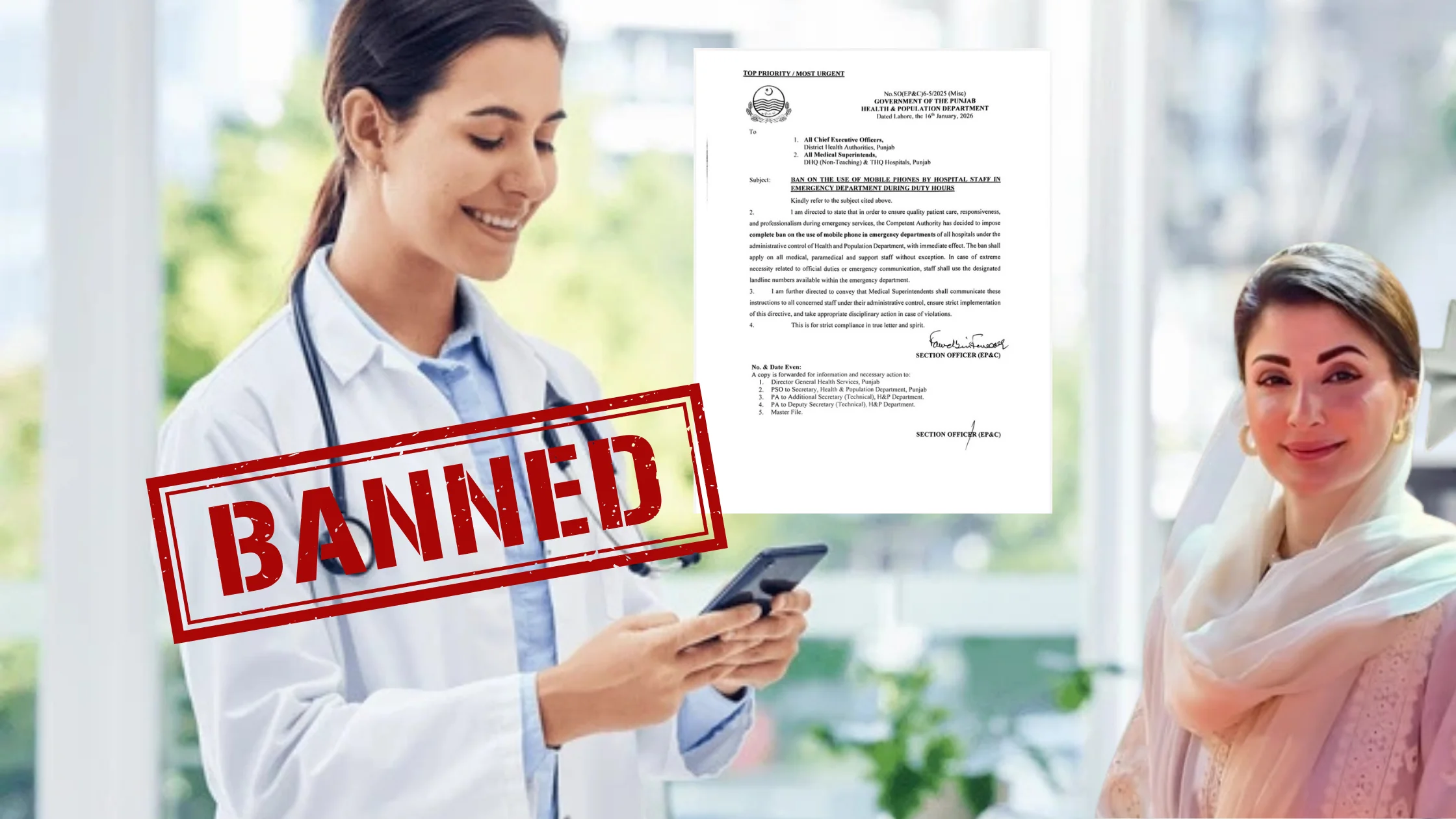
Maryam Nawaz Sharif, a prominent political leader in Pakistan, has issued a strict directive to all doctors and staff in public sector hospitals across Punjab. According to her instructions, the use of mobile phones and personal devices during duty hours is now prohibited. This move is aimed at improving patient care and ensuring that patients’ time is not wasted in hospitals.
The directive underscores the importance of prioritizing patient welfare over personal distractions. Public hospitals in Punjab have long faced challenges related to staff absenteeism and delayed services. By restricting the use of mobile phones, Maryam Nawaz aims to enhance efficiency, accountability, and professionalism in healthcare services.
Focus on Patient Care and Accountability
Maryam Nawaz emphasized that patient care must remain the absolute priority in hospitals. She stated that every patient deserves timely attention, and hospital staff must dedicate their full attention to medical duties during working hours.
She highlighted that patients’ time is valuable, and no one should experience unnecessary delays due to staff distractions. By strictly monitoring hospital staff, the government aims to ensure that every patient receives the care they need without avoidable delays.
Surprise Inspections to Ensure Compliance
To enforce the directive, Maryam Nawaz Sharif announced that inspection teams will conduct surprise visits around the clock in hospitals across Punjab. These inspections are designed to monitor compliance with the new rules and identify any staff failing to follow the guidelines.
The surprise visits will help maintain discipline, detect negligence, and ensure that hospital services are delivered efficiently. Maryam Nawaz made it clear that strict disciplinary action will be taken against any violations, including warnings, penalties, or further administrative action depending on the severity of the breach.
Why This Move is Important for Punjab’s Healthcare System
Public hospitals in Punjab serve millions of people, especially those who cannot afford private healthcare. Over the years, complaints have surfaced regarding delays in treatment, unprofessional behavior, and lack of attention from hospital staff.
Maryam Nawaz Sharif’s instructions aim to modernize hospital operations and ensure that staff members maintain professionalism. By limiting distractions and holding staff accountable, the quality of healthcare services can improve, and patients can experience faster, more effective treatment.
This initiative is also expected to boost public confidence in government hospitals, making them more reliable for patients seeking quality care. Improved efficiency in public hospitals can reduce overcrowding, save patient time, and improve overall healthcare outcomes.
Benefits of the Directive
- Improved patient care: Staff will be more attentive to patients’ needs.
- Reduced delays: Limiting distractions ensures that treatment is provided promptly.
- Increased accountability: Surprise inspections encourage hospital staff to perform their duties responsibly.
- Enhanced public confidence: Patients will trust public hospitals more for timely and quality healthcare.
Maryam Nawaz Sharif’s Commitment to Healthcare
This directive reflects Maryam Nawaz Sharif’s ongoing commitment to improving public services in Punjab. By focusing on discipline, accountability, and patient-centered care, she aims to transform the healthcare sector into a more efficient and reliable system for all citizens.
Frequently Asked Questions (FAQs)
Q1: What directive did Maryam Nawaz Sharif issue for public hospitals in Punjab?
She instructed all doctors and staff not to use mobile phones or personal devices during duty hours and to prioritize patient care.
Q2: How will compliance be monitored?
Surprise inspections will be conducted around the clock to ensure that hospital staff follow the directive.
Q3: What happens if staff violate the rules?
Strict disciplinary action will be taken against anyone failing to comply, including penalties and further administrative measures.
Q4: Why is this directive important?
It ensures patient care is prioritized, reduces delays, improves efficiency, and enhances public confidence in government hospitals.
Q5: Who will benefit from this new rule?
Patients across Punjab will benefit the most, as hospital staff focus entirely on providing timely and effective medical treatment.