
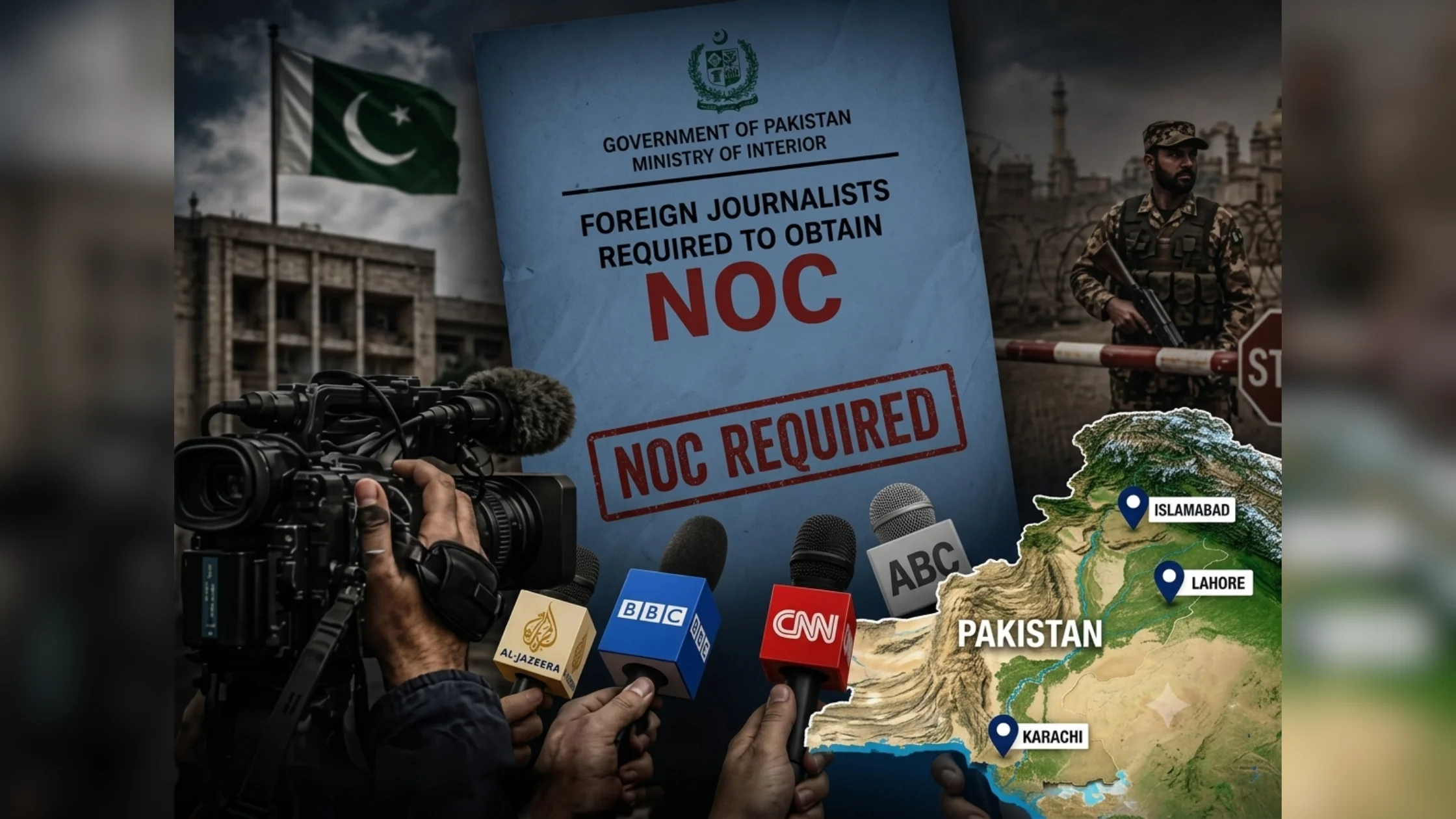
Pakistan’s newly introduced Foreign Media Guidelines 2026 have triggered a nationwide debate, with supporters describing them as an administrative framework for better coordination and critics warning that they could restrict independent journalism.
Under the new policy, foreign journalists are required to register with the Ministry of Information’s External Publicity Wing and obtain official approval before reporting outside Islamabad, Lahore, and Karachi. The guidelines also require a No Objection Certificate (NOC) for filming or producing content in other parts of the country. In addition, foreign journalists working in Pakistan-administered Kashmir must obtain fresh clearance before reporting from other regions.
The government maintains that the guidelines are intended to facilitate foreign media operations, improve coordination with state institutions, and ensure that reporting complies with existing administrative procedures. Officials have rejected claims that the policy amounts to a blanket restriction on journalism, arguing that it simply introduces a structured process for foreign correspondents operating in Pakistan.
However, several press freedom organizations have expressed concern over the new regulations. They argue that requiring prior approval for reporting outside three major cities could create additional bureaucratic hurdles and potentially affect the ability of journalists to report independently, particularly during fast-moving events or in sensitive regions. Critics also believe the policy could discourage timely on-the-ground reporting by increasing administrative oversight.
The timing of the guidelines has drawn particular attention, as they were introduced amid heightened political activity and public interest in developments across different parts of the country, including Pakistan-administered Kashmir. This has fueled a wider discussion about the balance between national security and media freedom.
Like many countries, Pakistan has the authority to regulate the activities of foreign journalists within its borders. At the same time, media organizations emphasize that transparent and independent reporting is an important part of keeping the public informed and strengthening accountability.
The introduction of the Foreign Media Guidelines 2026 has therefore raised an important question that extends beyond Pakistan itself: How should governments balance legitimate security concerns with the need to protect press freedom and ensure independent journalism?
As the debate continues, the implementation of these rules—and their practical impact on foreign reporting—will likely remain under close observation by journalists, policymakers, and international media organizations alike.