
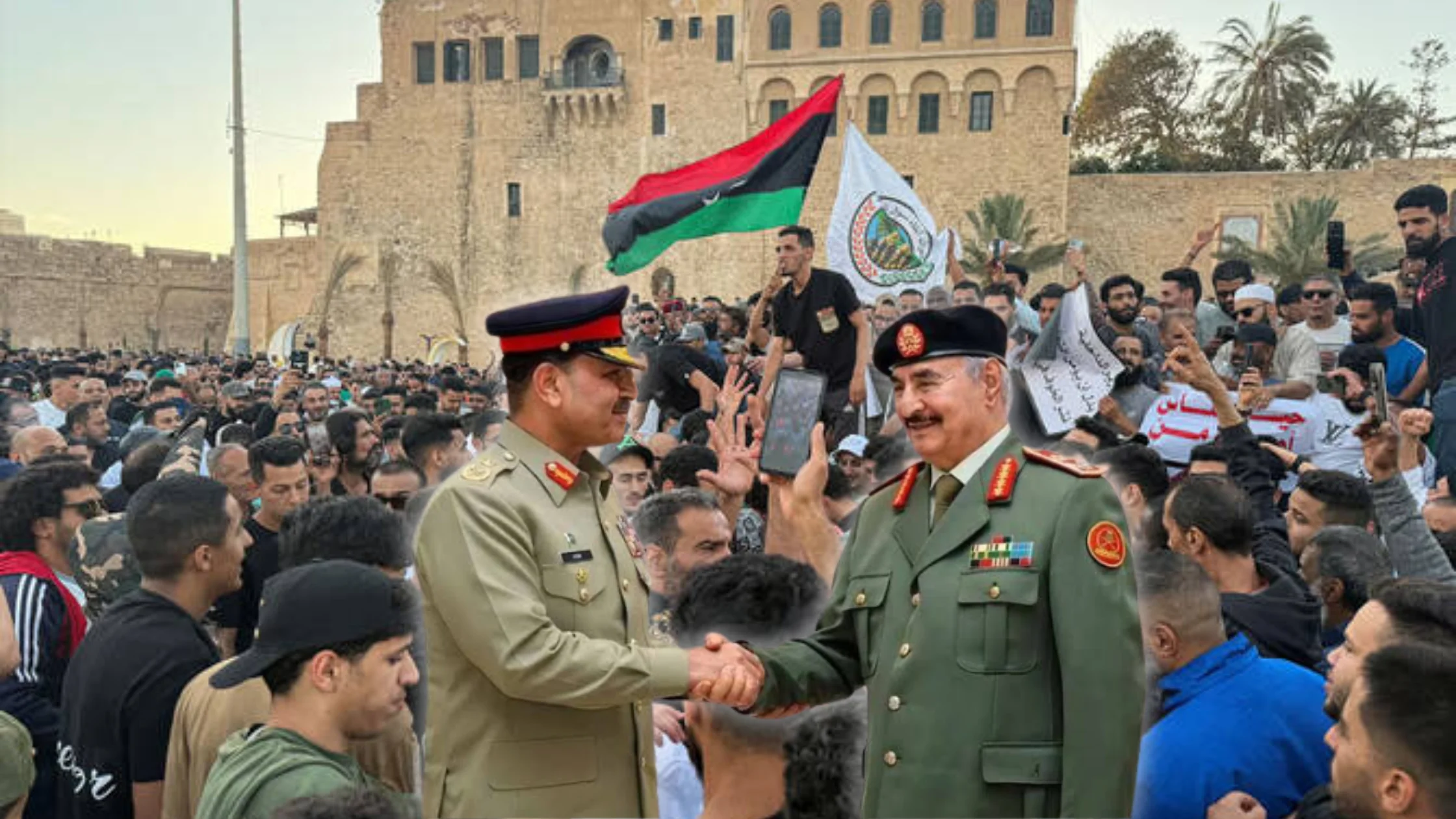
For decades, Pakistan’s foreign policy has primarily focused on South Asia, the Middle East, and strengthening relations with major global powers. However, recent developments suggest that Islamabad is gradually expanding its diplomatic footprint beyond its traditional sphere of influence. According to international media reports, Pakistan has quietly launched backchannel diplomatic efforts aimed at helping bridge the divide between Libya’s rival eastern and western political factions.
Although no official confirmation has yet been issued by the Government of Pakistan, the reported initiative reflects Islamabad’s growing ambition to contribute to international peacebuilding through discreet diplomacy rather than public negotiations. If successful, Pakistan’s role could further enhance its reputation as a credible mediator in regional and global conflicts.
Pakistan’s Quiet Diplomatic Initiative
According to foreign media reports, Pakistan has initiated confidential diplomatic contacts with Libya’s competing political leadership in an effort to encourage dialogue and support national reconciliation. Two sources familiar with the matter reportedly confirmed that Islamabad has been engaging with stakeholders from both eastern and western Libya through unofficial diplomatic channels.
Unlike formal peace negotiations conducted under international organizations, backchannel diplomacy involves confidential discussions away from media attention. Such negotiations often allow opposing sides to communicate more openly, explore compromises, and build trust before any official agreement is announced.
Pakistan’s reported efforts are believed to focus on creating an environment where rival Libyan factions can restart meaningful political dialogue and reduce tensions that have divided the country for more than a decade.
Understanding Libya’s Political Crisis
Libya has remained politically unstable since the 2011 uprising that ended the four-decade rule of former leader Muammar Gaddafi.
Following Gaddafi’s overthrow, rival political groups, tribal alliances, and armed militias competed for control of the country. Instead of transitioning smoothly toward democracy, Libya became divided between competing governments based in the east and west.
The western administration has generally been recognized by the United Nations and several international partners, while eastern authorities have maintained their own political institutions and military structures. Numerous attempts to organize nationwide elections and establish a unified government have repeatedly stalled because of political disagreements, security concerns, and competing regional interests.
The prolonged conflict has severely affected Libya’s economy, governance, public services, and security situation despite the country possessing some of Africa’s largest oil reserves.
Why Pakistan Is Getting Involved
Pakistan has traditionally maintained friendly diplomatic relations with many countries across the Middle East and North Africa while avoiding direct involvement in regional conflicts. This balanced foreign policy has allowed Islamabad to preserve constructive ties with multiple governments and political blocs.
Analysts believe this neutral position may enable Pakistan to serve as an acceptable facilitator between rival parties that may be reluctant to negotiate directly with one another.
Rather than acting as a decision-maker, Pakistan’s reported role appears to focus on encouraging communication, reducing mistrust, and helping create conditions for peaceful negotiations.
If these reports prove accurate, Islamabad is seeking to contribute diplomatically without imposing political solutions on the Libyan parties.
Pakistan Approves National Gemstone Policy, Targets $500 Million in Exports by 2030
The Importance of Backchannel Diplomacy
Backchannel diplomacy has played an important role in resolving many international disputes throughout modern history.
Unlike official negotiations, confidential discussions allow political leaders to exchange ideas without immediate political pressure or public scrutiny. This often creates opportunities for compromise that might not be possible during formal talks.
Such diplomatic channels have previously been used in negotiations involving regional conflicts, ceasefire agreements, hostage releases, and peace settlements around the world.
Pakistan’s reported engagement with Libya follows this diplomatic approach by emphasizing quiet dialogue rather than high-profile public mediation.
Pakistan’s Growing Role in International Mediation
The reported Libya initiative comes shortly after Islamabad was linked to diplomatic efforts aimed at encouraging dialogue between the United States and Iran.
Although those reports also remained largely unofficial, they reflected Pakistan’s increasing willingness to facilitate communication between countries experiencing political tensions.
Pakistan has historically participated in various international peace initiatives through the United Nations, the Organization of Islamic Cooperation (OIC), and bilateral diplomatic channels. In recent years, its foreign policy has increasingly emphasized dialogue, regional stability, and conflict prevention.
By expanding its diplomatic engagement beyond South Asia, Pakistan appears to be positioning itself as a responsible middle-power capable of contributing to international peace efforts.
Benefits for Libya
If successful, Pakistan’s reported mediation efforts could offer several potential benefits for Libya.
Renewed dialogue between rival governments could reduce political polarization and help pave the way for future national elections. Improved communication may also lower the risk of armed confrontation and encourage greater cooperation on economic recovery.
Political stability would allow Libya to focus more effectively on rebuilding infrastructure, strengthening public institutions, restoring investor confidence, and improving living conditions for its citizens.
A peaceful political settlement would also contribute to greater stability across North Africa and the wider Mediterranean region.
Strengthening Pakistan’s Global Image
For Pakistan, successful diplomatic engagement in Libya would represent more than just a foreign policy achievement.
Helping facilitate peace in another region would strengthen Islamabad’s international reputation as a country committed to diplomacy rather than confrontation. It would also demonstrate Pakistan’s ability to engage constructively in complex geopolitical issues beyond its immediate neighborhood.
Such initiatives can improve bilateral relations with African and Middle Eastern countries while enhancing Pakistan’s standing in international organizations and multilateral forums.
Diplomatic success also reinforces Pakistan’s image as a nation capable of contributing to global peace, stability, and conflict resolution.
Challenges Ahead
Despite the optimism surrounding the reported initiative, significant challenges remain.
Libya’s political divisions are deeply rooted and involve multiple domestic and international stakeholders with competing interests. Any mediation effort must balance complex political, security, and economic considerations while maintaining neutrality.
Additionally, Pakistan has not officially confirmed its involvement, making it difficult to assess the exact scope or progress of these diplomatic contacts.
Even if negotiations continue successfully behind closed doors, reaching a lasting political agreement will require sustained commitment from all Libyan parties as well as support from regional and international actors.
International Reactions
Although no formal statements have yet been released regarding Pakistan’s reported role, international observers continue to emphasize the importance of dialogue in resolving Libya’s long-running political crisis.
The United Nations has consistently called for inclusive political negotiations, constitutional reforms, and credible national elections as essential steps toward achieving lasting peace.
Any country capable of encouraging constructive dialogue between rival factions could potentially contribute to these broader international peace efforts.
Looking Ahead
Whether Pakistan’s reported diplomatic initiative ultimately succeeds remains to be seen. However, the reports themselves indicate Islamabad’s increasing confidence in using diplomacy as a tool for promoting international peace and stability.
As global conflicts become increasingly complex, middle powers like Pakistan may find greater opportunities to facilitate dialogue where traditional diplomatic channels have struggled.
If Pakistan can help create even a small opening for negotiations in Libya, it would represent another important milestone in the country’s evolving foreign policy and its growing role on the international diplomatic stage.
Final Thoughts
Pakistan’s reported backchannel diplomacy between Libya’s eastern and western factions highlights the country’s expanding engagement in international conflict resolution. While official confirmation is still awaited, the initiative reflects Islamabad’s broader strategy of supporting peace through dialogue, quiet diplomacy, and constructive engagement.
For Libya, renewed communication between rival factions could become another step toward national reconciliation after years of division. For Pakistan, it offers an opportunity to strengthen its global diplomatic profile and demonstrate that meaningful contributions to international peace can be made through patience, neutrality, and sustained diplomatic efforts.