When nations pass through times of trial, they need leaders who are not only warriors on the battlefield but also possess wisdom and foresight. The recent courageous speech by Army Chief General Syed Asim Munir has not only clarified the ideological stability of Pakistan’s armed forces but also reassured the nation that Pakistan is secure not just on its borders, but also stands firm on the ideological front.
General Asim Munir’s speech was not just a collection of words—it was a narrative. A clear and unequivocal message that there will be no compromise on Pakistan’s sovereignty, integrity, and ideological boundaries. He made it clear to the enemy: “We desire peace, but we are not weak.”
In his address, General Asim Munir sternly warned anti-state elements, terrorists, and those spreading internal discord. He stated, “Any element that challenges the writ of the state will be crushed at all costs.” This message was especially directed at forces conspiring to weaken national unity.

His speech reaffirmed that the defense of Pakistan is not limited to its physical borders but is rooted in an ideology, a vision, and a belief.
After this speech, everyone from everyday people to high-ranking officials praised General Asim Munir’s remarks. Overseas Pakistanis remarked that this speech aimed to reconnect the younger generation with Pakistan’s history and ideological foundations.
Following the speech, the Modi government and Indian media reacted with outrage, disturbed by the growing admiration and respect General Syed Asim Munir commands among the Pakistani people. In response, three main conspirators in India are said to have planned the Pahalgam false flag operation.
India’s Pahalgam False Flag Operation and Hidden Motives
The conspiracy behind the Pahalgam false flag attack has now come to light. The motives behind this Indian ploy are no longer a secret.
With the Indus Waters Treaty, closure of the Wagah Border, visa suspensions, and sealed borders, India has revealed its irresponsible and malicious face to the world.
Whenever political tensions rise in the subcontinent, the branches of peace are the first to bow. The recent Pakistan-India tension has once again placed regional peace under question. Diplomatic bitterness has repeated history, where even drops of water become victims of politics.

The Indus Waters Treaty
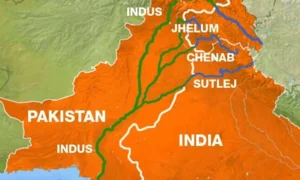
The Indus Waters Treaty is an international water-sharing agreement between Pakistan and India, signed on September 19, 1960, with the World Bank as mediator. It was signed by President Ayub Khan of Pakistan and Prime Minister Jawaharlal Nehru of India.
The purpose of the treaty was to resolve the water issue peacefully and prevent tensions in the region. According to its key clauses, the Indus river system was divided into two parts:
- Eastern Rivers: Sutlej, Beas, and Ravi control given to India
- Western Rivers: Indus, Jhelum, and Chenab control given to Pakistan
India was allowed to use the western rivers for limited hydroelectric power and agricultural purposes under specific conditions, but not to initiate any project that would affect Pakistan’s water supply.
Indian National Sentenced to 7,000 Lashes and 7 Years Jail for Disrespecting Kaaba
After the formation of Pakistan, there was no clear water-sharing agreement between the two nations. In April 1948, India temporarily halted water flow to Punjab, triggering an agricultural crisis in Pakistan. This event led to the search for a sustainable solution, which eventually resulted in the Indus Waters Treaty.
This treaty is considered one of the most successful water agreements globally. Despite wars and political tensions, the treaty has remained intact, proving its resilience and the seriousness of both countries. Since Pakistan’s agriculture heavily depends on the western rivers, this treaty is considered the backbone of the national economy.
In recent decades, India’s construction of various dams and hydropower projects like Baglihar and Kishanganga have drawn criticism from Pakistan. Pakistan has repeatedly called these projects violations of the treaty and taken the disputes to international arbitration forums. Despite these conflicts, the treaty has never been annulled.
The Indus Waters Treaty stands as a model for resolving water disputes between nations. Its continued implementation is essential not only for Pakistan-India relations but also for regional peace and stability in South Asia.
Given the current situation, it is crucial for both countries to adhere to the spirit of the agreement and avoid any form of provocation, ensuring the fair and just use of water resources. Attempting to block river flow is no less than declaring hostility. If water is turned into a weapon, it could endanger the lives of millions.
Visa Suspensions: More Than Bureaucracy
India’s cancellation of visas for Pakistani citizens is not just a bureaucratic move, but an attempt to raise walls of division even higher. Blocking avenues like education, healthcare, religious pilgrimages, and cultural exchanges turns softness at the public level into hardness.
These were the ties that brought people from both sides of the border closer. With the suspension of these visas, all dreams of love, peace, and friendship built over time have now been locked away in cabinets.
Wagah Border Closure: Are the Gates of Peace Shut?
Are the doors of peace closed? Borders sealed? Swords unsheathed? Are these the principles of good neighborliness?
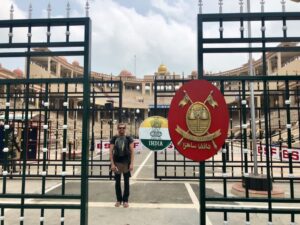
Wagah Border, Once a symbol of hope on the frontier, it now stands silent. The flag-hoisting ceremonies that once reflected passion, dignity, and national pride are now lost in the dust of tension. The closure of the border is a symbol of broken trust that had long stood between the two nations.
Is this the solution? Is this behavior going to take us forward? Will we always try to resolve disputes by choking each other?
The progress, prosperity, and peace of South Asia lie in resolving conflicts through dialogue, not by targeting water, passports, or flags. This is a time not for provocation, but for patience, wisdom, and foresight.
If history teaches anything, it’s that wars build graves, not bridges. Canceling treaties like the Indus Waters Treaty may stop water, but who will stop the flood of hatred?