

Iran’s nuclear chief, Mohammad Eslami, has arrived in Moscow for talks with Russian officials. The visit comes at a sensitive time as the United Nations considers reimposing sanctions on Iran over its nuclear program.
UN Divisions Over Iran’s Nuclear Issue
Recently, the UN Security Council rejected a resolution to permanently lift sanctions on Iran. The move was supported by Russia and China, but strongly opposed by Britain, France, and Germany. These European powers want restrictions to return, saying Iran has not honored its commitments under the 2015 nuclear deal.
That deal, known as the Joint Comprehensive Plan of Action (JCPOA), was designed to prevent Iran from developing a nuclear weapon. Tehran has always denied such intentions, insisting that its program is focused only on peaceful energy production. Russia has defended Iran, saying it has the right to expand nuclear power.
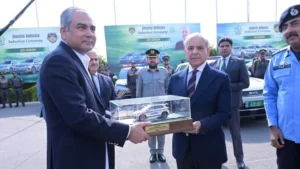
PM Shehbaz Sharif Meets Iranian President Masoud Pezeshkian at SCO Summit
Iran and Russia Expand Cooperation
During his trip, Eslami confirmed that Iran and Russia are preparing to sign new agreements. One of the main projects will be the construction of eight nuclear power plants. This is part of Iran’s broader plan to generate 20 GW of nuclear energy by 2040.
Iran’s nuclear chief said: “Contract negotiations have taken place, and with the signing of the agreement this week, we will move into the operational phase.”
At present, Iran has only one nuclear plant — the Bushehr facility, also built by Russia, which produces around 1 GW of electricity. Officials in Tehran argue that new power plants are urgently needed to deal with electricity shortages, especially during high-demand months.
Sanctions Deadline Approaches
Britain, France, and Germany have offered Iran a six-month delay before sanctions are fully reimposed. However, this offer depends on Iran allowing UN inspectors access, addressing concerns about enriched uranium stockpiles, and reopening talks with the United States.
If no compromise is reached by September 27, 2025, all UN sanctions on Iran will automatically return, creating more pressure on its struggling economy.
The Road Ahead
Iran faces a difficult balancing act. On one side, it needs nuclear energy to strengthen its electricity grid. On the other, it risks further isolation if Western powers believe it is not meeting its international obligations. Russia’s support gives Iran an important partner, but without broader diplomatic progress, tensions are likely to continue.
FAQs
1. Why did Iran’s nuclear chief visit Russia?
Mohammad Eslami traveled to Moscow to sign new cooperation deals, including a plan to build eight nuclear power plants.
2. What is Iran’s target for nuclear power?
Iran aims to produce 20 GW of nuclear energy by 2040 to meet growing electricity needs.
3. What is the 2015 nuclear deal?
The JCPOA was an agreement between Iran and world powers to limit Iran’s nuclear activities in exchange for sanctions relief.
4. What happens if sanctions return on September 27, 2025?
If no new deal is made, all UN sanctions will be reinstated, affecting Iran’s economy and global trade.
5. Which nuclear plant is currently running in Iran?
Iran operates the Bushehr plant, built with Russian help, with a capacity of about 1 GW.