
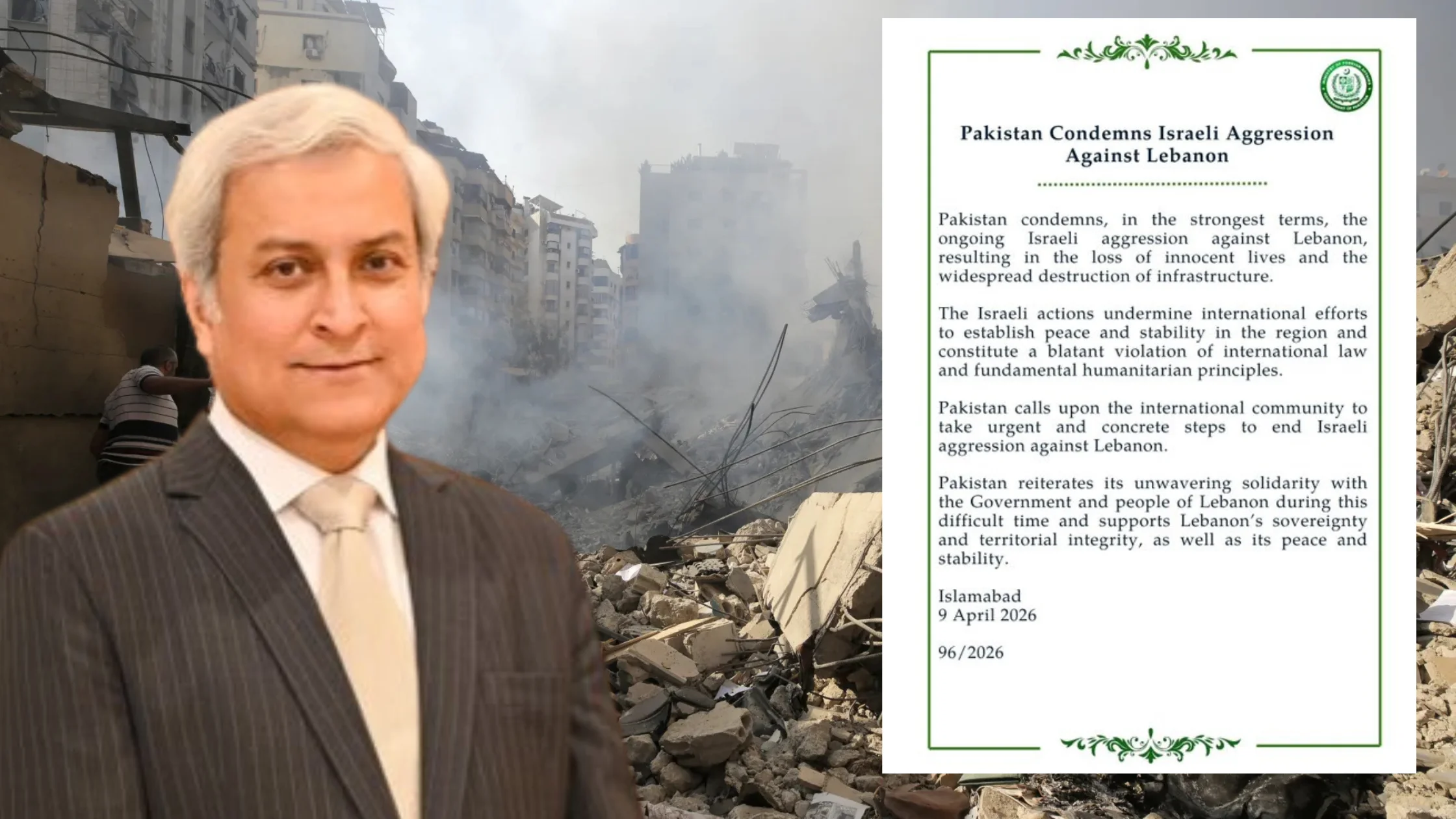
Pakistan has issued a clear statement regarding the ongoing temporary ceasefire arrangement, confirming that Lebanon is also included alongside Iran in the agreement. According to Pakistan’s ambassador Rizwan Saeed Sheikh, the ceasefire framework mediated by Pakistan is not limited to Iran alone but also extends to Lebanon, reflecting a broader regional understanding aimed at reducing tensions.
The statement aligns with earlier remarks attributed to Prime Minister Shehbaz Sharif, who reportedly played a key role in facilitating the ceasefire process. It was suggested that Iran and the United States, along with their respective allies, had agreed to an immediate halt in hostilities across multiple regions, including Lebanon. The objective of the arrangement was to prevent further escalation and stabilize the region through coordinated diplomatic efforts.
However, shortly after these claims surfaced, reports indicated a significant escalation of violence in Lebanon, with heavy casualties and widespread destruction reported. While Israeli military operations were acknowledged, conflicting statements emerged regarding the scope of the ceasefire agreement. Israeli leadership denied Lebanon’s inclusion in the arrangement, while officials from the United States also stated that Lebanon was not part of the deal, creating confusion over the actual terms of the agreement.
France 24 Reports India, Afghanistan Network Running Fake Iran Campaign Against Pakistan
In response to these conflicting narratives, Ambassador Rizwan Saeed Sheikh clarified during an interview with CNN that Pakistan’s position remains consistent. He emphasized that the understanding reached through diplomatic channels included a commitment to halt attacks not only in Iran but also in Lebanon. He further stated that the Prime Minister’s announcement was based on the agreed framework between the involved parties.
The situation highlights ongoing tensions and differing interpretations among global stakeholders regarding the ceasefire’s scope. While diplomatic efforts continue, the lack of a unified confirmation from all parties has created uncertainty over the implementation of the agreement and its effectiveness on the ground.