
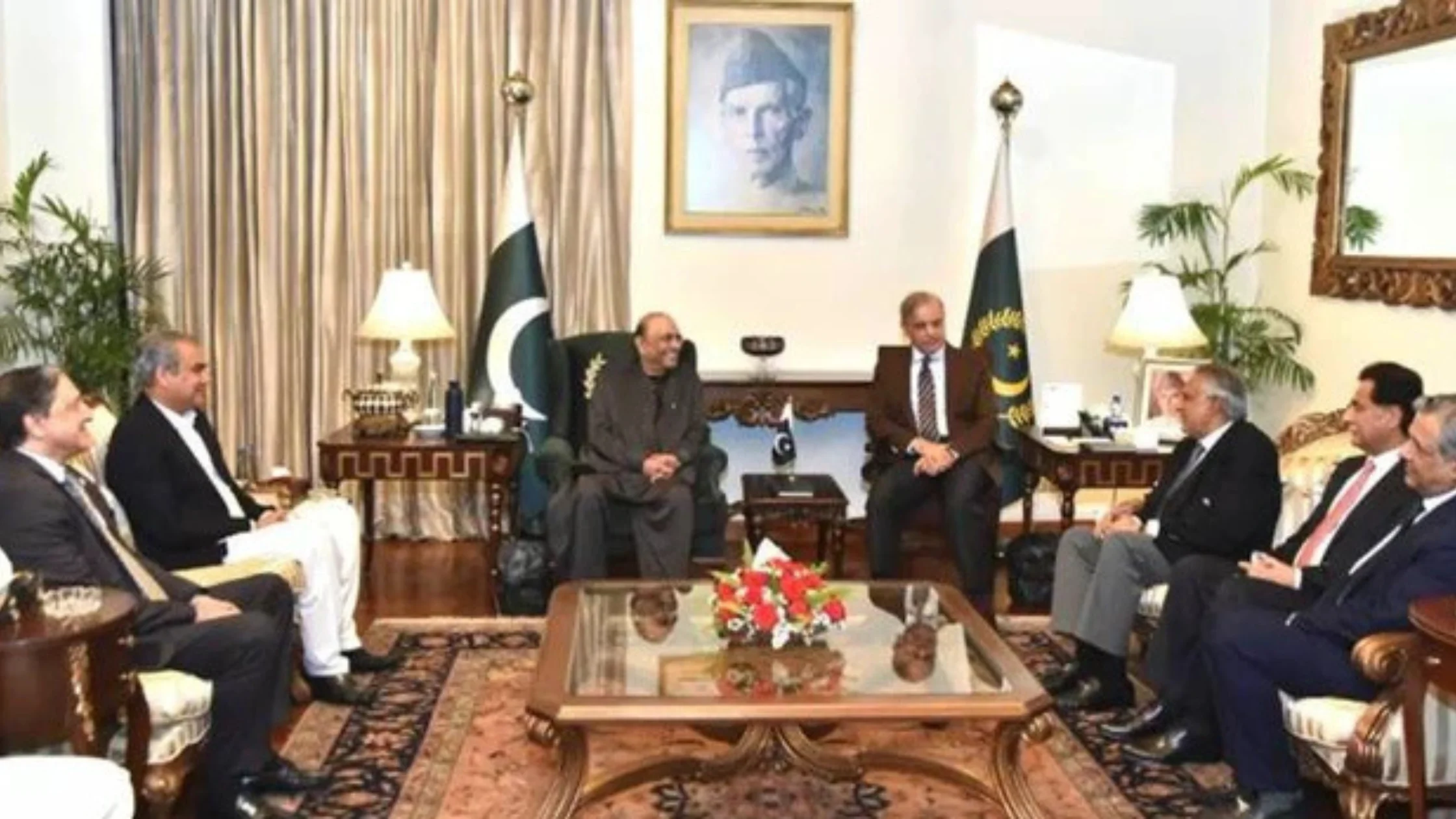
A high-level meeting was held at the Presidential Palace in Islamabad where Prime Minister Shehbaz Sharif and President Asif Ali Zardari reviewed important national and regional matters amid rapidly changing geopolitical conditions in the Middle East.
The meeting was attended by several senior government officials, including Deputy Prime Minister and Foreign Minister Ishaq Dar and Interior Minister Mohsin Naqvi. Discussions focused on Pakistan’s potential diplomatic role in reducing tensions between Iran and the United States, as the country continues efforts to promote regional peace and stability through dialogue and engagement.
The leadership also reviewed Pakistan’s internal security situation, border management challenges, and ongoing counter-terrorism efforts. Officials emphasized the need for stronger coordination among institutions to maintain national security and respond effectively to emerging threats. Border security and regional stability were described as closely linked to Pakistan’s economic and diplomatic priorities.
Economic reforms and governance performance were also part of the discussion. Leaders reportedly examined measures aimed at improving economic stability, strengthening administrative performance, and ensuring effective implementation of government policies. The meeting reflected a broader effort to maintain political unity and institutional coordination during a period of regional uncertainty.
Participants stressed the importance of a proactive diplomatic strategy that protects Pakistan’s national interests while supporting peace initiatives in the region. Observers believe the session demonstrates Pakistan’s intention to play a balanced and constructive role in international diplomacy while simultaneously addressing domestic challenges.
The meeting comes at a time when geopolitical tensions in the Middle East continue to influence regional security, energy markets, and global diplomacy, making coordinated national decision-making increasingly important for Pakistan’s strategic planning and foreign policy direction.