
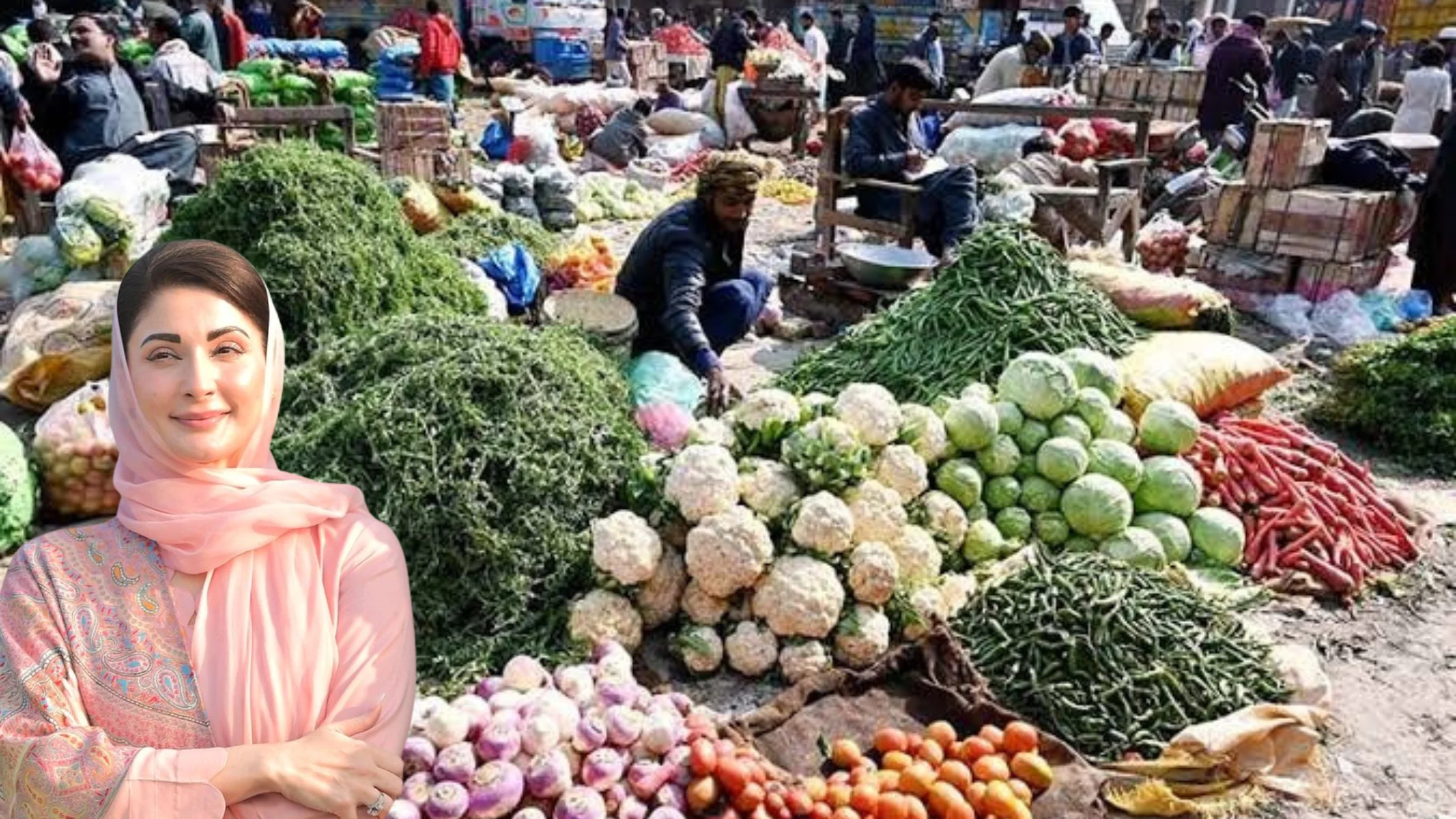
The Punjab government has introduced a new community welfare initiative, “Sasti Nahi Muft Sabzi, Sanjhi Sabzi” (Free, Not Cheap Vegetables, Shared Vegetables), to provide free seasonal vegetables to families affected by rising inflation.
Launched under the directions of Punjab Chief Minister Maryam Nawaz Sharif, the project aims to improve food security by utilizing government-owned urban buildings and rural land for vegetable cultivation. Instead of selling the produce at subsidized rates, the vegetables are distributed free of charge to residents based on their household needs.
According to officials, vegetables are currently being cultivated on 140 plots covering 139 kanals of land in Muzaffargarh, where the initiative was first introduced. The project began in a Christian community village and has since evolved into a community-led effort, with local residents voluntarily growing vegetables to support other families in need.
Punjab Approves Feasibility Study for 300-Acre Maryam Nawaz Sports City in Lahore
Encouraged by the positive response, Chief Minister Maryam Nawaz has directed deputy commissioners across Punjab to replicate the model in their respective districts. The initiative aims to transform unused government land into productive community gardens while promoting cooperation, self-reliance, and food sustainability.
Officials believe the scheme will not only help reduce the financial burden on low-income households but also encourage local participation in addressing food shortages. By combining community involvement with effective use of public resources, the government hopes to create a sustainable solution to rising food costs.
If expanded successfully across the province, the “Sasti Nahi Muft Sabzi, Sanjhi Sabzi” program could become a model for community-based food assistance, ensuring that vulnerable families have easier access to fresh, healthy vegetables during challenging economic times.