

At the heart of Islam, Judaism, and Christianity lies the powerful and deeply symbolic story of Abraham’s willingness to sacrifice his son in obedience to God. This event, though interpreted differently in each faith, emphasizes the values of submission, trust, and divine testing. Known as Ibrahim in Islam and Abraham in Judaism and Christianity, his test represents one of the earliest and most profound moments of spiritual sacrifice.
Islamic Perspective: Ibrahim and Ismail

In Islam, the story is found in the Qur’an, where Prophet Ibrahim dreams that Allah commands him to sacrifice his son, Ismail. Ibrahim shares the vision with Ismail, who accepts it with humility and encourages his father to fulfill God’s command. As Ibrahim prepares to carry out the act, Allah intervenes, sending a ram to be sacrificed in Ismail’s place. This moment is seen as a testament to both the father’s and the son’s faith and devotion.
Muslims commemorate this event during Eid al-Adha, one of the most important Islamic festivals. The ritual of Qurbani (sacrifice) is performed by slaughtering an animal, typically a sheep, goat, or cow. The meat is then distributed—one-third for the family, one-third for relatives and friends, and one-third for the poor. This act symbolizes obedience to Allah and compassion for others.
The Qur’an emphasizes that God is not interested in the meat or blood of the sacrifice, but in the piety and sincerity behind it. This underlines the idea that sacrifice is not about physical loss, but about spiritual dedication. Historically, this idea traces back to the very first sons of Adam—Habil (Abel) and Qabil (Cain)—who offered sacrifices, one accepted and one rejected, based on sincerity rather than the offering itself.
Judaism: The Binding of Isaac (Akedah)
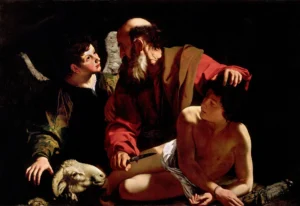
In Jewish tradition, the story is called the Akedah, or the Binding of Isaac. According to Genesis, God commands Abraham to offer his son Isaac as a burnt offering. Without question, Abraham obeys, but just before the act is completed, an angel stops him and a ram is sacrificed instead. This act of faith becomes a cornerstone of Jewish belief and is remembered especially during Rosh Hashanah, the Jewish New Year.
In ancient Judaism, the Temple in Jerusalem was the center for animal sacrifices. These included offerings for atonement, thanksgiving, and communal celebrations. After the destruction of the Second Temple in 70 CE, the practice of animal sacrifice ended. It was replaced by prayer, ethical behavior, and the study of Torah, which are seen as spiritual offerings.
Jewish law still preserves aspects of sacrificial purity through kosher slaughter, a humane and sanctified method of killing animals for food. Although literal sacrifice is no longer practiced, the deeper meaning—honoring God through obedience and ethical conduct—remains central in Judaism.
Christianity: Sacrifice Through Jesus Christ
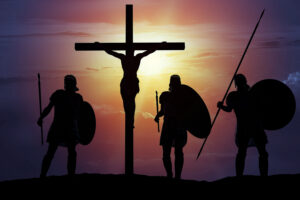
In Christianity, Abraham’s near-sacrifice of Isaac is viewed as a foreshadowing of God’s sacrifice of His son, Jesus Christ. Christians believe that Jesus, known as the “Lamb of God,” was crucified as the ultimate and final sacrifice for humanity’s sins. Unlike the repeated animal sacrifices in the Old Testament, Jesus’ death is seen as a once-and-for-all atonement.
HAJJ GUIDE DAY-BY-DAY: A JOURNEY OF FAITH AND DEVOTION
The Christian practice of the Eucharist (Holy Communion) is a symbolic remembrance of this sacrifice. Through the ritual, believers consume bread and wine that represent the body and blood of Jesus, reaffirming their connection to his sacrifice and resurrection. The Apostle Paul further encouraged Christians to become “living sacrifices,” dedicating their lives to holiness, service, and love.
Christianity moved away from physical sacrifice and focused instead on spiritual transformation, where acts of mercy, humility, and devotion to God reflect the true essence of offering.
The Deeper Meaning of Sacrifice Across Faiths
Despite the differences in names, details, and theology, the story of Abraham’s test reveals a shared spiritual truth across all three religions: God values inner sincerity over outward rituals. Sacrifice is not only the act of giving up something, but also the willingness to obey, trust, and put God above all else.
Whether through the ritual Qurbani of Eid, the remembrance of the Akedah during Rosh Hashanah, or the commemoration of Christ’s sacrifice during the Eucharist, the principle is the same faith is tested, and love for God is proven through devotion, not destruction.
Modern Relevance of Sacrifice Today
In the modern world, sacrifice may not always involve rituals or altars. Instead, it can be seen in daily acts of kindness, self-restraint, charity, and moral courage. Helping others, sharing wealth, standing for justice, and choosing ethical paths even when difficult—these are the living sacrifices that continue the legacy of Abraham in everyday life.
The enduring lesson from Abraham’s story is that what matters most to God is not what we give up, but how willing we are to surrender our desires for something greater. The ultimate sacrifice is of the ego, the self, and the material attachments that keep us from truly serving others and connecting with the Divine.
Conclusion
Whether it’s Ismail, Isaac, or Jesus, the concept of sacrifice speaks to the deepest parts of human faith. It challenges us to put trust over fear, obedience over desire, and God over everything.
The story of Ibrahim’s great test unites over half the world in one profound lesson: true faith demands real surrender.
FAQs
What is the story of sacrifice in Islam?
In Islam, the sacrifice story centers around Prophet Ibrahim and his son Ismail, where Ibrahim saw a dream from Allah commanding him to sacrifice his son. This act is commemorated during Eid al-Adha with Qurbani.
Why is Abraham’s test important in Judaism?
In Judaism, Abraham’s test, known as the Akedah, is crucial for demonstrating unwavering faith. God asked Abraham to offer his son Isaac as a sacrifice, showcasing the depth of Abraham’s loyalty.
How does Christianity interpret Abraham’s sacrifice?
Christianity sees Abraham’s act as a symbolic prophecy of Jesus’ crucifixion. Abraham’s willingness to sacrifice Isaac mirrors God offering Jesus for humanity’s sins.
What is the significance of Qurbani in Islam?
Qurbani in Islam is a ritual animal sacrifice during Eid al-Adha to honor Ibrahim’s obedience. It reflects faith, charity, and surrender to Allah’s will.
Is animal sacrifice still practiced today?
Yes, animal sacrifice is practiced during Eid al-Adha in Islam. In Judaism and Christianity, it’s symbolic now, though some traditions commemorate it through prayer and charitable giving.