
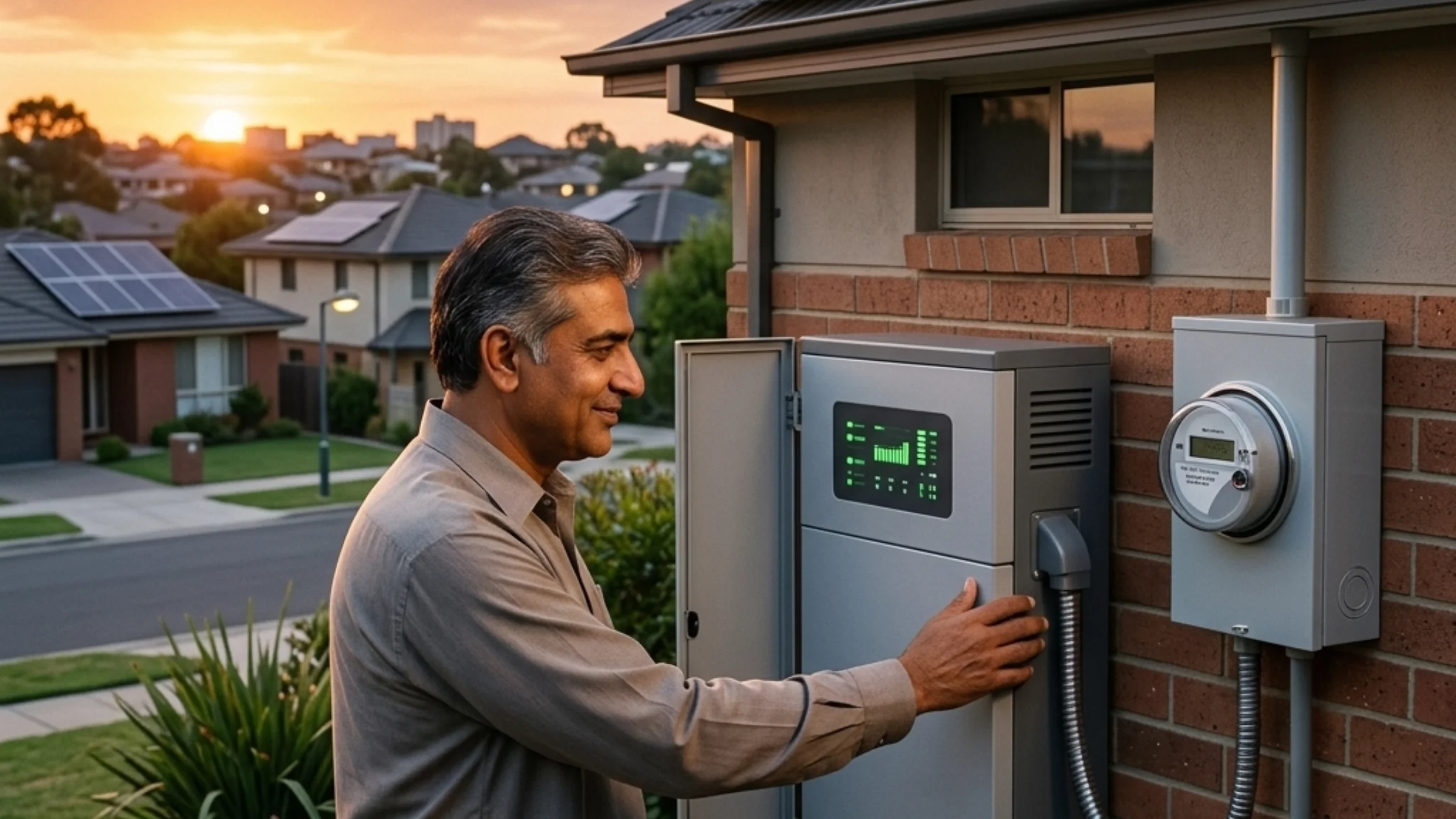
Pakistan is preparing to introduce a major change in its energy sector that could allow homeowners with solar battery systems to earn additional income by supplying electricity to the national grid during peak demand hours. The proposed policy by the Power Division aims to encourage battery storage while helping reduce pressure on the country’s overstretched electricity network.
If approved, the initiative would reward consumers who store solar energy during the day and feed it back into the grid in the evening, creating a new source of income for solar users while improving grid stability.
New Incentive for Solar Battery Owners
Under the proposed Time-of-Use (ToU) net metering and net billing mechanism, solar users equipped with battery storage systems could receive an additional Rs. 18 to Rs. 22 per kilowatt-hour (kWh) for electricity supplied between 5:00 PM and 10:00 PM.
These evening hours represent Pakistan’s highest electricity demand period, when residential and commercial electricity consumption increases significantly. Instead of drawing electricity from the grid, battery owners would discharge their stored solar energy and sell the surplus back to the system, earning higher payments than under conventional net metering.
The proposal is designed to make battery storage financially attractive while reducing dependence on expensive power generation during peak hours.
Why the Government Is Introducing This Policy
Pakistan’s electricity demand continues to grow, particularly during evening hours. According to the Power Division, peak electricity demand has now exceeded 26,000 megawatts (MW), placing enormous pressure on the national grid.
Meeting this demand often requires operating expensive power plants that increase electricity generation costs. The government believes encouraging battery owners to supply stored electricity during these hours can reduce reliance on costly peak-hour generation and improve the overall efficiency of the power system.
Rather than building additional power plants, authorities hope to use distributed battery storage as a flexible energy resource.
LNG Supply Drops to Zero: Power Shortage and Load Shedding Risk Loom in Pakistan
Power Division Warns Public Against Fake QR Code Scam on Electricity Bills
Pakistan’s Battery Market Is Growing Rapidly
The proposal comes as Pakistan experiences a remarkable expansion in battery storage technology.
Between January 2024 and June 2026, Pakistan imported approximately 6.004 gigawatt-hours (GWh) of lithium-ion batteries worth nearly Rs. 126 billion (around $454.7 million).
The pace of imports has accelerated dramatically. Monthly battery imports increased by 1,640 percent, rising from just 42 megawatt-hours (MWh) in January 2024 to a record 652.2 MWh in April 2026.
This sharp growth reflects the increasing number of households and businesses investing in battery storage to reduce electricity bills and protect themselves from load shedding.
Shift Towards Battery-Backed Solar Systems
Pakistan’s solar industry is evolving beyond traditional rooftop solar installations.
Initially, most consumers installed solar panels mainly to reduce daytime electricity consumption. Today, many homeowners are pairing solar systems with battery storage, allowing them to store excess electricity produced during daylight hours and use it later in the evening.
This trend is transforming solar systems into reliable energy storage solutions capable of supporting both individual households and the national grid.
Battery-backed systems also provide backup power during outages while increasing energy independence for consumers.
Businesses Are Also Investing in Energy Storage
The growing battery market is not limited to residential consumers.
Telecommunication companies, commercial buildings, industrial facilities, and large infrastructure projects are increasingly adopting battery storage systems to reduce operating costs and ensure uninterrupted power supplies.
As battery prices continue to decline and technology improves, energy storage is becoming a key part of Pakistan’s broader transition toward cleaner and more reliable electricity.
Regulatory Challenges Still Need to Be Addressed
While battery adoption is expanding rapidly, experts warn that Pakistan’s regulatory framework has not kept pace with market growth.
Several important issues still require government attention, including:
- National battery safety standards
- Grid connection regulations
- Battery registration systems
- Performance certification
- Tariff structures for energy storage services
- Technical standards for battery integration
Without proper regulations, large-scale battery deployment could create technical challenges for electricity distribution companies and grid operators.
Impact on the National Grid
Energy experts believe that as more households become self-sufficient through solar and battery systems, fewer consumers will rely heavily on the national electricity grid.
While this helps individual consumers lower their electricity bills, it also reduces revenue for electricity distribution companies. Fixed infrastructure costs would then be shared among a smaller number of traditional consumers, potentially increasing electricity prices for those who remain fully dependent on the grid.
The proposed Time-of-Use payment mechanism seeks to balance these concerns by encouraging battery owners to actively support the grid instead of disconnecting from it.
Benefits for Solar Consumers
If implemented, the proposed policy could provide several advantages for homeowners with battery storage systems.
Consumers would not only save money by using stored solar energy during expensive evening hours but also generate additional income by exporting excess electricity to the grid. This would improve the financial return on battery investments and shorten the payback period for installing energy storage systems.
The policy could also encourage more households to adopt battery technology, accelerating Pakistan’s shift toward renewable energy.
What Happens Next?
The proposal is currently under consideration, and the government has yet to announce a final implementation timeline.
Industry stakeholders are expected to review the proposed tariff structure and regulatory framework before any nationwide rollout. If approved, Pakistan could become one of the regional leaders in integrating residential battery storage into the national electricity network.
The initiative represents an important step toward creating a smarter, more flexible power system that rewards consumers for contributing to grid stability while supporting the country’s renewable energy goals.
Conclusion
Pakistan’s proposed incentive for solar battery owners has the potential to transform how electricity is generated, stored, and consumed across the country. By allowing homeowners to earn Rs. 18 to Rs. 22 per kWh for supplying stored solar energy during evening peak hours, the government hopes to reduce pressure on the national grid while encouraging greater investment in battery storage.
With battery imports reaching record levels and solar adoption continuing to rise, the policy could create new earning opportunities for consumers while strengthening Pakistan’s transition toward a cleaner, more efficient, and sustainable energy future.