

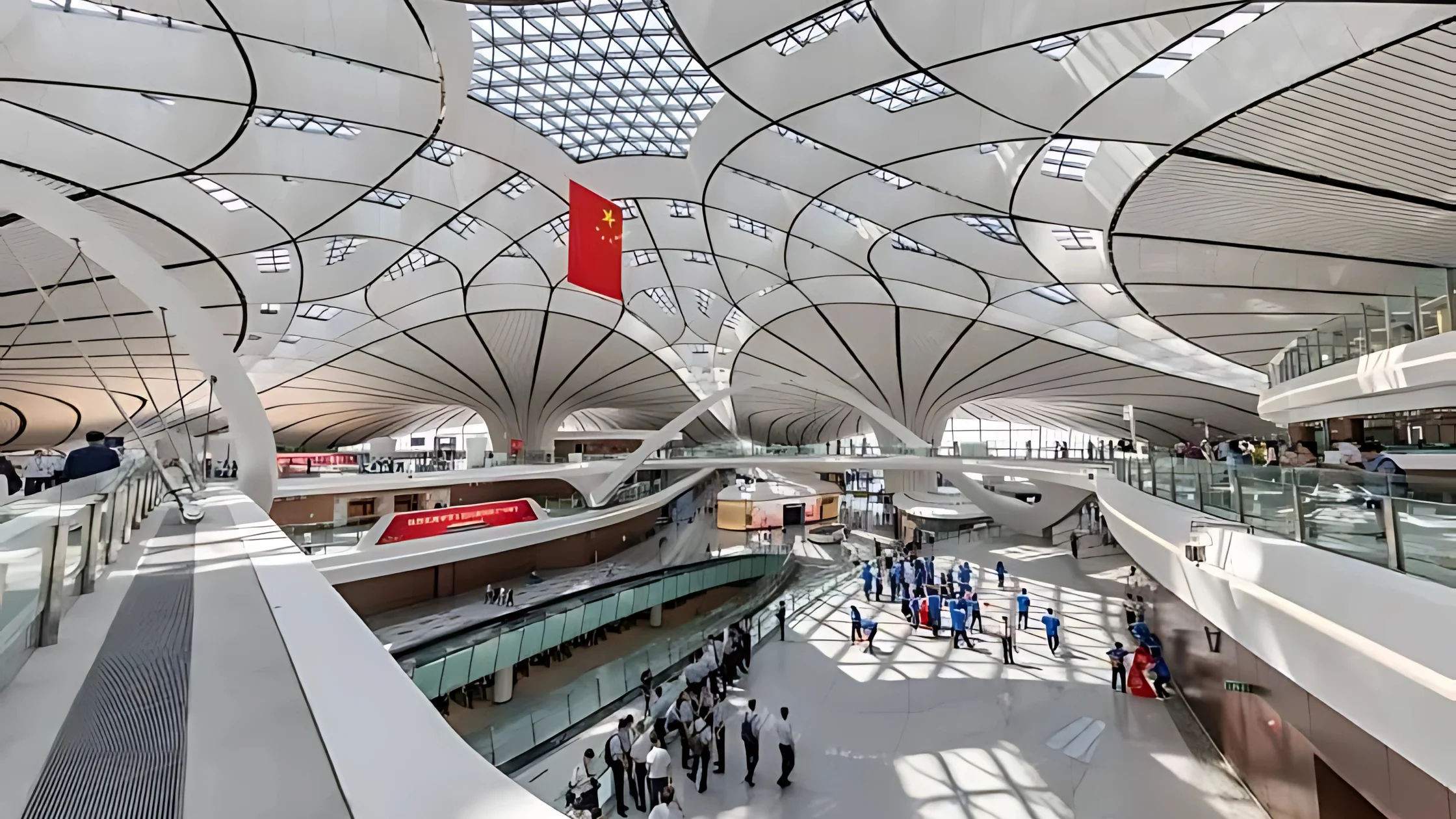
China’s Beijing Daxing International Airport, opened in 2019, is known as the world’s largest airport terminal. Designed by the late world-famous architect Zaha Hadid, the terminal is a symbol of futuristic design and China’s ambition to become a global aviation leader.
The airport, shaped like a starfish from above, was built to handle massive passenger traffic. Experts expect it to reach 100 million passengers per year by 2040, which would make it one of the busiest airports in the world.
World’s First Pregnant humanoid Robot Unveiled by China, Ignites Global Debate
However, six years after its inauguration, the airport still sees minimal passenger traffic compared to its capacity. Industry analysts point to several reasons: slower recovery in international travel after the pandemic, limited airline routes, and challenges in attracting global carriers.
Despite the current underuse, officials remain confident that Daxing will eventually achieve its goals. The terminal’s advanced design, high-speed rail connections, and ability to handle future demand give it strong long-term potential. For now, though, the airport raises important questions about planning, connectivity, and changing travel patterns in the global aviation industry.
FAQs
1. Why is Beijing Daxing International Airport famous?
It is the world’s largest airport terminal, designed by Zaha Hadid, with futuristic architecture.
2. How many passengers does it handle now?
Currently, the airport is underutilized, with far fewer passengers than its capacity.
3. What is its expected capacity by 2040?
Experts predict it will handle around 100 million passengers annually by 2040.
4. Why is passenger traffic still low?
The slow post-pandemic recovery, fewer routes, and connectivity challenges are major factors.
5. What makes the airport unique?
Its starfish-shaped design, advanced facilities, and integration with high-speed rail set it apart.