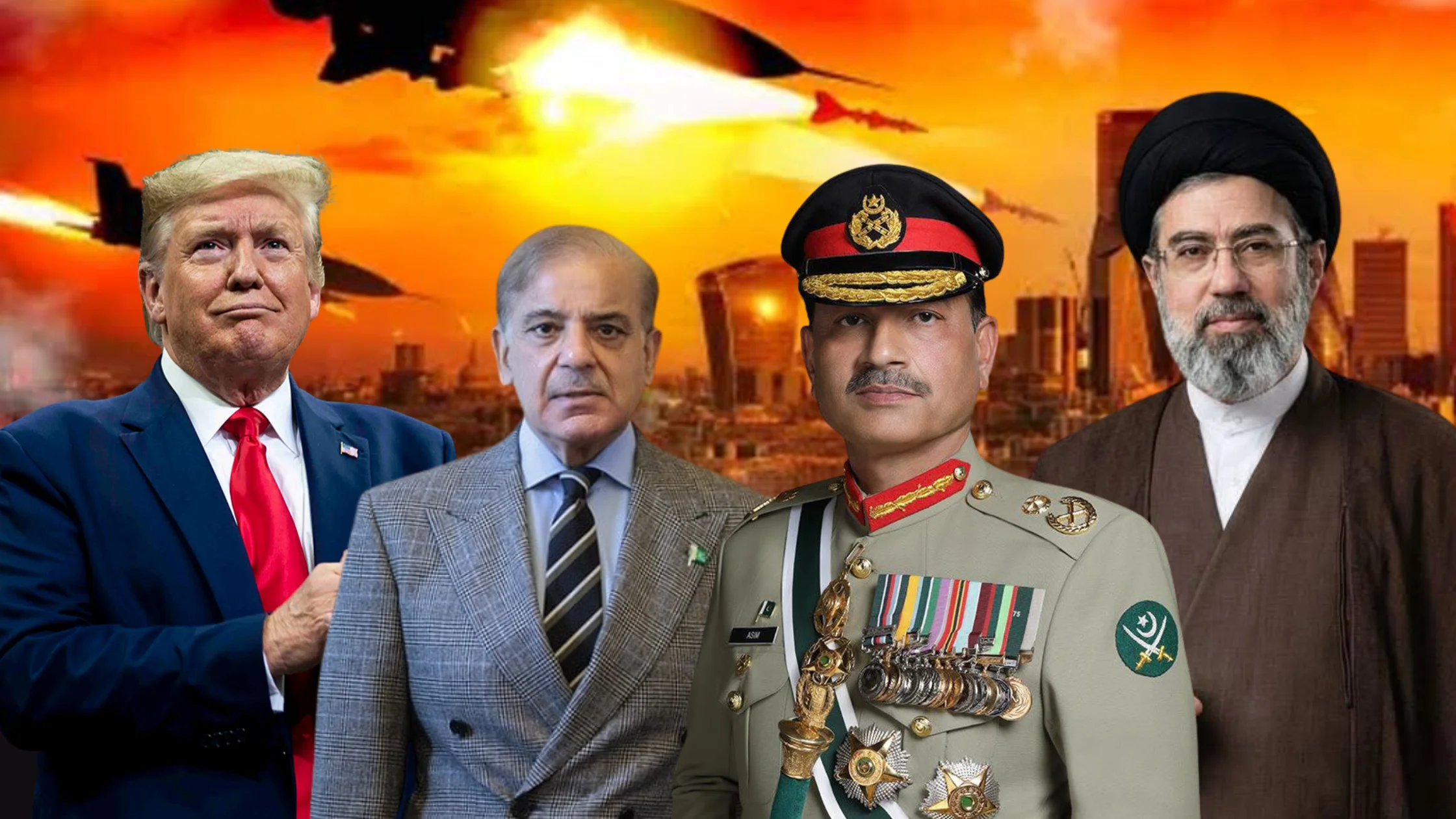
Right now, Islamabad feels less like a normal capital city and more like the center of the world. Streets are quieter than usual, security is tighter than ever, and people are constantly checking updates on their phones. Why? Because Pakistan is hosting crucial peace talks between the United States and Iran—talks that could decide whether the region moves toward peace or slips back into war.
Prime Minister Shehbaz Sharif stepped in at a critical moment to bring both sides together. After weeks of deadly conflict, a fragile two-week ceasefire was agreed upon. It’s not permanent, and honestly, it feels like walking on thin ice. One wrong move, and everything could collapse.
On one side, the US leadership under Donald Trump is pushing for strict control over Iran’s nuclear and military programs. On the other, Iran—represented by Foreign Minister Abbas Araghchi—is demanding security guarantees and relief from years of pressure. Islamabad is now the place where these two powerful forces are trying to find common ground.
How the War Started: The Reality Behind “Epic Fury”
The conflict didn’t just appear out of nowhere. It exploded on February 28, 2026, when the US and Israel launched a powerful military operation known as “Epic Fury.” This wasn’t a warning shot—it was a full-scale attack designed to shake Iran’s system from the top down.
The thinking behind the attack was simple, at least from the US and Israeli perspective: Iran was getting too close to becoming a nuclear power, and that was seen as a direct threat. There were also serious concerns about Iran’s missile capabilities and its growing influence across the Middle East.
But let’s be real—this wasn’t just about defense. There was also a clear intention to weaken Iran’s leadership and limit its control over the Strait of Hormuz, one of the most important oil routes in the world. When nearly one-fifth of global oil passes through a single narrow channel, control over that space becomes a huge geopolitical weapon.
Once the strikes began, everything escalated fast. Iran responded with force, targeting regional positions and disrupting global trade routes. Within days, the situation went from tense to explosive.
Pakistan Clarifies Temporary Ceasefire Agreement Includes Lebanon Along with Iran
JD Vance to Lead US Delegation as Iran Sends Senior Leadership for Islamabad Peace Talks
The Scale of Destruction Inside Iran
War always leaves scars, but in this case, the damage has been deep and widespread. Entire areas in Iran have been affected—not just military zones but civilian life as well.
Airstrikes hit nuclear facilities, missile bases, communication networks, and even administrative buildings. But the impact didn’t stop there. Hospitals struggled to function, universities were damaged, and many families lost their homes overnight. Imagine waking up one day and finding your entire neighborhood gone—that’s the reality many people faced.
Transportation systems were also badly hit. Bridges were destroyed, roads became unsafe, and supply chains were broken. This created shortages of essential goods like food, medicine, and fuel. It wasn’t just about bombs—it was about daily life collapsing piece by piece.
And while governments talk about “targets” and “strategic strikes,” on the ground, it meant people running for safety, children missing school, and communities trying to survive in chaos.
Human Loss: More Than Just Numbers
When we talk about war, it’s easy to focus on statistics. But behind every number is a real person—a story that ended too soon. Thousands of people lost their lives in this conflict, including civilians, soldiers, and officials.
In Iran, the death toll quickly climbed into the thousands. Families were torn apart, and entire communities were displaced. Many people had to leave everything behind and move to safer areas, not knowing if they would ever return home.
Even the United States suffered losses, with soldiers killed and many more injured. War doesn’t choose sides when it comes to human suffering—it affects everyone involved.
What makes this situation even more painful is how quickly it escalated. One moment, there were diplomatic talks happening quietly in the background. The next, missiles were flying, and lives were being lost.
Top Leadership Deaths That Changed Everything
One of the most shocking parts of this war was the loss of high-ranking Iranian leaders. These weren’t just officials—they were key figures shaping the country’s policies and future.
Among the most significant losses was Iran’s Supreme Leader, Ali Khamenei, whose reported death in an airstrike sent shockwaves across the region. Alongside him, several senior military commanders and intelligence officials were also killed.
This kind of targeted attack is designed to create confusion and weaken decision-making at the highest level. And it worked—at least in the short term. Losing leadership during a crisis is like losing the captain of a ship in the middle of a storm. Everything becomes harder to control.
But it also raised serious concerns globally. Many experts warned that such actions could lead to even more instability rather than solving the problem.
Economic Impact: A War That Shook the Global Market
The financial damage from this war goes far beyond the countries directly involved. When conflict hits a region as important as the Middle East, the entire world feels it.
Oil prices jumped almost immediately after the Strait of Hormuz was threatened. Countries that depend heavily on oil imports started to panic. Businesses faced rising costs, and everyday people felt it in the form of higher fuel prices.
Iran’s economy, already under pressure from sanctions, took another major hit. Infrastructure damage, reduced trade, and ongoing instability made recovery even harder.
The United States also faced significant costs. Military operations are expensive, and prolonged conflict can strain even the strongest economies. Billions of dollars were spent, and the long-term impact is still unfolding.
It’s like throwing a stone into a pond—the ripples spread far beyond the point of impact.
Iran’s 10-Point Peace Plan: What Tehran Wants
To move toward peace, Iran presented a detailed 10-point plan. This plan gives us a clear idea of what Iran is hoping to achieve through negotiations.
Here’s a simplified version of their demands:
| Point | What Iran Wants |
|---|---|
| 1 | No future attacks guarantee |
| 2 | Control or role in Strait of Hormuz |
| 3 | Right to continue uranium enrichment |
| 4 | Removal of US primary sanctions |
| 5 | Removal of secondary sanctions |
| 6 | End of UN restrictions |
| 7 | Removal of nuclear watchdog pressure |
| 8 | Financial compensation |
| 9 | US military withdrawal |
| 10 | End of all regional conflicts |
From Iran’s point of view, these demands are about security and sovereignty. But from the US perspective, some of these points are difficult—if not impossible—to accept fully.
Peace Talks in Islamabad: What’s Being Decided
The discussions in Islamabad are focused on turning a short-term ceasefire into something more stable. Both sides are trying to find a middle ground, but trust is still a big issue.
The US wants limits on Iran’s nuclear program and less military influence in the region. Iran, on the other hand, wants freedom from sanctions and guarantees that it won’t be attacked again.
One positive step has been Iran’s agreement to allow safe passage through the Strait of Hormuz during the ceasefire. This has already helped calm global markets.
Still, challenges remain. Ongoing tensions in Lebanon and disagreements over key issues are making negotiations more complicated. It’s like trying to solve a puzzle where some pieces don’t quite fit yet.
Conclusion
The 2026 US-Iran conflict has left behind destruction, loss, and uncertainty. From damaged cities and economic shock to the deaths of top leaders, the impact has been massive.
Now, all eyes are on Islamabad. These talks are more than just political discussions—they are a chance to prevent further suffering and create a path toward stability.
Whether this moment becomes the beginning of peace or just a pause in conflict depends on what happens next. And for now, the world is watching and waiting.
FAQs
1. What triggered the US-Iran war in 2026?
The war began after US and Israeli strikes targeting Iran’s nuclear and military facilities.
2. Why is the Strait of Hormuz important?
It carries about 20% of global oil, making it critical for the world economy.
3. Who is leading the peace talks?
Key figures include Donald Trump, Abbas Araghchi, and Shehbaz Sharif.
4. What is Iran’s main demand?
Iran wants security guarantees and removal of sanctions.
5. Are the Islamabad talks successful so far?
They are ongoing, and the outcome is still uncertain.