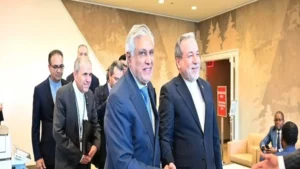

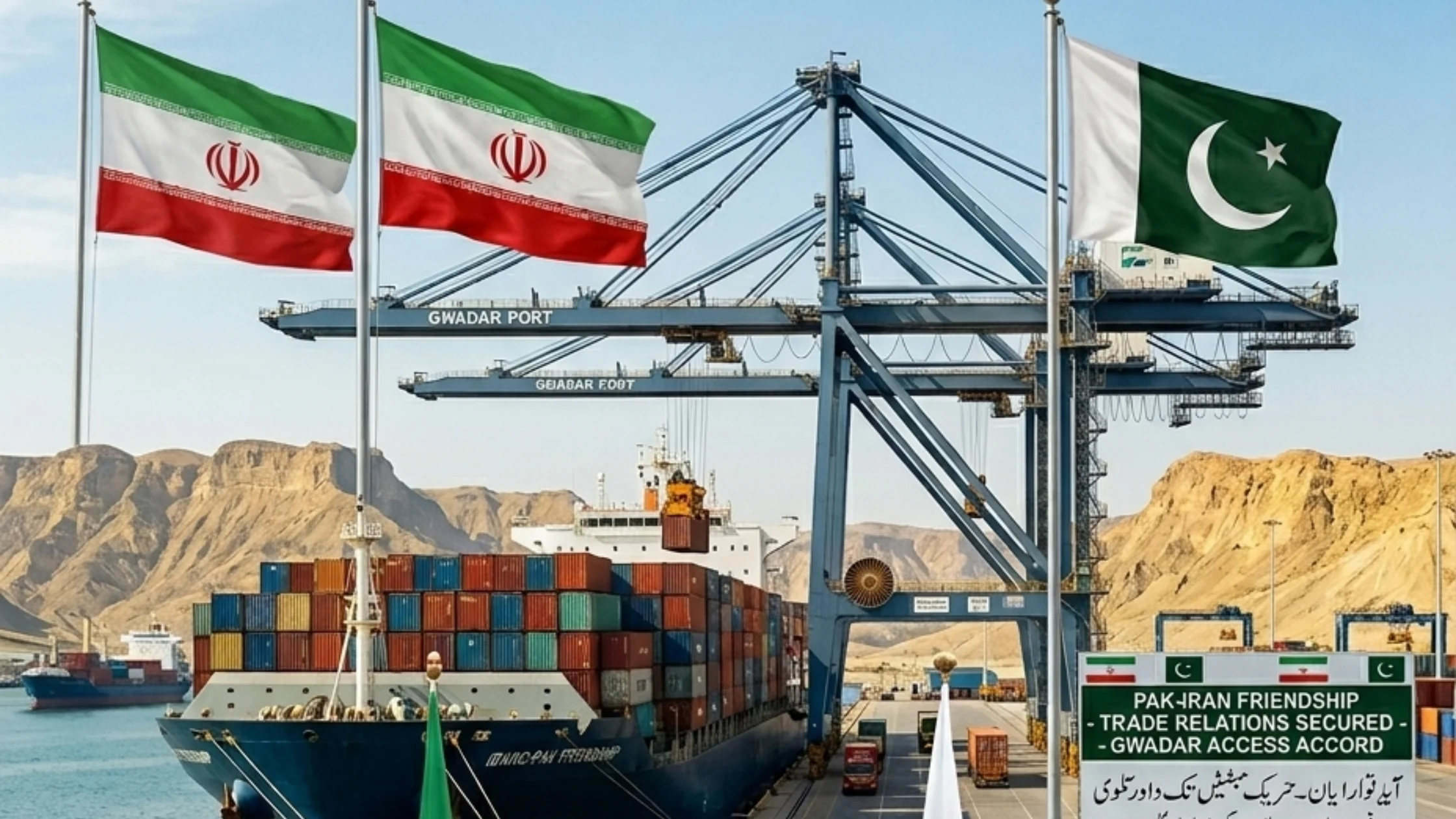
Pakistan and Iran are reportedly moving closer to a mutual trade agreement that could reshape regional economic connectivity and strengthen cross-border commerce between the two neighboring countries. The discussions are focused on improving trade flows, reducing logistical barriers, and expanding transport routes that connect South Asia with the Middle East. One of the most notable elements under consideration is the possible inclusion of access to Pakistan’s strategic Gwadar Port, which could open new trade opportunities for Iran and the wider region.
The idea of enhanced trade cooperation comes at a time when both countries are actively looking to improve economic stability and diversify trade channels. Gwadar Port, located on Pakistan’s southwestern coast, is seen as a key asset due to its deep-sea capabilities and its position near important maritime routes. If included in the agreement, it could allow Iranian goods to be transported more efficiently through Pakistan’s port infrastructure, reducing reliance on longer or more costly shipping routes.
Pakistan Ports to Facilitate Iran’s Global Trade, Boosting Revenue and Connectivity
At the same time, Pakistan has already taken steps to streamline regional trade by introducing structured transit systems that connect border areas with major ports and commercial hubs. These developments are designed to make trade smoother, faster, and more predictable for all parties involved. The proposed agreement with Iran builds on these efforts and signals a broader push toward regional economic integration.
Experts believe that stronger trade ties between Pakistan and Iran could benefit both economies by increasing trade volume, improving supply chain efficiency, and creating new business opportunities. However, the agreement is still in the discussion phase, and final details have not yet been confirmed.
Overall, the talks reflect a growing interest in regional cooperation, with Gwadar Port emerging as a central point in future trade planning between Pakistan, Iran, and potentially other neighboring economies.